Quick Answer 🔥
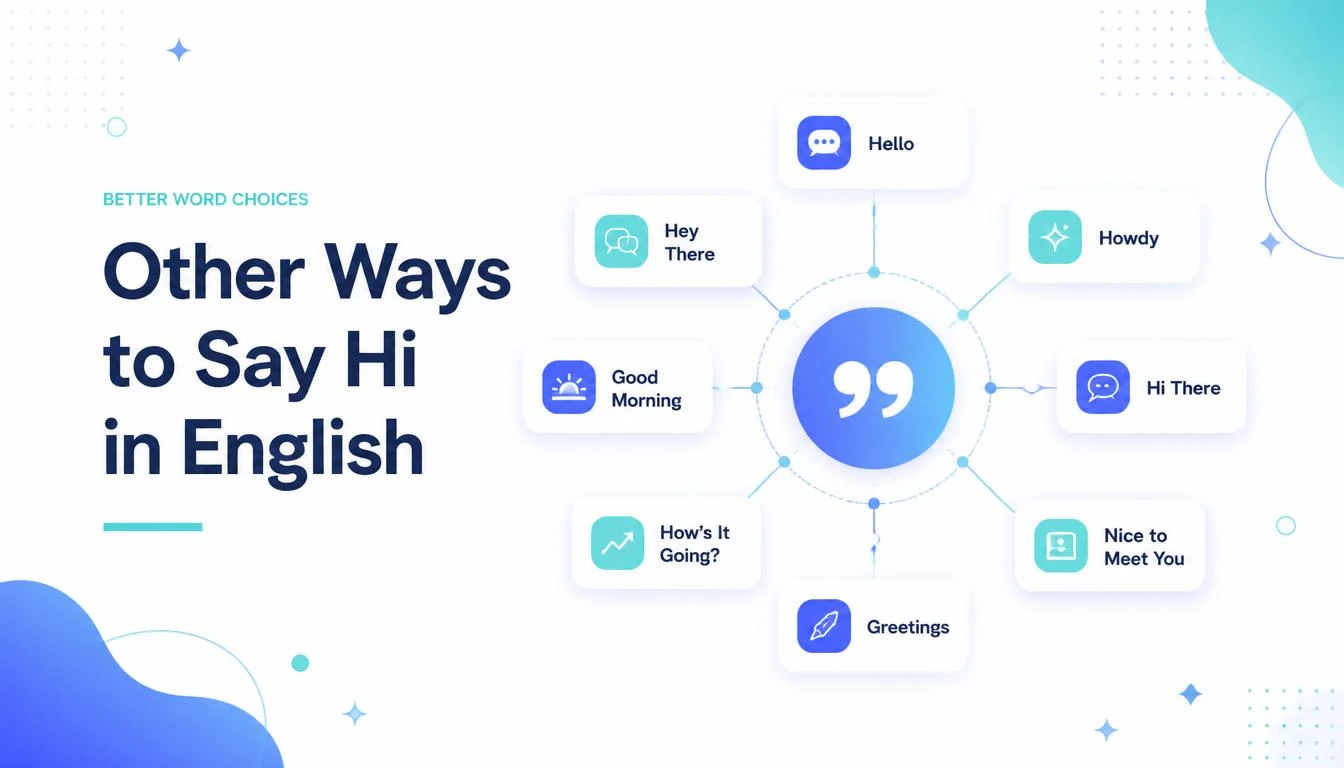
Hi is friendly and safe, but repeating it makes your English sound flat. The best other ways to say hi in English depend on who you are greeting, where you are, and how well you know them.Top 5 alternatives: Hello, Hey there, Good morning, Hope you’re well, Good to see you
Knowing other ways to say hi in English can make your conversations sound more natural, friendly, and confident. Whether you are meeting someone for the first time, greeting a friend, or starting a conversation at work, the right greeting helps you create a positive first impression.
In this guide, you’ll discover other ways to say hi in English for different situations, from casual chats to formal meetings. These simple alternatives will help you choose the right words, express warmth, and avoid using the same greeting every time.
What Is “Hi”? (Meaning, Grammar & Real Use)
Picture this. You join a video call with a new client and open with “Hi.” It works, but then you realize every person you met this week got the same greeting: colleagues, neighbors, your manager, even the barista.
Learning alternatives to hi helps you sound natural and prepared. A warm greeting sets the tone for the whole conversation. It can also help you express excitement in English when you meet an old friend, join a new team, or welcome a guest.
Many learners know hundreds of advanced words but still repeat one greeting all day. That habit is easy to fix. With a small set of well-chosen phrases, you can match your greeting to the person, the place, and the mood.
This guide gives you other ways to say hi in English, with clear rules and real examples.
Definition
“Hi” is a short, friendly greeting used when you meet or contact someone.
Grammar Note
“Hi” is an interjection. Its register is informal to neutral, so it is accepted in most workplaces but is less common in very formal writing.
Example Sentence
Hi Daniel, thanks for sending the report.
Where and Why People Use It
People use “Hi” in speech, text messages, chats, and emails. It is quick, warm, and easy to understand, which is why it is the default greeting for millions of English speakers.
When Should You Use “Hi”?
Common Contexts
- Starting an email to a colleague or client you already know
- Greeting a neighbor, classmate, or friend
- Opening a phone call or video meeting
- Replying to a message in a workplace chat
- Welcoming a customer in a relaxed setting
Spoken vs Written
- Spoken: “Hi” sounds natural and friendly in almost any conversation.
- Written: It is common in emails and messages, but “Dear” or “Good morning” suits formal letters better.
Formal vs Informal
- Informal: Perfect with friends, peers, and team members.
- Formal: Better replaced by “Good morning,” “Greetings,” or “Dear Mr. Khan” in official documents, job applications, and legal contexts.
Is “Hi” Professional or Just Polite?
Politeness means being kind and respectful. Professionalism means matching the standards of a workplace or industry. A greeting can be polite without being professional, but “Hi” usually manages both.
Business example: Hi Ms. Carter, I wanted to follow up on yesterday’s proposal.
Verdict:
- Polite? ✔️ Yes
- Professional? ✔️ Yes, in most modern workplaces. For first contact with senior executives or formal letters, choose “Hello” or “Dear.”
Pros and Cons of Using “Hi”
Pros
- Simple and quick to say or type
- Friendly without being too casual
- Understood by every English speaker
- Works across most workplace emails and chats
Cons
- Too casual for very formal letters
- Overused, so it can sound repetitive
- Limited emotional range for showing warmth or excitement
- Weak in ceremonies, official speeches, and legal writing
Common Mistakes People Make
1. Using “Hi” in a Very Formal Letter
- Incorrect: Hi Sir, I am applying for the director position.
- Correct: Dear Mr. Rahman, I am applying for the director position.
2. Using “Yo” in Client Emails
- Incorrect: Yo Sarah, here is the invoice.
- Correct: Hello Sarah, please find the invoice attached.
3. Answering “How Do You Do?” Like a Real Question
- Incorrect: How do you do? “I am fine, thank you.”
- Correct: How do you do? “How do you do?”
4. Saying “Long Time No See” to a New Person
- Incorrect: Long time no see! Nice to meet you.
- Correct: It’s a pleasure to meet you.
5. Greeting Without a Name in Important Emails
- Incorrect: Hi, I would like a meeting.
- Correct: Hi Priya, I would like to schedule a meeting.
“Small tone mistakes can make confident English sound careless.”
Alternatives by Category
These are a curated preview of the full list of 30 in the next section. Each phrase appears again there with examples.
Formal Alternatives to “Hi”
- Good day
- How do you do?
- Pleased to meet you
- Greetings
Pro Tip: Use these in first-time introductions, official events, and letters. Add the person’s title to sound even more respectful.
Casual Alternatives
- Hey there
- Hiya
- What’s up?
Pro Tip: Match the other person’s energy. If they greet you casually, you can answer in the same style.
Professional Alternatives
- Good morning
- Hope you’re well
- Happy to connect
Pro Tip: Pair these with a name. “Good morning, Anna” sounds more personal than “Good morning” alone.
Informal Expressions
- Yo
- Howdy
- Long time no see
Pro Tip: Keep these for friends and relaxed settings. These informal expressions in English can confuse people in formal situations.
“Formal and informal English aren’t about correctness. They’re about context.”
For more vocabulary practice, read See also: Other Ways to Say “Amazing”.
Other Ways to Say Hi in English
These 30 alternatives build fluency and help you express excitement, admiration, or approval, depending on tone and context. Use them to move from basic greetings to confident professional reaction phrases.
1. Phrase: Hello
Meaning: A standard greeting.
Explanation: Works in nearly every situation.
Example Sentence: Hello, Ms. Lee. Thanks for joining us.
Best Use: Meetings, emails
Worst Use: Very casual texts
Tone: Neutral, polite
Context Variability: professional / spoken
2. Phrase: Hey
Meaning: A short, casual greeting.
Explanation: Friendly and quick among peers.
Example Sentence: Hey, did you see the schedule?
Best Use: Friends, teammates
Worst Use: Formal letters
Tone: Relaxed, friendly
Context Variability: casual / spoken
3. Phrase: Good morning
Meaning: A greeting before noon.
Explanation: Polite and suitable for any workplace.
Example Sentence: Good morning, team. Let’s begin.
Best Use: Offices, emails
Worst Use: Evening calls
Tone: Polite, warm
Context Variability: professional / spoken
4. Phrase: Good afternoon
Meaning: A greeting from noon to evening.
Explanation: Slightly more formal than “Hello.”
Example Sentence: Good afternoon, and welcome to the seminar.
Best Use: Presentations, calls
Worst Use: Late night
Tone: Formal, courteous
Context Variability: professional / spoken
5. Phrase: Good evening
Meaning: A greeting after late afternoon.
Explanation: Common at events and dinners.
Example Sentence: Good evening, everyone. Thank you for coming.
Best Use: Events, dinners
Worst Use: Morning meetings
Tone: Elegant, respectful
Context Variability: professional / spoken
6. Phrase: Greetings
Meaning: A formal, general welcome.
Explanation: Common in letters and announcements.
Example Sentence: Greetings, and welcome to our annual conference.
Best Use: Formal letters
Worst Use: Friendly chats
Tone: Formal, distant
Context Variability: professional
7. Phrase: Hey there
Meaning: A warm, casual greeting.
Explanation: Sounds welcoming to someone you may not know well.
Example Sentence: Hey there! Can I help you find something?
Best Use: Customer service, friends
Worst Use: Senior executives
Tone: Friendly, upbeat
Context Variability: casual / spoken
8. Phrase: Hi there
Meaning: A friendly greeting.
Explanation: Slightly warmer than plain “Hi.”
Example Sentence: Hi there, how can I help you today?
Best Use: Chat support
Worst Use: Formal speeches
Tone: Warm, helpful
Context Variability: casual / professional
9. Phrase: How are you?
Meaning: A greeting asking about wellbeing.
Explanation: Often used as a polite opener.
Example Sentence: Hello, Tom. How are you?
Best Use: Calls, meetings
Worst Use: Rushed emails
Tone: Caring, polite
Context Variability: professional / spoken
10. Phrase: How are you doing?
Meaning: A friendly check on someone.
Explanation: Slightly more relaxed than “How are you?”
Example Sentence: Hi Mia, how are you doing today?
Best Use: Colleagues, friends
Worst Use: Formal interviews
Tone: Friendly, easygoing
Context Variability: casual / spoken
11. Phrase: How is it going?
Meaning: An informal check on progress or mood.
Explanation: Common among coworkers.
Example Sentence: Hey Sam, how is it going with the project?
Best Use: Team chats
Worst Use: Formal letters
Tone: Casual, curious
Context Variability: casual / spoken
12. Phrase: What’s up?
Meaning: A very casual greeting.
Explanation: Asks what is happening in someone’s day.
Example Sentence: What’s up, Jake? Ready for the game?
Best Use: Close friends
Worst Use: Business emails
Tone: Relaxed, informal
Context Variability: casual / spoken
13. Phrase: Howdy
Meaning: A folksy, friendly greeting.
Explanation: Associated with the southern and western United States.
Example Sentence: Howdy, folks! Welcome to the ranch.
Best Use: Playful moments
Worst Use: Corporate settings
Tone: Playful, rustic
Context Variability: casual / spoken
14. Phrase: Yo
Meaning: An informal, slang greeting.
Explanation: Used among very close friends.
Example Sentence: Yo, are you coming tonight?
Best Use: Close friends
Worst Use: Workplace emails
Tone: Slangy, casual
Context Variability: casual / spoken
15. Phrase: Good to see you
Meaning: Expresses pleasure at meeting.
Explanation: Warm and suitable for people you know.
Example Sentence: Good to see you, Priya. How was the trip?
Best Use: Colleagues, clients
Worst Use: First meetings
Tone: Warm, sincere
Context Variability: professional / spoken
16. Phrase: Nice to meet you
Meaning: A greeting for first introductions.
Explanation: Polite and universally accepted.
Example Sentence: Nice to meet you, Mr. Ali.
Best Use: First meetings
Worst Use: Old friends
Tone: Polite, friendly
Context Variability: professional / spoken
17. Phrase: Pleased to meet you
Meaning: A formal first-meeting greeting.
Explanation: More polished than “Nice to meet you.”
Example Sentence: Pleased to meet you, Dr. Evans.
Best Use: Formal introductions
Worst Use: Casual parties
Tone: Formal, respectful
Context Variability: professional / spoken
18. Phrase: Long time no see
Meaning: Said after a long absence.
Explanation: Informal and cheerful.
Example Sentence: Long time no see, Hannah! You look great.
Best Use: Old friends
Worst Use: First meetings
Tone: Cheerful, nostalgic
Context Variability: casual / spoken
19. Phrase: Welcome
Meaning: A greeting for arrivals.
Explanation: Shows hospitality to guests or new members.
Example Sentence: Welcome to the team, Omar!
Best Use: Hosting guests
Worst Use: Passing colleagues
Tone: Inviting, warm
Context Variability: professional / spoken
20. Phrase: How have you been?
Meaning: Asks about someone’s recent time.
Explanation: Suits people you have not seen recently.
Example Sentence: Hi Laura, how have you been since the move?
Best Use: Reconnecting
Worst Use: Daily greetings
Tone: Caring, warm
Context Variability: casual / professional
21. Phrase: Hiya
Meaning: A cheerful casual greeting.
Explanation: Popular in British English.
Example Sentence: Hiya! Are you free for lunch?
Best Use: Friends, texts
Worst Use: Formal emails
Tone: Cheerful, informal
Context Variability: casual / spoken
22. Phrase: Morning
Meaning: A short form of “Good morning.”
Explanation: Quick greeting among familiar coworkers.
Example Sentence: Morning, Ben. Coffee is ready.
Best Use: Office hallways
Worst Use: Formal speeches
Tone: Brief, friendly
Context Variability: casual / spoken
23. Phrase: Hello, everyone
Meaning: A greeting for a group.
Explanation: Clear and inclusive for meetings.
Example Sentence: Hello, everyone. Let’s start the webinar.
Best Use: Group calls
Worst Use: One-to-one chats
Tone: Inclusive, polite
Context Variability: professional / spoken
24. Phrase: What’s new?
Meaning: Asks for recent news.
Explanation: Opens a friendly conversation.
Example Sentence: Hey Lina, what’s new with you?
Best Use: Friends, peers
Worst Use: Formal emails
Tone: Curious, casual
Context Variability: casual / spoken
25. Phrase: Look who it is!
Meaning: A surprised, happy greeting.
Explanation: Shows excitement at an unexpected meeting.
Example Sentence: Look who it is! I haven’t seen you in years.
Best Use: Surprise reunions
Worst Use: Business settings
Tone: Excited, playful
Context Variability: casual / spoken
26. Phrase: It’s great to see you
Meaning: Shows genuine pleasure.
Explanation: Stronger and warmer than “Good to see you.”
Example Sentence: It’s great to see you again, Maria.
Best Use: Valued contacts
Worst Use: Strangers
Tone: Warm, enthusiastic
Context Variability: professional / spoken
27. Phrase: Happy to connect
Meaning: A friendly networking greeting.
Explanation: Common on professional platforms.
Example Sentence: Hello Ravi, happy to connect with you here.
Best Use: Networking messages
Worst Use: Casual chats
Tone: Professional, friendly
Context Variability: professional
28. Phrase: Hope you’re well
Meaning: A polite wish for someone’s health.
Explanation: Standard email opener in business.
Example Sentence: Hello Anna, I hope you’re well.
Best Use: Business emails
Worst Use: Face-to-face greetings
Tone: Polite, considerate
Context Variability: professional
29. Phrase: Good day
Meaning: A formal greeting at any time.
Explanation: Sounds traditional and respectful.
Example Sentence: Good day, Mr. Wilson. How may I assist you?
Best Use: Formal service
Worst Use: Casual talk
Tone: Formal, traditional
Context Variability: professional / spoken
30. Phrase: How do you do?
Meaning: A very formal greeting.
Explanation: Not a real question; the reply repeats it.
Example Sentence: How do you do, Your Honor?
Best Use: Ceremonial introductions
Worst Use: Everyday chats
Tone: Formal, old-fashioned
Context Variability: professional / spoken
Comparison Table: Top 10 Alternatives at a Glance
| Phrase | Tone | Best Use |
|---|---|---|
| Hello | Neutral, polite | Meetings, emails |
| Good morning | Polite, warm | Offices, emails |
| Hey there | Friendly, upbeat | Customer service |
| Hi there | Warm, helpful | Chat support |
| How are you doing? | Friendly, easygoing | Colleagues, friends |
| Good to see you | Warm, sincere | Clients, coworkers |
| Nice to meet you | Polite, friendly | First meetings |
| Hope you’re well | Polite, considerate | Business emails |
| Greetings | Formal, distant | Formal letters |
| How have you been? | Caring, warm | Reconnecting |
Quick Self-Check (Mini Quiz)
Question 1
You are writing a first email to a senior executive. Which opening is best?
- A) Yo, hope you’re good
- B) Good morning, Mr. Hassan
- C) What’s up, Mr. Hassan?
Question 2
You meet a friend after five years. Which greeting fits best?
- A) How do you do?
- B) Greetings
- C) Long time no see!
Question 3
Which phrase is best for a first introduction at a formal event?
- A) Pleased to meet you
- B) Hiya
- C) Howdy
Question 4
A coworker says “How do you do?” at a ceremony. What is the best reply?
- A) I’m fine, thanks
- B) How do you do?
- C) Not bad
Answers: 1) B, 2) C, 3) A, 4) B
FAQs
What are the best other ways to say hi in English for work?
Good morning, Hello, Hope you’re well, and Happy to connect are safe, polite choices for professional messages and meetings.
Is “Hey” acceptable in professional emails?
It depends on the relationship. “Hey” suits close teammates, but “Hello” or “Hi” is safer with clients and managers.
What is a formal alternative to hi?
“Good day,” “Greetings,” and “Pleased to meet you” are strong formal options for letters and official events.
How can I express excitement in English when greeting someone?
Try “Look who it is!” or “It’s great to see you.” Add a smile and warm tone to match your words.
Does “How do you do?” mean the same as “How are you?”
No. “How do you do?” is a formal greeting, and the correct reply is to repeat it. “How are you?” asks about wellbeing and expects an answer.
Conclusion
Using different greetings makes your English sound more natural, confident, and aware of context. You do not need all 30 phrases at once. Start with a few that fit your daily life, then add more as they become comfortable.
Pay attention to tone every time you greet someone. Practice one new greeting each day, in a real conversation, a message, or even out loud to yourself.
Read More Related Articles:
- Other Ways to Say Contact Us on Website | Natural Phrases to Use In 2026
- Other Ways to Say Bless You After a Sneeze | Clever Ways to Respond In 2026
- Other Ways to Say I Hope You Feel Better Soon | Comforting Messages for Anyone In 2026

Daniel Murphy is a professional writer and blogger specializing in digital communication and messaging trends. As a contributor to TextsResponse.com, he creates reader-focused content designed to help people find the right words at the right time.