Quick Answer
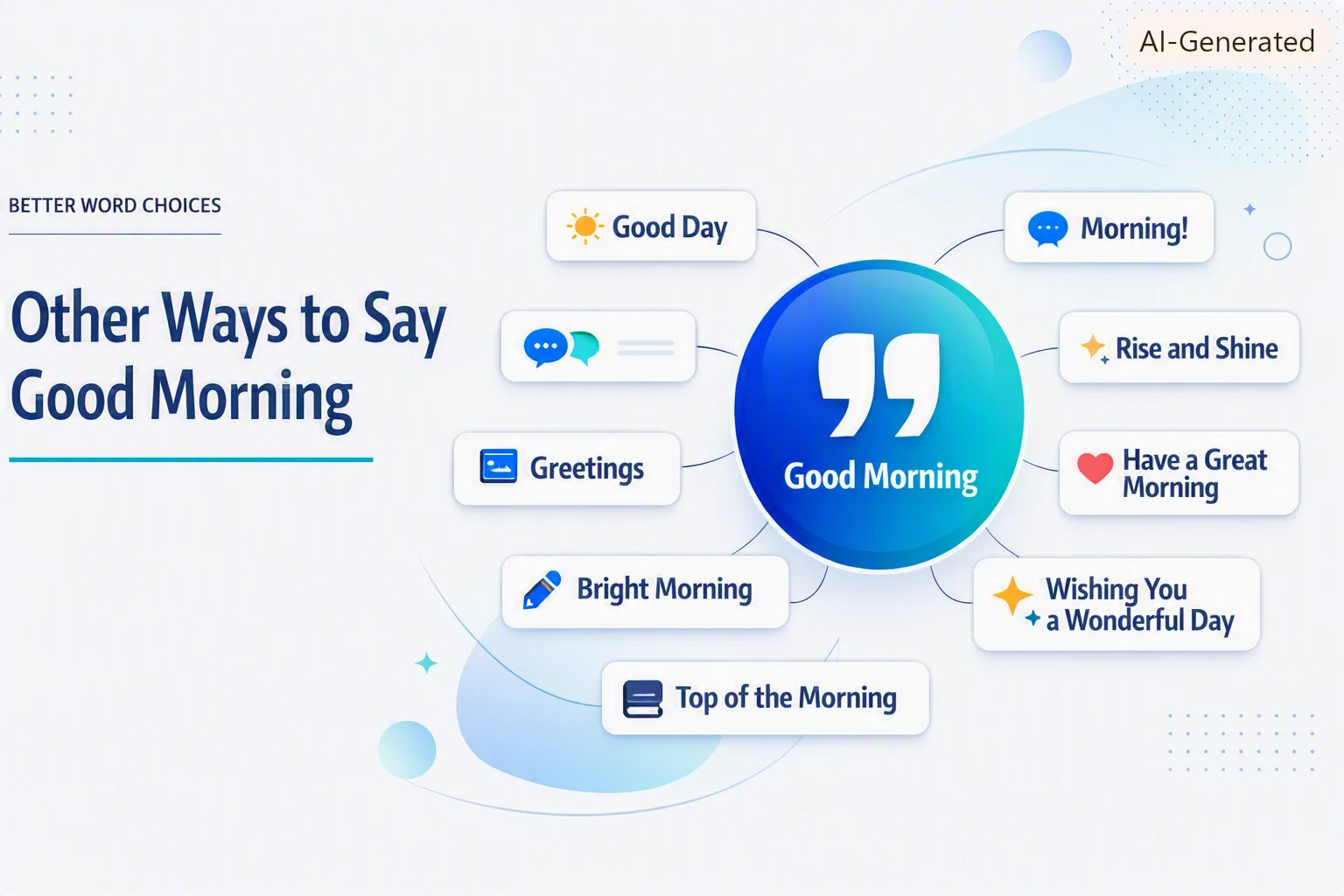
Morning! – Rise and shine! – Top of the morning to you! – Good day! – Greetings!
“Good morning” is one of the first phrases English learners master. It is friendly, polite, and widely understood. But using the same greeting every single day can make your speech feel predictable and your vocabulary limited. Learning alternatives to good morning will help you sound more fluent, confident, and natural in different situations.
The key to great communication is knowing when and how to adapt your language. Whether you are writing a professional email, chatting with friends, or greeting your boss, having a range of other ways to say good morning at your disposal allows you to express excitement in English appropriately. This guide gives you 30 powerful alternatives to enrich your daily greetings.
Quick Categories
Formal Alternatives to “Good Morning”
- Good day to you
- Wishing you a pleasant morning
- I hope your morning is off to a great start
- A very good morning to you
- Greetings and salutations
Casual Alternatives
- Morning!
- G’morning!
- Hey there!
- Howdy!
- What’s up?
Professional Alternatives
- Good morning, everyone
- I trust you’re having a productive morning
- Wishing you a bright and successful day
- Good morning, team
- Hope your day is progressing smoothly
Informal Expressions
- Rise and shine!
- Wakey, wakey!
- Top of the morning to you!
- Hello, sunshine!
- Hey, sleepyhead!
💡 Pro Tip: Match your greeting to your audience. Use formal alternatives with supervisors and clients; save casual and informal expressions for friends, family, and close colleagues.
Common Mistakes
1. Using “goodmorning” as one word
2. Overusing casual greetings in professional emails
- ❌ Hey! Just following up on the report.
- ✅ Good morning. I hope you’re having a productive day. I’m following up on the report.
- Casual greetings can undermine professionalism in writing.
3. Using “Rise and shine” with someone who is clearly not a morning person
- ❌ Rise and shine! (to a tired colleague at 7 AM)
- ✅ Good morning. Hope you had a good rest.
- Energetic greetings can feel insensitive to those who struggle in the morning.
4. Forgetting to adjust for time zones
- ❌ Good morning! (sent at 8 PM to someone in another country)
- ✅ Good morning! I know it’s evening where you are, but I hope your day went well.
- Time-sensitive greetings require awareness of the recipient’s location.
5. Using overly affectionate phrases with strangers
- ❌ Good morning, sunshine! (to a new client)
- ✅ Good morning. It’s a pleasure to meet you.
- Intimate greetings can make unfamiliar people uncomfortable.
What Does “Good Morning” Mean?
“Good morning” is a greeting used when meeting someone during the early part of the day, typically from sunrise until noon. It expresses goodwill, acknowledgment, and a positive start to the day.
Example: Good morning, everyone. Let’s begin today’s meeting.
Grammatically, “good” functions as an adjective modifying the noun “morning.” The phrase can stand alone as a greeting or appear within a larger sentence.
When to Use “Good Morning”
- Spoken: In person, on the phone, or in video calls
- Written: Emails, messages, letters, and notes
- Formal: Business meetings, client interactions, professional correspondence
- Informal: Friends, family, casual social settings
- Time-bound: Only before noon (after 12 PM, switch to “good afternoon”)
Is It Professional or Polite to Say “Good Morning”?
Polite? ✔️ Yes – It is a universally accepted courteous greeting.
Professional? ✔️ Yes – It works in almost every workplace setting.
Example in a business context: Good morning, Mr. Chen. Thank you for taking the time to meet with me today.
While “good morning” is both polite and professional, using it repeatedly can feel monotonous. Expanding your repertoire shows linguistic confidence and cultural awareness.
Pros and Cons of Using “Good Morning”
Pros:
- Simple and universally understood
- Friendly and approachable tone
- Appropriate for nearly all situations
- Easy for English learners to use correctly
Cons:
- Can sound repetitive or uninspired
- Too neutral for expressing genuine warmth
- Limited emotional range
- May feel overly formal in very casual settings
Other Ways to Say Good Morning
These alternatives will help you sound more fluent, confident, and natural in different situations. Use them according to tone, context, and audience to express excitement, admiration, or approval.
Formal & Professional Alternatives
1. Phrase: Good day to you
- Meaning: A formal and polite morning greeting.
- Explanation: This phrase carries a slightly old-fashioned but respectful tone.
- Example Sentence: Good day to you, Professor. I hope you are well.
- Best Use: Formal letters
- Worst Use: Text messages
- Tone: Respectful, polished
- Context Variability: Professional (emails, letters) / Formal spoken
2. Phrase: Wishing you a pleasant morning
- Meaning: A warm, formal wish for someone’s morning.
- Explanation: Shows consideration and politeness without being overly familiar.
- Example Sentence: Wishing you a pleasant morning. I look forward to our discussion later.
- Best Use: Business emails
- Worst Use: Casual chats
- Tone: Warm, courteous
- Context Variability: Professional (email) / Formal spoken
3. Phrase: I hope your morning is off to a great start
- Meaning: A sincere wish that someone’s day is beginning well.
- Explanation: This phrase acknowledges the start of the day while showing care.
- Example Sentence: I hope your morning is off to a great start. Shall we review the agenda?
- Best Use: Work meetings
- Worst Use: Quick greetings
- Tone: Caring, professional
- Context Variability: Professional / Formal
4. Phrase: A very good morning to you
- Meaning: An emphatic and polite morning greeting.
- Explanation: Adding “very” elevates the formality and warmth.
- Example Sentence: A very good morning to you, Dr. Patel. We appreciate your time.
- Best Use: Formal introductions
- Worst Use: Casual settings
- Tone: Elegant, formal
- Context Variability: Formal spoken / Written
5. Phrase: Good morning, everyone
- Meaning: A polite greeting directed at a group.
- Explanation: Inclusive and professional for team settings.
- Example Sentence: Good morning, everyone. Let’s get started with today’s update.
- Best Use: Team meetings
- Worst Use: One-on-one conversations
- Tone: Inclusive, professional
- Context Variability: Professional / Group settings
6. Phrase: I trust you’re having a productive morning
- Meaning: A professional assumption that someone’s morning is going well.
- Explanation: Shows confidence and respect for the other person’s work.
- Example Sentence: I trust you’re having a productive morning. Here is the file you requested.
- Best Use: Work emails
- Worst Use: Friends
- Tone: Professional, polished
- Context Variability: Professional (written/spoken)
7. Phrase: Wishing you a bright and successful day
- Meaning: A forward-looking wish for someone’s entire day.
- Explanation: Combines a morning greeting with encouragement for the day ahead.
- Example Sentence: Wishing you a bright and successful day. Let’s catch up later.
- Best Use: Professional messages
- Worst Use: Texting friends
- Tone: Optimistic, professional
- Context Variability: Professional / Formal
8. Phrase: Greetings and salutations
- Meaning: A very formal, almost theatrical way to say hello.
- Explanation: Often used humorously or in very formal writing.
- Example Sentence: Greetings and salutations, esteemed colleagues.
- Best Use: Formal speeches
- Worst Use: Everyday conversation
- Tone: Grand, formal
- Context Variability: Formal / Playful formal
9. Phrase: I hope your day is beginning smoothly
- Meaning: A polite wish for a trouble-free start to the day.
- Explanation: Shows attention to the other person’s experience.
- Example Sentence: I hope your day is beginning smoothly. Please let me know if you need assistance.
- Best Use: Client emails
- Worst Use: Casual settings
- Tone: Attentive, professional
- Context Variability: Professional (written)
10. Phrase: Pleasant morning to you
- Meaning: A concise, formal morning greeting.
- Explanation: Shorter than “wishing you a pleasant morning” but equally polite.
- Example Sentence: Pleasant morning to you. I’ll send the report by noon.
- Best Use: Formal notes
- Worst Use: Social media
- Tone: Polite, formal
- Context Variability: Formal / Professional
Casual & Friendly Alternatives
11. Phrase: Morning!
- Meaning: A shortened, casual version of “good morning.”
- Explanation: Dropping “good” makes it sound relaxed and friendly.
- Example Sentence: Morning! How did you sleep?
- Best Use: Friends
- Worst Use: Formal emails
- Tone: Casual, friendly
- Context Variability: Casual spoken / Texting
12. Phrase: G’morning!
- Meaning: A very casual, spoken contraction.
- Explanation: Commonly used in speech but avoid in formal writing.
- Example Sentence: G’morning! Coffee’s ready.
- Best Use: Family
- Worst Use: Business writing
- Tone: Relaxed, informal
- Context Variability: Casual spoken
13. Phrase: Hey there!
- Meaning: An informal greeting that works any time of day.
- Explanation: Friendly and approachable without being overly familiar.
- Example Sentence: Hey there! Ready for the big presentation?
- Best Use: Colleagues
- Worst Use: Senior executives
- Tone: Friendly, warm
- Context Variability: Casual / Semi-formal
14. Phrase: Howdy!
- Meaning: A casual greeting associated with American English.
- Explanation: Regional and informal, best used with people you know.
- Example Sentence: Howdy! Great to see you this morning.
- Best Use: Informal settings
- Worst Use: Formal writing
- Tone: Folksy, casual
- Context Variability: Casual / Regional
15. Phrase: What’s up?
- Meaning: A very informal greeting asking how someone is.
- Explanation: Popular among younger speakers and in casual contexts.
- Example Sentence: What’s up? How was your weekend?
- Best Use: Friends
- Worst Use: Professional settings
- Tone: Casual, modern
- Context Variability: Casual spoken / Texting
16. Phrase: Hello there!
- Meaning: A friendly and slightly playful greeting.
- Explanation: Adds warmth and personality to a simple hello.
- Example Sentence: Hello there! I didn’t expect to see you this morning.
- Best Use: Acquaintances
- Worst Use: Formal meetings
- Tone: Warm, cheerful
- Context Variability: Casual / Semi-formal
17. Phrase: Hi, good morning!
- Meaning: A friendly combination of two greetings.
- Explanation: Adds extra warmth and friendliness.
- Example Sentence: Hi, good morning! How are you today?
- Best Use: Friendly interactions
- Worst Use: Formal emails
- Tone: Warm, friendly
- Context Variability: Casual / Semi-formal
18. Phrase: Happy morning!
- Meaning: A cheerful wish for a happy start to the day.
- Explanation: Similar to “happy birthday” but for mornings.
- Example Sentence: Happy morning! Hope your day is full of smiles.
- Best Use: Friends and family
- Worst Use: Professional writing
- Tone: Cheerful, upbeat
- Context Variability: Casual
Informal & Playful Alternatives
19. Phrase: Rise and shine!
- Meaning: An energetic call to wake up and start the day.
- Explanation: Playful and motivating, often used to wake someone.
- Example Sentence: Rise and shine! It’s a beautiful day outside.
- Best Use: Waking someone
- Worst Use: Professional settings
- Tone: Energetic, playful
- Context Variability: Casual / Family
20. Phrase: Top of the morning to you!
- Meaning: A classic, cheerful morning greeting.
- Explanation: Old-fashioned and often used humorously.
- Example Sentence: Top of the morning to you! Ready for a great day?
- Best Use: Playful greetings
- Worst Use: Serious meetings
- Tone: Cheerful, charming
- Context Variability: Casual / Playful
21. Phrase: Wakey, wakey!
- Meaning: A playful way to tell someone to wake up.
- Explanation: Often used with children or in humorous contexts.
- Example Sentence: Wakey, wakey! Breakfast is ready.
- Best Use: Family
- Worst Use: Professional
- Tone: Playful, lighthearted
- Context Variability: Casual / Family
22. Phrase: Hello, sunshine!
- Meaning: An affectionate greeting for someone who brightens your day.
- Explanation: Warm and endearing, best for close relationships.
- Example Sentence: Hello, sunshine! You look great this morning.
- Best Use: Partners, close friends
- Worst Use: Strangers
- Tone: Affectionate, warm
- Context Variability: Casual / Romantic
23. Phrase: Hey, sleepyhead!
- Meaning: A teasing greeting for someone who is still tired.
- Explanation: Playful and affectionate, but can seem rude with strangers.
- Example Sentence: Hey, sleepyhead! Time to get up.
- Best Use: Friends, family
- Worst Use: Professional
- Tone: Teasing, affectionate
- Context Variability: Casual
24. Phrase: Bright and early!
- Meaning: Acknowledging that someone is up early.
- Explanation: Often used to comment on the time.
- Example Sentence: Bright and early! You’re ahead of everyone today.
- Best Use: Casual greetings
- Worst Use: Formal
- Tone: Cheerful, observant
- Context Variability: Casual
25. Phrase: Good morning, beautiful!
- Meaning: A romantic, complimentary greeting.
- Explanation: Reserved for partners or people you are very close to.
- Example Sentence: Good morning, beautiful! I hope you have an amazing day.
- Best Use: Romantic partners
- Worst Use: Professional
- Tone: Romantic, affectionate
- Context Variability: Romantic / Intimate
Unique & Creative Alternatives
26. Phrase: What a glorious morning!
- Meaning: Expressing admiration for the morning itself.
- Explanation: Shows enthusiasm and appreciation for the day.
- Example Sentence: What a glorious morning! The sun is shining perfectly.
- Best Use: Nature lovers
- Worst Use: Indoor meetings
- Tone: Enthusiastic, appreciative
- Context Variability: Casual / Observational
27. Phrase: Welcome to a new day!
- Meaning: Greeting someone with a focus on new beginnings.
- Explanation: Inspiring and forward-looking.
- Example Sentence: Welcome to a new day! Let’s make it count.
- Best Use: Motivational contexts
- Worst Use: Formal
- Tone: Inspiring, optimistic
- Context Variability: Casual / Motivational
28. Phrase: It’s a lovely day, isn’t it?
- Meaning: A conversational morning opener.
- Explanation: Invites agreement and starts a dialogue.
- Example Sentence: It’s a lovely day, isn’t it? Perfect for a walk.
- Best Use: Small talk
- Worst Use: Professional meetings
- Tone: Conversational, pleasant
- Context Variability: Casual / Social
29. Phrase: Another beautiful morning!
- Meaning: Appreciating the beauty of the new day.
- Explanation: Positive and uplifting.
- Example Sentence: Another beautiful morning! I love this time of day.
- Best Use: Social settings
- Worst Use: Professional
- Tone: Appreciative, cheerful
- Context Variability: Casual
30. Phrase: Salutations!
- Meaning: A formal, slightly old-fashioned greeting.
- Explanation: Often used humorously or in very formal contexts.
- Example Sentence: Salutations! I hope this message finds you well.
- Best Use: Formal letters
- Worst Use: Casual chats
- Tone: Formal, traditional
- Context Variability: Formal / Playful formal
“The right tone makes your English sound professional and confident.”
“Variety in greetings is the first sign of a confident English speaker.”
Mini Quiz / Self-Check
1. Which greeting is most appropriate for an email to a new client?
A) Hey there!
B) Good day to you
C) Rise and shine!
D) What’s up?
Answer: B) Good day to you
Explanation: “Good day to you” is polite, professional, and appropriate for first-time business communication. The other options are too casual or informal for a new client.
2. You are texting a close friend at 8 AM. Which option fits best?
A) I trust you’re having a productive morning
B) Greetings and salutations
C) Morning! How’d you sleep?
D) Wishing you a pleasant morning
Answer: C) Morning! How’d you sleep?
Explanation: This greeting is warm, natural, and conversational, making it perfect for texting a close friend.
3. Which greeting would be inappropriate for a formal business meeting?
A) Good morning, everyone
B) Top of the morning to you!
C) A very good morning to you
D) I hope your morning is off to a great start
Answer: B) Top of the morning to you!
Explanation: Although friendly, “Top of the morning to you!” is highly informal and has an old-fashioned, playful tone that doesn’t suit most formal business settings.
4. You are sending a professional email to your supervisor. Which phrase is most suitable?
A) Hey, sleepyhead!
B) What a glorious morning!
C) Good morning. I hope you’re having a productive day.
D) Howdy!
Answer: C) Good morning. I hope you’re having a productive day.
Explanation: This greeting is respectful, professional, and appropriate for workplace communication with a supervisor.
Comparison Table: Top 10 Alternatives
| Phrase | Tone | Best Use |
|---|---|---|
| Good morning, everyone | Professional | Team meetings |
| Wishing you a pleasant morning | Formal, courteous | Business emails |
| Morning! | Casual, friendly | Friends and family |
| Rise and shine! | Energetic, playful | Waking someone up |
| Top of the morning to you! | Cheerful, charming | Playful greetings |
| I hope your morning is off to a great start | Caring, professional | Work settings |
| Hello, sunshine! | Affectionate, warm | Romantic partners |
| Good day to you | Formal, polished | Formal letters |
| Hey there! | Friendly, warm | Colleagues |
| What a glorious morning! | Enthusiastic, appreciative | Social settings |
FAQs
1. What are other ways to say good morning in a professional email?
Use phrases like “Good morning, everyone,” “Wishing you a pleasant morning,” or “I hope your morning is off to a great start”. These maintain professionalism while adding warmth.
2. Is “Morning!” acceptable in business writing?
No. “Morning!” is a casual contraction best reserved for spoken conversations with people you know well. Avoid it in formal emails and professional documents.
3. Can I say “good morning” after 12 PM?
No. “Good morning” is only appropriate until noon. After 12 PM, switch to “good afternoon.”
4. What is the most formal way to say good morning?
“Good day to you” and “Greetings and salutations” are among the most formal options. They are best used in official correspondence or formal introductions.
5. How do I choose the right morning greeting?
Consider your audience, the setting, and your relationship with the person. Use formal alternatives for professional contexts, casual ones for friends, and playful ones for family and close colleagues.
Conclusion
Learning alternatives to good morning transforms your English from basic to brilliant. A varied vocabulary allows you to match your tone to any situation whether you need to sound professional, casual, warm, or playful. The right greeting sets the stage for every conversation that follows.
Practice using a few new phrases each week. Pay attention to how native speakers greet each other in different settings. With consistent effort, you will develop the confidence to choose the perfect morning greeting every time. Remember: the goal is not just to say “good morning” differently it is to say it better.
Read More Related Articles:
- Other Ways to Say “From” in a Letter | For a More Professional Sign-Off In 2026
- Other Ways to Say Be Safe | Upgrade Your Farewells In 2026
- Other Ways to Say Feel Free | Formal Writing and Business Communication In 2026

Victoria Hughes is a content writer dedicated to making communication clearer and more effective. Through TextsResponse.com, she shares practical insights and thoughtfully crafted response ideas that help readers express themselves with confidence.