Quick Answer
If you want fresh ways to say looking forward to seeing you, try these five natural alternatives: can’t wait to see you, excited to meet you, see you soon, eagerly anticipating our meeting, or counting down the days. Each one carries a slightly different tone, so choose based on whether your message is casual, warm, or formal.
Looking forward to seeing you is one of the most common closing phrases in English, used in emails, texts, and conversations to express anticipation. It signals warmth, interest, and enthusiasm about an upcoming meeting, event, or reunion.
People use this phrase in job interviews, business emails, family messages, and casual chats. However, repeating the same expression can make your writing sound flat or generic. Learning alternatives to looking forward to seeing you helps you sound more fluent, natural, and emotionally precise.
Knowing how to express excitement in English with variety also builds confidence. It shows that you understand tone, audience, and context, three skills that separate intermediate speakers from advanced, professional communicators.
The right tone makes your English sound professional and confident.
Quick Categories
Formal Alternatives to “Looking Forward to Seeing You”
- I look forward to our meeting
- I anticipate our upcoming discussion with interest
- I await our meeting with pleasure
- It will be a pleasure to meet you
Pro Tips Box: Use formal alternatives in emails to clients, employers, or senior colleagues. Pair them with a polite closing line like “Best regards” for a polished tone.
Casual Alternatives
- Can’t wait to see you
- So excited to catch up
- See you soon
- This is going to be fun
Pro Tips Box: Casual phrases work best with friends and family. Keep them short and add an exclamation mark to sound genuinely enthusiastic.
Professional Alternatives
- I look forward to connecting with you
- Excited to move forward with this meeting
- Looking forward to our collaboration
- I appreciate the opportunity to meet soon
Pro Tips Box: Professional reaction phrases work well in follow-up emails after interviews or networking events. Keep them concise and action-oriented.
Informal Expressions
- Counting down the days
- Can’t stop thinking about it
- This is gonna be great
- Super stoked to see you
Pro Tips Box: Informal expressions in English suit texts and social media, not workplace emails. Save them for close relationships.
“Tone is the difference between sounding robotic and sounding real.”
Common Mistakes
- Overusing the exact phrase repeatedly Example: “Looking forward to seeing you. Looking forward to seeing you soon.” (Repetition weakens impact.)
- Using informal phrases in business emails Example: “Can’t wait to see you!” sent to a client instead of a colleague.
- Mismatching tone with context Example: “I anticipate our upcoming discussion with interest” texted to a close friend sounds stiff.
- Forgetting to specify time or event Example: “Looking forward to seeing you” without mentioning when or where.
- Grammar errors with tense Example: “I am looking forward to see you” (incorrect gerund usage; should be “seeing”).
What Does “Looking Forward to Seeing You” Mean?
Definition: This phrase expresses positive anticipation about a future meeting or event with a specific person.
Grammar note: The phrase uses the gerund form after “looking forward to,” since “to” here functions as a preposition, not part of an infinitive. Correct usage is “seeing,” not “see.”
Example Sentence: “I’m looking forward to seeing you at the conference next week.”
When to Use “Looking Forward to Seeing You”
- Before a scheduled meeting, interview, or event
- In email sign-offs and closing lines
- When confirming plans with friends or family
- After making travel or reunion arrangements
Spoken vs Written
- Spoken: Often shortened to “Looking forward to it” or “Can’t wait.”
- Written: Typically kept in full form, especially in emails and letters.
Formal vs Informal
- Formal: Used in professional correspondence, interviews, and business closings.
- Informal: Used in texts, social messages, and casual conversations.
Is It Professional or Polite to Say “Looking Forward to Seeing You”?
This phrase is polite in almost every context, but its professionalism depends on the setting. In business writing, it works well as a closing line, though more formal variations sound sharper in high-stakes communication.
Business-style example: “I look forward to seeing you at Thursday’s board meeting to discuss the quarterly results.”
Polite? Yes Professional? Yes (in most standard business contexts)
Pros and Cons of Using “Looking Forward to Seeing You”
Pros
- Simple and natural
- Friendly tone
- Common usage across contexts
- Easy to understand
Cons
- Can feel repetitive if overused
- Sounds generic in creative or personal writing
- Limited emotional range
- Not always specific enough for formal invitations
“Repetition is the enemy of memorable communication.”
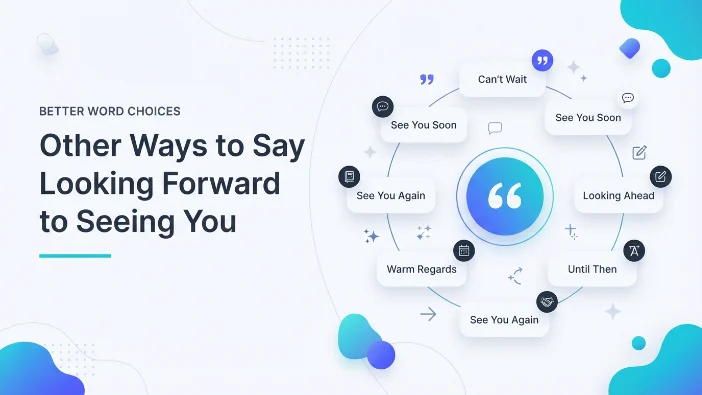
Other Ways to Say Looking Forward to Seeing You
These alternatives will help you sound more fluent, confident, and natural in different situations. Use them according to tone, context, and audience to express excitement, admiration, or approval.
1. Can’t Wait to See You
Meaning: Expresses strong excitement about seeing someone soon.
Explanation: A warm, informal phrase commonly used with friends, family, and romantic partners.
Example Sentence: “Can’t wait to see you this weekend!”
Best Use: Friends, family, loved ones
Worst Use: Formal business emails
Tone: Warm, enthusiastic, casual
Context Variability: Casual, spoken
2. Excited to Meet You
Meaning: Shows enthusiasm about meeting someone, especially for the first time.
Explanation: Friendly enough for networking while remaining professional.
Example Sentence: “I’m excited to meet you during Monday’s kickoff meeting.”
Best Use: Networking, interviews, introductions
Worst Use: Highly formal correspondence
Tone: Friendly, professional
Context Variability: Professional, spoken
3. See You Soon
Meaning: A simple way to express that you’ll meet shortly.
Explanation: Short, natural, and suitable for everyday communication.
Example Sentence: “Thanks again—see you soon!”
Best Use: Texts, casual emails
Worst Use: Formal proposals
Tone: Friendly, relaxed
Context Variability: Casual, professional
4. I Am Eagerly Anticipating Our Meeting
Meaning: Expresses formal anticipation for an upcoming meeting.
Explanation: A polished phrase commonly used in business communication.
Example Sentence: “I am eagerly anticipating our meeting next Tuesday.”
Best Use: Business emails
Worst Use: Casual conversations
Tone: Formal, polished
Context Variability: Professional
5. I’m Counting Down the Days
Meaning: Shows growing excitement as an event approaches.
Explanation: Highlights emotional anticipation for an important occasion.
Example Sentence: “I’m counting down the days until your visit.”
Best Use: Personal relationships
Worst Use: Business communication
Tone: Emotional, informal
Context Variability: Casual, spoken
6. I Look Forward to Connecting with You
Meaning: Expresses professional anticipation for future interaction.
Explanation: Frequently used in networking and business communication.
Example Sentence: “I look forward to connecting with you at the conference.”
Best Use: Networking, professional emails
Worst Use: Casual texts
Tone: Professional, courteous
Context Variability: Professional
7. I Await Our Meeting with Pleasure
Meaning: Politely expresses anticipation for an upcoming meeting.
Explanation: A refined phrase suited to formal correspondence.
Example Sentence: “I await our meeting with pleasure next month.”
Best Use: Formal letters, official correspondence
Worst Use: Everyday conversation
Tone: Elegant, formal
Context Variability: Professional
8. This Is Going to Be Fun
Meaning: Expresses excitement about an enjoyable upcoming event.
Explanation: A playful phrase perfect for informal plans.
Example Sentence: “This is going to be fun—see you Friday!”
Best Use: Friends, casual outings
Worst Use: Business meetings
Tone: Playful, informal
Context Variability: Casual, spoken
9. I’m So Excited to Catch Up
Meaning: Shows enthusiasm about reconnecting with someone.
Explanation: Ideal for seeing friends or family after some time apart.
Example Sentence: “I’m so excited to catch up with you next week!”
Best Use: Reunions, old friends
Worst Use: First-time business meetings
Tone: Warm, personal
Context Variability: Casual
10. It Will Be a Pleasure to Meet You
Meaning: A respectful way to express anticipation.
Explanation: Frequently used before interviews or professional introductions.
Example Sentence: “It will be a pleasure to meet you on Thursday.”
Best Use: Interviews, business introductions
Worst Use: Casual conversations
Tone: Formal, respectful
Context Variability: Professional
11. I Can’t Stop Thinking About It
Meaning: Shows strong excitement about an upcoming event.
Explanation: Conveys emotional anticipation.
Example Sentence: “I can’t stop thinking about seeing you this summer.”
Best Use: Close relationships
Worst Use: Workplace emails
Tone: Emotional, informal
Context Variability: Casual
12. Looking Forward to Our Collaboration
Meaning: Expresses enthusiasm for working together.
Explanation: Ideal when discussing projects or partnerships.
Example Sentence: “Looking forward to our collaboration on this project.”
Best Use: Business partnerships
Worst Use: Personal conversations
Tone: Professional, positive
Context Variability: Professional
13. Excited to Move Forward with This Meeting
Meaning: Shows enthusiasm about the next step in a process.
Explanation: Common in follow-up emails after initial discussions.
Example Sentence: “I’m excited to move forward with this meeting next week.”
Best Use: Follow-up emails
Worst Use: Informal texting
Tone: Professional, confident
Context Variability: Professional
14. I Appreciate the Opportunity to Meet Soon
Meaning: Combines gratitude with anticipation.
Explanation: Appropriate after receiving a meeting invitation.
Example Sentence: “I appreciate the opportunity to meet soon and discuss the position.”
Best Use: Job interviews
Worst Use: Casual plans
Tone: Grateful, formal
Context Variability: Professional
15. I’m Super Stoked to See You
Meaning: Shows high-energy excitement.
Explanation: A slang expression popular among close friends.
Example Sentence: “I’m super stoked to see you at the concert!”
Best Use: Friends, social events
Worst Use: Professional settings
Tone: Energetic, casual
Context Variability: Casual, spoken
16. This Is Gonna Be Great
Meaning: Expresses confidence that an event will be enjoyable.
Explanation: A relaxed and conversational expression.
Example Sentence: “This is gonna be great. See you Saturday!”
Best Use: Friends, casual texts
Worst Use: Business communication
Tone: Casual, upbeat
Context Variability: Spoken
17. I’m Anticipating Our Reunion
Meaning: Expresses excitement about meeting again.
Explanation: Works well for family reunions and long-awaited visits.
Example Sentence: “I’ve been anticipating our reunion for months.”
Best Use: Family gatherings
Worst Use: First business meetings
Tone: Warm, sincere
Context Variability: Casual, professional
18. I’m Thrilled at the Thought of Seeing You
Meaning: Shows heartfelt excitement about meeting someone.
Explanation: Adds emotional warmth to your message.
Example Sentence: “I’m thrilled at the thought of seeing you again.”
Best Use: Personal letters
Worst Use: Formal business emails
Tone: Expressive, warm
Context Variability: Casual
19. Looking Forward to Catching Up in Person
Meaning: Expresses excitement about meeting face-to-face.
Explanation: Especially useful after virtual conversations.
Example Sentence: “Looking forward to catching up in person next week.”
Best Use: Friends, coworkers
Worst Use: Formal written reports
Tone: Friendly, clear
Context Variability: Casual, professional
20. I’m Eager to See You Again
Meaning: Politely expresses anticipation for another meeting.
Explanation: Suitable for both personal and professional communication.
Example Sentence: “I’m eager to see you again next month.”
Best Use: General correspondence
Worst Use: Very casual texting
Tone: Sincere, neutral
Context Variability: Casual, professional
21. I’m Really Looking Forward to It
Meaning: Adds extra enthusiasm to your anticipation.
Explanation: A natural variation of the original phrase.
Example Sentence: “I’m really looking forward to it. See you then!”
Best Use: Emails, texts
Worst Use: Highly formal documents
Tone: Enthusiastic, friendly
Context Variability: Casual, spoken
22. I’m Delighted at the Prospect of Meeting You
Meaning: Expresses elegant and formal anticipation.
Explanation: Often used in executive or diplomatic communication.
Example Sentence: “I’m delighted at the prospect of meeting you in person.”
Best Use: Executive correspondence
Worst Use: Casual conversation
Tone: Formal, elegant
Context Variability: Professional
23. I Can Hardly Wait
Meaning: Shows intense excitement about something upcoming.
Explanation: A common spoken expression of anticipation.
Example Sentence: “I can hardly wait to see you tomorrow!”
Best Use: Personal conversations
Worst Use: Formal writing
Tone: Excited, casual
Context Variability: Spoken
24. Looking Forward to Our Get-Together
Meaning: Expresses anticipation for a social gathering.
Explanation: Focuses on the event rather than the individual.
Example Sentence: “Looking forward to our get-together this Friday.”
Best Use: Social gatherings
Worst Use: Business meetings
Tone: Casual, friendly
Context Variability: Casual
25. I’m Keen to Meet You
Meaning: Politely expresses enthusiasm about meeting someone.
Explanation: Common in British English and semi-formal communication.
Example Sentence: “I’m keen to meet you and discuss the proposal.”
Best Use: Business emails
Worst Use: Very casual texts
Tone: Polite, professional
Context Variability: Professional
26. I’m Excited for Our Upcoming Visit
Meaning: Shows anticipation for a planned trip or visit.
Explanation: Useful when travel is involved.
Example Sentence: “I’m excited for our upcoming visit next month.”
Best Use: Family visits, travel
Worst Use: Formal reports
Tone: Warm, upbeat
Context Variability: Casual, professional
27. I Anticipate Our Upcoming Discussion with Interest
Meaning: Formally expresses interest in an upcoming conversation.
Explanation: Suitable for academic or corporate settings.
Example Sentence: “I anticipate our upcoming discussion with interest.”
Best Use: Academic and corporate emails
Worst Use: Personal messages
Tone: Formal, analytical
Context Variability: Professional
28. Can’t Wait for Our Catch-Up
Meaning: Shows excitement about reconnecting.
Explanation: A relaxed phrase for friends and acquaintances.
Example Sentence: “Can’t wait for our catch-up this weekend!”
Best Use: Friends, informal plans
Worst Use: Business proposals
Tone: Friendly, relaxed
Context Variability: Casual
29. Looking Forward to Spending Time Together
Meaning: Expresses excitement about sharing quality time.
Explanation: Emphasizes companionship rather than simply meeting.
Example Sentence: “I’m looking forward to spending time together soon.”
Best Use: Family, relationships
Worst Use: Formal business communication
Tone: Warm, personal
Context Variability: Casual
30. I Look Forward to Seeing You at Your Earliest Convenience
Meaning: A courteous and highly formal way to arrange a meeting.
Explanation: Indicates flexibility while maintaining professionalism.
Example Sentence: “I look forward to seeing you at your earliest convenience.”
Best Use: Business scheduling, formal correspondence
Worst Use: Personal messages
Tone: Formal, courteous
Context Variability: Professional
Small word choices shape how sincere and confident you sound.
Fluency isn’t about using bigger words it’s about choosing the right ones for the situation.
Mini Quiz
1. Which phrase is most appropriate for a formal business email?
A) Can’t wait to see you
B) I look forward to connecting with you
C) Super stoked to see you
Answer: B) I look forward to connecting with you — It’s professional, courteous, and widely accepted in business communication.
2. Which phrase is best suited for a text to a close friend?
A) I await our meeting with pleasure
B) Counting down the days
C) I anticipate our upcoming discussion with interest
Answer: B) Counting down the days — It sounds natural, enthusiastic, and friendly in casual conversations.
3. Which sentence is grammatically correct?
A) I am looking forward to see you
B) I am looking forward to seeing you
C) I am look forward to seeing you
Answer: B) I am looking forward to seeing you — The phrase “look forward to” is followed by a gerund (-ing form), making “seeing” the correct choice.
4. Which phrase works best in a job interview follow-up email?
A) This is gonna be great
B) I appreciate the opportunity to meet soon
C) Can hardly wait
Answer: B) I appreciate the opportunity to meet soon — It conveys gratitude and professionalism, making it ideal for interview-related communication.
Comparison Table: Top Alternatives
| Phrase | Tone | Best Use |
|---|---|---|
| Can’t wait to see you | Warm, casual | Friends, family |
| Excited to meet you | Friendly, professional | Networking, interviews |
| See you soon | Light, friendly | Texts, casual emails |
| Eagerly anticipating our meeting | Formal, polished | Business emails |
| Counting down the days | Emotional, informal | Personal relationships |
| I look forward to connecting with you | Professional, neutral | Networking emails |
| It will be a pleasure to meet you | Formal, respectful | Interviews, formal intros |
| Looking forward to our collaboration | Professional, positive | Business partnerships |
| I’m keen to meet you | Polite, professional | Business, semi-formal emails |
| I look forward to seeing you at your earliest convenience | Formal, courteous | Formal business scheduling |
FAQs
Is “looking forward to seeing you” formal or informal?
It works in both formal and informal contexts, making it one of the most versatile English phrases.
What is a more formal way to say “looking forward to seeing you”?
“I anticipate our upcoming meeting with interest” or “It will be a pleasure to meet you” sound more formal.
What is a casual way to say “looking forward to seeing you”?
“Can’t wait to see you” or “See you soon” work well in casual conversations.
Is it grammatically correct to say “looking forward to see you”?
No. The correct form is “looking forward to seeing you,” since “to” acts as a preposition requiring a gerund.
Why should I learn alternatives to “looking forward to seeing you”?
Using varied expressions improves fluency, prevents repetition, and helps you match tone to context accurately.
Conclusion
Learning multiple other ways to say looking forward to seeing you strengthens both your spoken and written English. It allows you to match your tone precisely, whether you are writing a formal business email or texting a close friend.
Practice these alternatives daily by using one new phrase in your conversations or emails each day. Over time, this habit builds natural fluency and helps you sound more confident, polished, and emotionally accurate in every context.
Read More Related Articles:
- Other Ways to Say “Next” in an Essay | Make Every Paragraph Shine In 2026
- Other Ways to Say “Due to the Fact That” | Like a Skilled Writer In 2026
- Other Ways to Say Good | Leave a Stronger Impression In 2026

Henry Walker is an American writer and blogger with a keen interest in communication, language and digital content. At TextsResponse.com, he creates informative and reader-focused resources designed to help people communicate with clarity, confidence and authenticity.