Quick Answer
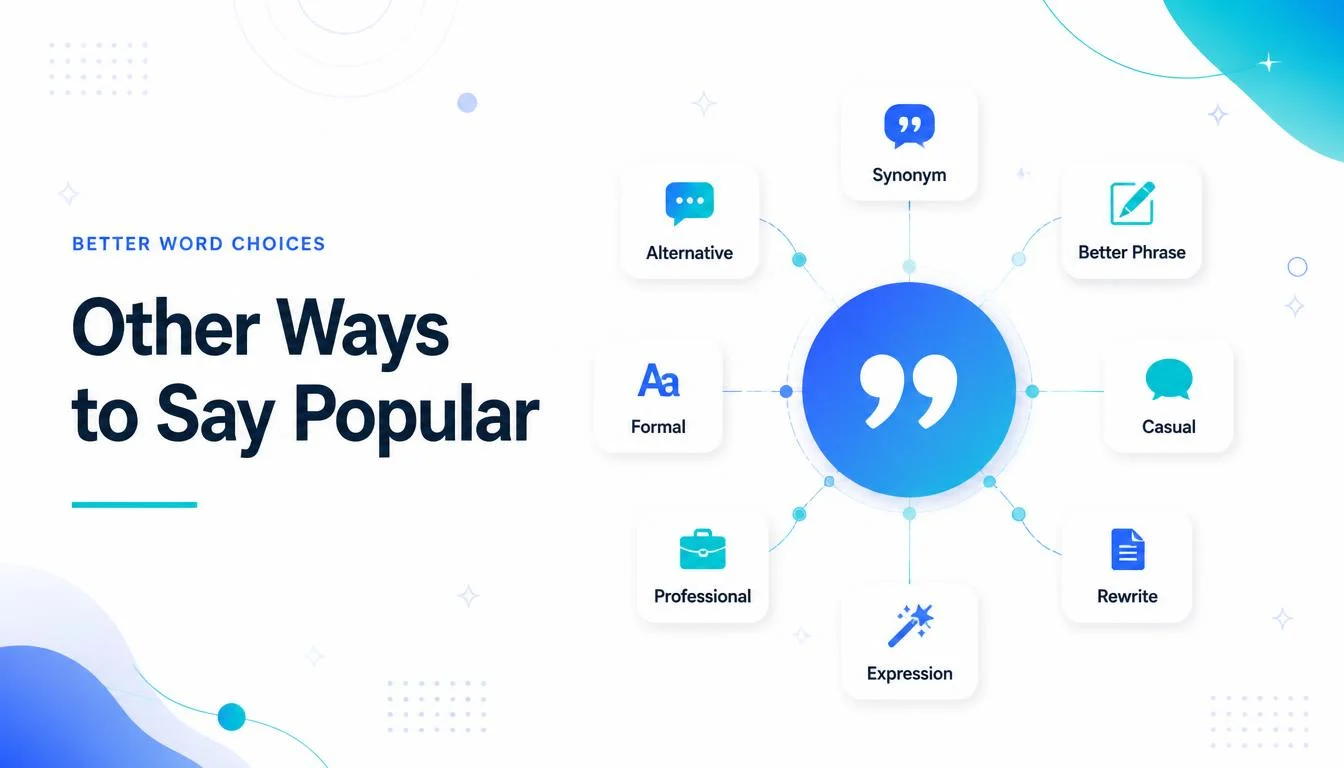
The fastest alternatives to “popular” are widely used, well-liked, in demand, trending, and a crowd favorite. Each phrase carries a slightly different tone, so picking the right one depends on whether you are writing casually, speaking with friends, or communicating in a professional setting.Top 5 alternatives: widely used, well-liked, in demand, trending, crowd favorite
Popular” is one of the most common words in English, used to describe people, products, trends, and ideas that are widely liked or followed. It shows up in casual conversation, marketing copy, academic writing, and everyday small talk, which is exactly why relying on it too often can make your English sound repetitive.
Learning alternatives to “popular” helps you match your tone to your audience. A marketing report might need “in high demand,” while a chat with friends might call for “everyone’s obsessed with it.” Building this range also helps you express excitement in English more naturally, since many alternatives carry stronger emotional energy than the plain word “popular.
Whether you are writing a resume, describing a trending product, or simply telling a friend about your favorite show, having 30 alternatives ready will make your English sound more fluent, confident, and precise.
Formal Alternatives To Popular
Widely Recognized
Used in academic, business, or formal writing to describe something respected across a broad audience.
Well-Established
Suggests long-term popularity and credibility, often used for brands, institutions, or practices.
Highly Regarded
Implies popularity combined with respect and admiration, common in professional reviews.
In High Demand
Describes something many people want, frequently used in business and economic contexts.
Pro Tip: Use formal alternatives in reports, resumes, and emails where credibility matters more than excitement.
Casual Alternatives To Popular
All The Rage
Describes something suddenly popular, especially trends or fashion items.
Everyone’s Talking About It
A conversational way to say something is popular right now.
The Talk Of The Town
Used when something is being widely discussed in a local or social circle.
Blowing Up
Common in casual speech to describe something gaining popularity quickly, especially online.
Pro Tip: Save casual alternatives for texting, social media captions, or relaxed conversations with friends.
Professional Alternatives To Popular
Well-Received
Common in business reviews and feedback to describe positive audience response.
Favored By
Used to describe preference among a specific professional or consumer group.
In Strong Demand
A neutral, data-friendly way to describe popularity in reports and presentations.
Widely Adopted
Best for describing popular tools, methods, or technologies in professional settings.
Pro Tip: Pair professional alternatives with data or context, such as “widely adopted among small businesses,” to sound more credible.
Informal Expressions For Popular
Trending
A modern, informal term describing something currently popular, especially online.
A Crowd Favorite
Describes something well-liked by a group, often used for food, events, or entertainment.
Everyone’s Obsessed With It
An expressive, informal phrase showing strong popularity and excitement.
The It Thing
A casual, slightly playful way to describe whatever is currently most popular.
Pro Tip: Informal expressions work well in blogs, social captions, and everyday conversation, but avoid them in formal writing.
“Casual doesn’t mean careless. Choose informal phrases with intention, not habit.”
Common Mistakes When Using Popular
- Overusing “popular” in every sentence Example mistake: “This popular app is popular because it’s popular with popular users.
- Using casual alternatives in formal writing Example mistake: “This product is all the rage” in a business report.
- Confusing “popular” with “famous” Example mistake: “The scientist is very popular” when “renowned” fits better.
- Using “popular” without context Example mistake: “It’s popular” without saying popular with whom or why.
- Mixing tones in one sentence Example mistake: “The widely adopted software is blowing up right now” mixes formal and informal tone.
What Does Popular Mean
“Popular” is an adjective that describes something liked, followed, or supported by a large number of people. It can describe people, products, ideas, trends, or places.
Grammar note: “Popular” is typically followed by “with” or “among” to specify the group, such as “popular with teenagers” or “popular among professionals.”
Example sentence: The new coffee shop quickly became popular with local students.
When To Use Popular
- Describing trends, products, or media with broad appeal
- Talking about someone liked by many people
- Marketing and advertising language
- Everyday conversation about likes and preferences
Spoken Vs Written
In spoken English, “popular” is often paired with casual boosters like “so” or “really.” In written English, especially formal writing, it is often replaced with more specific alternatives like “widely adopted” or “well-received.”
Formal Vs Informal
Formal writing favors precision, such as “widely recognized” or “in high demand.” Informal speech favors expressive alternatives like “all the rage” or “blowing up.”
Is It Professional Or Polite To Say Popular
“Popular” is polite and neutral, but it is not always precise enough for professional writing.
Business example: “Our product remains popular” is acceptable, but “Our product has seen strong market adoption” sounds more professional.
Polite: Yes Professional: No, in most formal business contexts
Pros And Cons Of Using Popular
Pros
- Simple and natural
- Friendly tone
- Common usage
- Easy to understand
Cons
- Too informal for work
- Overused
- Limited emotional range
- Not suitable for formal writing
Other Ways to Say Popular
These alternatives will help you sound more fluent, confident, and natural in different situations. Use them according to tone, context, and audience to express excitement, admiration, or approval.
1. Phrase: Widely used
Meaning: Used by a large number of people.
Explanation: A neutral, factual way to describe popularity.
Example Sentence: This software is widely used across the industry.
Best Use: reports, presentations
Worst Use: casual chats
Tone: neutral, factual
Context Variability: professional
2. Phrase: Well-liked
Meaning: Generally approved of by people.
Explanation: Focuses on positive feelings rather than numbers.
Example Sentence: She is well-liked by her coworkers.
Best Use: workplace talk
Worst Use: formal reports
Tone: warm, approving
Context Variability: professional, spoken
3. Phrase: In demand
Meaning: Wanted by many people.
Explanation: Common in business and hiring contexts.
Example Sentence: Skilled developers are always in demand.
Best Use: business writing
Worst Use: emotional storytelling
Tone: neutral, direct
Context Variability: professional
4. Phrase: Trending
Meaning: Currently popular, especially online.
Explanation: Modern term tied to social media and news.
Example Sentence: The hashtag started trending overnight.
Best Use: social media
Worst Use: formal essays
Tone: modern, energetic
Context Variability: casual, spoken
5. Phrase: A crowd favorite
Meaning: Something many people enjoy or prefer.
Explanation: Often used for food, events, or entertainment.
Example Sentence: The chocolate cake was a crowd favorite at the party.
Best Use: events, food
Worst Use: technical writing
Tone: friendly, warm
Context Variability: casual
6. Phrase: Widely recognized
Meaning: Known and accepted by many people.
Explanation: Suggests credibility along with popularity.
Example Sentence: The brand is widely recognized worldwide.
Best Use: formal writing
Worst Use: casual speech
Tone: formal, respectful
Context Variability: professional
7. Phrase: All the rage
Meaning: Extremely popular right now.
Explanation: Informal and often tied to trends or fashion.
Example Sentence: Oversized jackets are all the rage this season.
Best Use: fashion talk
Worst Use: business reports
Tone: playful, trendy
Context Variability: casual, spoken
8. Phrase: Highly regarded
Meaning: Respected and admired by many.
Explanation: Adds a layer of respect beyond simple popularity.
Example Sentence: The professor is highly regarded in her field.
Best Use: professional bios
Worst Use: everyday chats
Tone: respectful, formal
Context Variability: professional
9. Phrase: Everyone’s talking about it
Meaning: A topic that is currently getting a lot of attention.
Explanation: Conversational and expressive.
Example Sentence: Everyone’s talking about the new movie release.
Best Use: casual conversation
Worst Use: formal writing
Tone: excited, informal
Context Variability: casual, spoken
10. Phrase: Well-received
Meaning: Responded to positively by an audience.
Explanation: Common in reviews and feedback.
Example Sentence: The presentation was well-received by the board.
Best Use: business feedback
Worst Use: everyday small talk
Tone: professional, positive
Context Variability: professional
11. Phrase: The talk of the town
Meaning: Something everyone is discussing locally.
Explanation: Slightly old-fashioned but still common in speech.
Example Sentence: The new bakery is the talk of the town.
Best Use: local news, gossip
Worst Use: technical reports
Tone: expressive, social
Context Variability: casual, spoken
12. Phrase: In high demand
Meaning: Strongly wanted by many people.
Explanation: Often used in economic or hiring contexts.
Example Sentence: Electric cars are currently in high demand.
Best Use: business, economics
Worst Use: casual storytelling
Tone: formal, direct
Context Variability: professional
13. Phrase: Blowing up
Meaning: Rapidly gaining popularity.
Explanation: Very informal, common in online and youth speech.
Example Sentence: That song is blowing up on social media.
Best Use: informal chats
Worst Use: professional writing
Tone: energetic, informal
Context Variability: casual, spoken
14. Phrase: Favored by
Meaning: Preferred by a specific group.
Explanation: Useful when specifying an audience.
Example Sentence: The strategy is favored by senior managers.
Best Use: business writing
Worst Use: casual talk
Tone: neutral, formal
Context Variability: professional
15. Phrase: The it thing
Meaning: Whatever is currently most fashionable or popular.
Explanation: Playful and trend-focused.
Example Sentence: Minimalist design is the it thing right now.
Best Use: lifestyle content
Worst Use: academic writing
Tone: playful, modern
Context Variability: casual
16. Phrase: Widely adopted
Meaning: Used or accepted by many people or organizations.
Explanation: Common for describing tools, methods, or technology.
Example Sentence: Cloud storage is now widely adopted by businesses.
Best Use: technology, business
Worst Use: emotional writing
Tone: formal, factual
Context Variability: professional
17. Phrase: Everyone’s obsessed with it
Meaning: Something people love intensely.
Explanation: Strongly expressive and emotional.
Example Sentence: Everyone’s obsessed with the new streaming series.
Best Use: casual, entertainment talk
Worst Use: professional emails
Tone: enthusiastic, informal
Context Variability: casual, spoken
18. Phrase: A hit
Meaning: Something very successful and well-liked.
Explanation: Common for entertainment, products, or events.
Example Sentence: The new restaurant was an instant hit.
Best Use: reviews, entertainment
Worst Use: formal reports
Tone: positive, casual
Context Variability: casual, professional
19. Phrase: Sought after
Meaning: Desired by many people.
Explanation: Slightly formal, often used for talent or products.
Example Sentence: She is one of the most sought-after designers today.
Best Use: professional bios
Worst Use: everyday chats
Tone: formal, respectful
Context Variability: professional
20. Phrase: Everyone’s favorite
Meaning: Liked by almost everyone in a group.
Explanation: Warm and inclusive phrasing.
Example Sentence: This dish is everyone’s favorite at family dinners.
Best Use: casual, food talk
Worst Use: technical writing
Tone: warm, friendly
Context Variability: casual
21. Phrase: Well-established
Meaning: Recognized and accepted over time.
Explanation: Implies long-term popularity and reliability.
Example Sentence: The company has a well-established reputation.
Best Use: formal writing
Worst Use: trend-based topics
Tone: formal, steady
Context Variability: professional
22. Phrase: Making waves
Meaning: Attracting attention and gaining popularity.
Explanation: Suggests a strong, noticeable impact.
Example Sentence: The startup is making waves in the tech industry.
Best Use: business, media
Worst Use: formal legal writing
Tone: dynamic, confident
Context Variability: professional, casual
23. Phrase: In vogue
Meaning: Fashionable or popular at the moment.
Explanation: Slightly formal and stylish in tone.
Example Sentence: Vintage furniture is back in vogue.
Best Use: fashion, lifestyle writing
Worst Use: technical reports
Tone: stylish, refined
Context Variability: professional, casual
24. Phrase: A fan favorite
Meaning: Especially liked by a specific audience or fanbase.
Explanation: Common in entertainment and sports.
Example Sentence: The character became a fan favorite in the series.
Best Use: entertainment writing
Worst Use: business reports
Tone: warm, enthusiastic
Context Variability: casual
25. Phrase: Widely praised
Meaning: Complimented by many people.
Explanation: Focuses on positive recognition rather than just popularity.
Example Sentence: The film was widely praised by critics.
Best Use: reviews, formal writing
Worst Use: casual chats
Tone: formal, positive
Context Variability: professional
26. Phrase: Everyone’s into it
Meaning: Many people currently enjoy or follow something.
Explanation: Very casual and conversational.
Example Sentence: Everyone’s into this new fitness trend.
Best Use: informal speech
Worst Use: professional writing
Tone: casual, relaxed
Context Variability: casual, spoken
27. Phrase: Gaining traction
Meaning: Slowly becoming more popular or accepted.
Explanation: Common in business and marketing contexts.
Example Sentence: The idea is gaining traction among investors.
Best Use: business, startups
Worst Use: everyday small talk
Tone: professional, progressive
Context Variability: professional
28. Phrase: A big deal
Meaning: Something considered important or popular.
Explanation: Informal and versatile in meaning.
Example Sentence: This new phone release is a big deal this year.
Best Use: casual conversation
Worst Use: academic writing
Tone: casual, expressive
Context Variability: casual, spoken
29. Phrase: Widely followed
Meaning: Watched or supported by many people.
Explanation: Common for social media, sports, or public figures.
Example Sentence: The athlete is widely followed on social platforms.
Best Use: media, social content
Worst Use: legal writing
Tone: neutral, modern
Context Variability: professional, casual
30. Phrase: Loved by many
Meaning: Appreciated and enjoyed by a large group of people.
Explanation: Warm, simple, and broadly applicable.
Example Sentence: The recipe is loved by many home cooks.
Best Use: lifestyle, food content
Worst Use: technical reports
Tone: warm, simple
Context Variability: casual, professional
“Vocabulary variety is not decoration. It’s clarity in disguise.”
“Every strong communicator has more than one word for popular.
Mini Quiz Self Check
1. Which phrase fits best in a formal business report?
A) All the rage
B) Widely adopted
C) Blowing up
D) Everyone’s obsessed with it
2. Which phrase is most appropriate for casual conversation with friends?
A) Sought after
B) Widely recognized
C) Everyone’s talking about it
D) Well-established
3. Which sentence uses tone correctly?
A) “The strategy is blowing up among senior executives.”
B) “The strategy is widely adopted among senior executives.”
C) “The strategy is the it thing among senior executives.”
D) “The strategy is all the rage among senior executives.”
4. Which phrase best describes long-term, credible popularity?
A) Trending
B) Well-established
C) Blowing up
D) The it thing
Answers
1-B, 2-C, 3-B, 4-B
Comparison Table Top Alternatives
| Phrase | Tone | Best Use |
|---|---|---|
| Widely used | Neutral, factual | Reports |
| Well-liked | Warm, approving | Workplace talk |
| In demand | Direct, professional | Business writing |
| Trending | Modern, energetic | Social media |
| A crowd favorite | Friendly | Events, food |
| Widely recognized | Formal, respectful | Professional bios |
| All the rage | Playful, trendy | Fashion talk |
| Highly regarded | Respectful, formal | Professional writing |
| Well-received | Positive, professional | Business feedback |
| Sought after | Formal, respectful | Career, talent |
FAQs
What is another professional way to say popular?
“Widely adopted” or “well-received” are strong professional alternatives that sound credible in business writing.
What is a casual way to say something is popular?
“All the rage” or “everyone’s talking about it” work well in relaxed, everyday conversation.
Is trending the same as popular?
Trending usually refers to short-term popularity, especially online, while popular can describe lasting appeal.
Can I use popular in a resume?
It is better to use alternatives like “widely recognized” or “well-established” for a more polished, professional tone.
What is the difference between popular and famous?
Popular describes broad appeal or preference, while famous focuses on being widely known, often for achievement.
Conclusion
Learning alternatives to popular gives you more control over tone, precision, and emotion in your English. Instead of repeating the same word, you can choose phrases that fit formal writing, professional communication, or casual conversation with confidence.
Practice using a few new alternatives every day, paying attention to tone and context each time. Over time, this small habit will make your spoken and written English sound noticeably more natural and fluent.
Read More Related Articles:
- Other Ways to Say “I Also” | Smarter Expressions You’ll Love Using In 2026
- Other Ways to Say Hello Everyone | Make Your Greetings More Engaging In 2026
- Other Ways to Say Move Forward | Express Progress Without Repeating Yourself In 2026

Victoria Hughes is a content writer dedicated to making communication clearer and more effective. Through TextsResponse.com, she shares practical insights and thoughtfully crafted response ideas that help readers express themselves with confidence.