Quick Answer
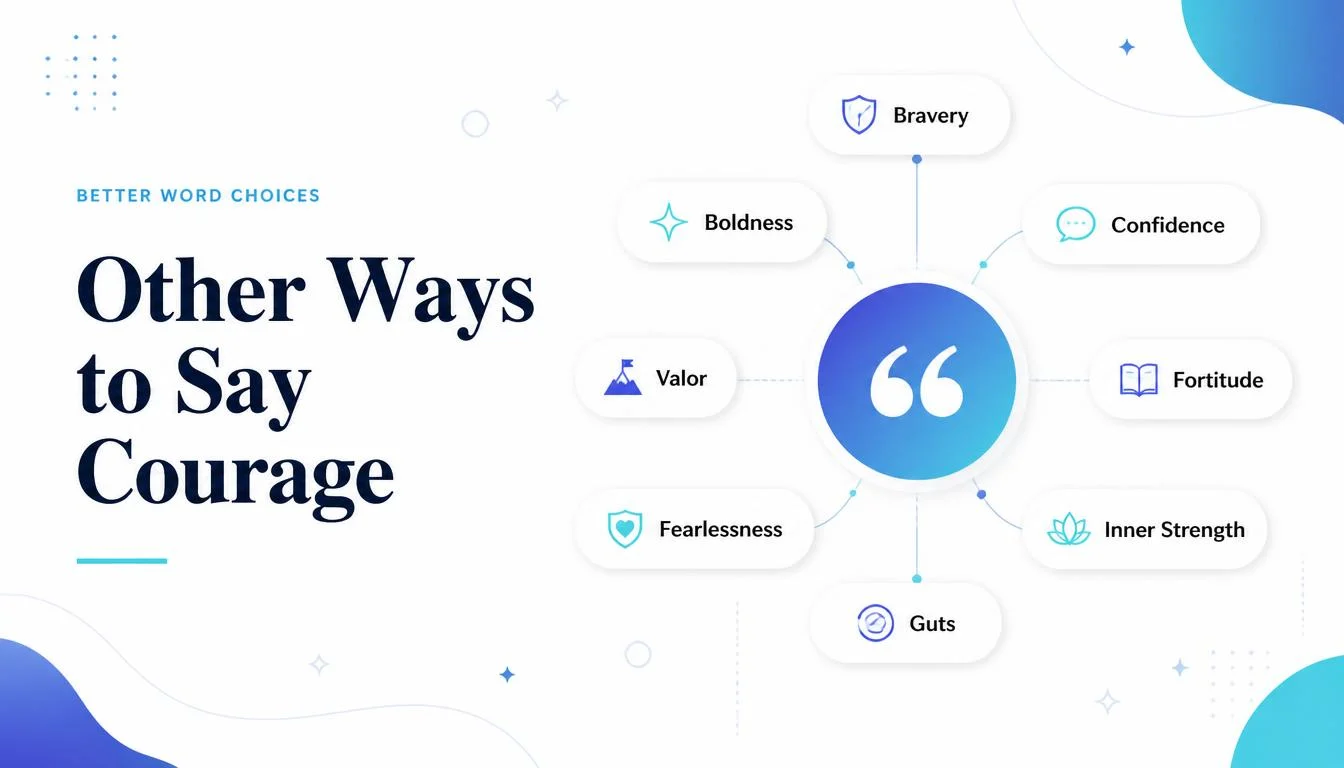
Other ways to say courage include bravery, boldness, fearlessness, determination, and valor. These alternatives help you describe strength and the willingness to face challenges.
Learning other ways to say courage can make your English more expressive and help you communicate your ideas with confidence. Whether you are describing someone who stands up for others, faces difficult situations, or takes risks to achieve a goal, choosing the right word can make your message more meaningful.
The word “courage” can describe physical bravery, emotional strength, or the determination to do what is right despite fear. Alternatives such as “bravery,” “fortitude,” “resilience,” and “boldness” carry slightly different meanings, making them useful in essays, professional communication, storytelling, and everyday conversations.
What Is “Courage”? (Meaning, Grammar & Real Use)
Imagine a student speaking up when everyone else stays silent, an employee sharing an honest opinion during a difficult meeting, or a friend standing beside someone during a challenging time. Each situation demonstrates courage, but the most suitable word depends on the action, setting, and emotion involved.
Learning alternatives to courage helps you describe these situations more accurately. For example, bravery emphasizes facing fear, boldness highlights willingness to take risks, and fortitude describes strength during prolonged hardship. These distinctions make your English more expressive in conversations, essays, presentations, and workplace communication.
If you want to express excitement in English or praise someone’s character, choosing a precise word can make your message more meaningful. Instead of repeating “You have courage,” you might say, “Your determination is inspiring” or “Your bravery deserves recognition.
Definition: Courage is the mental or emotional strength to face fear, danger, uncertainty, or adversity despite the challenges involved.
Grammar note: Courage is an uncountable noun. It commonly appears in expressions such as “show courage,” “have the courage,” and “a great deal of courage.” The word is suitable for both formal and informal contexts.
Example: She showed remarkable courage when she defended her colleague.
People use this word in spoken conversations, academic writing, professional feedback, motivational speeches, and personal messages. Its alternatives help communicate different shades of bravery, confidence, resilience, and moral strength.
When Should You Use “Courage”?
Choose the word that best reflects the situation rather than treating every synonym as interchangeable.
Common contexts
- Facing danger: Use bravery or valor when someone confronts a dangerous situation.
- Taking risks: Choose boldness or daring when someone acts despite uncertainty.
- Overcoming hardship: Use fortitude or resilience when someone persists through prolonged difficulties.
- Speaking honestly: Choose conviction or moral courage when someone stands up for their principles.
- Making difficult decisions: Use determination or resolve when someone commits to a challenging course of action.
- Trying something unfamiliar: Choose nerve or audacity when highlighting willingness to act despite hesitation. Note that audacity can suggest excessive boldness.
Spoken vs. written English
In conversation, words such as bravery, boldness, and guts sound natural. In essays, reports, and formal speeches, fortitude, valor, and moral courage may be more appropriate.
Formal vs. informal English
Formal writing often benefits from precise terms such as fortitude and resolve. Informal conversations may call for guts or nerve. The best choice depends on your audience and the message you want to convey.
Is It Professional or Just Polite?
Courage is both professional and socially appropriate when it describes a person’s willingness to act responsibly despite difficulty. It is not merely a polite expression. It communicates a meaningful personal quality.
Politeness vs. professionalism
- Politeness means showing consideration and respect for others.
- Professionalism means demonstrating sound judgment, responsibility, integrity, and appropriate workplace behavior.
- Courage can support professionalism when someone raises a concern, admits a mistake, or challenges an unethical decision respectfully.
Business example: “Her moral courage in raising the compliance concern helped the team address the issue before it escalated.”
Verdict:
- Polite? ✔️ Yes, when used respectfully.
- Professional? ✔️ Yes, particularly in discussions of leadership, integrity, and responsible decision-making.
For more workplace vocabulary, read the Professional English Communication Guide.
Pros and Cons of Using “Courage”
Understanding the strengths and limitations of this word helps you choose alternatives that fit your purpose.
Pros
- Clear meaning: Most English speakers understand the word immediately.
- Positive tone: It communicates strength, bravery, and willingness to face difficulties.
- Broad usage: It works in everyday conversations, professional settings, speeches, and academic writing.
- Emotional impact: It can recognize someone’s effort without focusing only on the outcome.
Cons
- Limited precision: It may not distinguish between taking risks and enduring hardship.
- Potential overuse: Repeating it in essays can make your vocabulary sound less varied.
- Different shades of meaning: It does not always communicate persistence, confidence, or moral conviction specifically.
- Context sensitivity: In some situations, calling an action courageous may imply that it involved danger or serious personal risk.
For example, fortitude is often more precise when describing someone enduring a long illness or prolonged hardship, while boldness can better describe someone proposing an unconventional idea.
Common Mistakes People Make
Using synonyms correctly requires more than memorizing similar words. You must understand their grammatical patterns and emotional implications.
1. Treating every synonym as identical
❌ Her fortitude made her willing to take an exciting risk.
✔️ Her boldness made her willing to take an exciting risk.
Why: Boldness often emphasizes taking risks, while fortitude emphasizes strength during hardship.
2. Using an overly dramatic word
❌ His valor helped him ask a question during an ordinary meeting.
✔️ His confidence helped him ask a question during an ordinary meeting.
Why: Valor commonly suggests exceptional bravery, especially in dangerous circumstances.
3. Confusing courage with confidence
❌ She showed confidence by confronting a serious danger despite her fear.
✔️ She showed courage by confronting a serious danger despite her fear.
Why: Confidence is belief in your ability, while courage involves facing fear or difficulty.
4. Using an informal expression in a formal report
❌ The employee had the guts to report the safety violation.
✔️ The employee had the courage to report the safety violation.
Why: Guts is conversational. Courage is more suitable for formal workplace documentation.
5. Using a noun where an adjective is needed
❌ She was a courage leader during the crisis.
✔️ She was a courageous leader during the crisis.
Why: Courage is a noun, while courageous is the adjective used to describe a person or action.
Small tone mistakes can make confident English sound careless.
Alternatives by Category
The following curated selection introduces useful expressions before the complete list of 30 alternatives below.
Formal alternatives to “Courage”
- Fortitude: Strength during difficult or prolonged circumstances.
- Valor: Exceptional bravery, especially in dangerous situations.
- Resolve: Firm determination to follow through on a decision.
Pro Tip: Use fortitude for endurance, valor for exceptional bravery, and resolve for commitment to a difficult goal.
Casual alternatives
- Bravery: Willingness to face danger or fear.
- Guts: Informal expression for courage and willingness to act.
- Nerve: The willingness to do something difficult, risky, or intimidating.
Pro Tip: In everyday conversations, choose words your listener can understand immediately. Save guts for relaxed settings.
Professional alternatives
- Moral courage: Willingness to defend ethical principles.
- Conviction: Strong belief in an idea or principle.
- Determination: Persistent commitment to achieving a goal.
Pro Tip: In professional feedback, connect the quality to a specific action, such as raising a concern or making a difficult decision.
Informal expressions
- Boldness: Willingness to act confidently or take risks.
- Daring: Readiness to attempt something challenging or risky.
- Fearlessness: An apparent lack of fear when facing a challenge.
Pro Tip: Consider the possible implications of your word. Daring and fearlessness can sound admiring, but they may also suggest unnecessary risk-taking.
“Formal and informal English aren’t about correctness. They’re about context.”
Other Ways to Say “Courage” (Full List with Examples)
These 30 alternatives will help you describe bravery, persistence, confidence, and moral strength with greater precision. Each expression suits different situations, from casual conversations to professional writing.
1. Phrase: Bravery
Meaning: Willingness to face fear or danger.
Explanation: A widely understood synonym that works in most contexts.
Example Sentence: Her bravery inspired the entire team.
Best Use: Everyday praise
Worst Use: Technical precision
Tone: Positive, neutral
Context Variability: casual / professional / spoken
2. Phrase: Boldness
Meaning: Willingness to take risks or act confidently.
Explanation: Emphasizes taking initiative rather than enduring hardship.
Example Sentence: His boldness helped him introduce an innovative idea.
Best Use: Creative decisions
Worst Use: Quiet endurance
Tone: Confident, assertive
Context Variability: casual / professional / spoken
3. Phrase: Valor
Meaning: Exceptional bravery, particularly in dangerous circumstances.
Explanation: Often associated with military service, heroic actions, or formal recognition.
Example Sentence: The ceremony honored her valor during the rescue.
Best Use: Heroic recognition
Worst Use: Routine challenges
Tone: Formal, elevated
Context Variability: professional / written / spoken
4. Phrase: Fortitude
Meaning: Mental and emotional strength during hardship.
Explanation: Highlights endurance when circumstances are painful, difficult, or demanding.
Example Sentence: He demonstrated fortitude throughout the recovery process.
Best Use: Prolonged hardship
Worst Use: Casual banter
Tone: Formal, respectful
Context Variability: professional / written / spoken
5. Phrase: Fearlessness
Meaning: A lack of apparent fear.
Explanation: Describes someone who confronts challenges without seeming afraid. It does not necessarily mean the person feels no fear internally.
Example Sentence: Her fearlessness encouraged others to speak up.
Best Use: Risky challenges
Worst Use: Cautious planning
Tone: Strong, admiring
Context Variability: casual / professional / spoken
6. Phrase: Determination
Meaning: Firm commitment to achieving a goal.
Explanation: Focuses on persistence and purpose rather than fear alone.
Example Sentence: His determination helped him complete the demanding project.
Best Use: Goal achievement
Worst Use: Sudden danger
Tone: Positive, purposeful
Context Variability: casual / professional / spoken
7. Phrase: Resolve
Meaning: Firmness of purpose or decision.
Explanation: Suggests a steady commitment to doing what needs to be done.
Example Sentence: She showed resolve when defending her decision.
Best Use: Difficult decisions
Worst Use: Light conversation
Tone: Formal, decisive
Context Variability: professional / written / spoken
8. Phrase: Guts
Meaning: Informal courage or willingness to face difficulty.
Explanation: A conversational expression that often praises someone for taking a risk.
Example Sentence: It took guts to admit the mistake publicly.
Best Use: Friendly praise
Worst Use: Formal reports
Tone: Informal, direct
Context Variability: casual / spoken
9. Phrase: Nerve
Meaning: The ability to do something intimidating or risky.
Explanation: Depending on context, it can express admiration or criticize someone’s audacity.
Example Sentence: She had the nerve to challenge the unfair decision.
Best Use: Risky actions
Worst Use: Formal praise
Tone: Informal, ambiguous
Context Variability: casual / spoken
10. Phrase: Audacity
Meaning: Boldness that may seem surprising or excessive.
Explanation: Can express admiration for originality or disapproval of disrespectful behavior.
Example Sentence: His audacity surprised the experienced negotiators.
Best Use: Unconventional actions
Worst Use: Neutral reporting
Tone: Strong, ambiguous
Context Variability: casual / professional / written
11. Phrase: Daring
Meaning: Readiness to attempt something risky or challenging.
Explanation: Highlights adventurous action and a willingness to move beyond familiar limits.
Example Sentence: Her daring proposal changed the discussion.
Best Use: Bold initiatives
Worst Use: Routine tasks
Tone: Energetic, admiring
Context Variability: casual / professional / spoken
12. Phrase: Resilience
Meaning: The ability to recover from difficulties.
Explanation: Emphasizes adaptation and recovery rather than confronting fear in a single moment.
Example Sentence: His resilience helped him rebuild after the setback.
Best Use: Recovering setbacks
Worst Use: Immediate bravery
Tone: Positive, encouraging
Context Variability: casual / professional / written
13. Phrase: Confidence
Meaning: Belief in your abilities or judgment.
Explanation: Appropriate when a person trusts their skills, although confidence alone does not necessarily imply courage.
Example Sentence: She spoke with confidence during the presentation.
Best Use: Public speaking
Worst Use: Serious danger
Tone: Positive, professional
Context Variability: casual / professional / spoken
14. Phrase: Conviction
Meaning: A strong belief in an idea or principle.
Explanation: Often describes the inner certainty that supports courageous decisions or statements.
Example Sentence: He defended his position with conviction.
Best Use: Ethical discussions
Worst Use: Physical danger
Tone: Serious, assured
Context Variability: professional / written / spoken
15. Phrase: Moral Courage
Meaning: Willingness to stand up for ethical principles despite pressure.
Explanation: Especially useful when someone risks criticism or professional consequences to do what is right.
Example Sentence: Her moral courage helped expose the misconduct.
Best Use: Ethical leadership
Worst Use: Minor risks
Tone: Professional, principled
Context Variability: professional / written / spoken
16. Phrase: Bravado
Meaning: Confident or aggressive behavior intended to impress others.
Explanation: Often implies that a person exaggerates their bravery or hides insecurity behind an outward display.
Example Sentence: His bravado disappeared when the real challenge began.
Best Use: Critical descriptions
Worst Use: Genuine praise
Tone: Critical, skeptical
Context Variability: casual / professional / written
17. Phrase: Steadfastness
Meaning: Firmness in belief, loyalty, or purpose.
Explanation: Highlights remaining committed despite pressure, opposition, or changing circumstances.
Example Sentence: Her steadfastness reassured the team during the crisis.
Best Use: Long commitments
Worst Use: Spontaneous risks
Tone: Respectful, formal
Context Variability: professional / written / spoken
18. Phrase: Perseverance
Meaning: Continued effort despite obstacles.
Explanation: Focuses on keeping going when progress is slow or difficult.
Example Sentence: His perseverance helped him finish his degree.
Best Use: Long-term goals
Worst Use: Sudden emergencies
Tone: Encouraging, positive
Context Variability: casual / professional / written
19. Phrase: Grit
Meaning: Determination and perseverance through difficulty.
Explanation: A concise, modern word often used to describe sustained effort under pressure.
Example Sentence: The team showed grit throughout the competition.
Best Use: Persistent effort
Worst Use: Formal ceremonies
Tone: Direct, motivational
Context Variability: casual / professional / spoken
20. Phrase: Strength of Character
Meaning: The ability to act according to sound principles.
Explanation: Useful when courage reflects integrity, responsibility, and good judgment.
Example Sentence: Admitting the error demonstrated strength of character.
Best Use: Character assessment
Worst Use: Quick reactions
Tone: Respectful, formal
Context Variability: professional / written / spoken
21. Phrase: Inner Strength
Meaning: Emotional or mental resources that help someone face difficulties.
Explanation: Often describes quiet courage during personal challenges.
Example Sentence: She relied on her inner strength during the transition.
Best Use: Personal struggles
Worst Use: Technical reports
Tone: Supportive, warm
Context Variability: casual / professional / spoken
22. Phrase: Self-Assurance
Meaning: Calm confidence in one’s judgment or abilities.
Explanation: Emphasizes composure and trust in oneself rather than willingness to face danger.
Example Sentence: He answered the difficult questions with self-assurance.
Best Use: Interviews, presentations
Worst Use: Dangerous situations
Tone: Professional, composed
Context Variability: professional / written / spoken
23. Phrase: Heroism
Meaning: Exceptional bravery or selfless action.
Explanation: Often used when someone takes significant risks to protect or help others.
Example Sentence: The rescue team’s heroism saved several lives.
Best Use: Exceptional sacrifice
Worst Use: Ordinary tasks
Tone: Elevated, admiring
Context Variability: professional / written / spoken
24. Phrase: Daring Spirit
Meaning: An adventurous willingness to take on challenges.
Explanation: A descriptive expression that highlights someone’s readiness to explore unfamiliar possibilities.
Example Sentence: Her daring spirit led her to start a new venture.
Best Use: Personal inspiration
Worst Use: Formal assessments
Tone: Energetic, positive
Context Variability: casual / professional / spoken
25. Phrase: Courageousness
Meaning: The quality of being courageous.
Explanation: A valid but less common noun form. Courage or bravery usually sounds more natural.
Example Sentence: The story celebrates the courageousness of ordinary people.
Best Use: Specific descriptions
Worst Use: Everyday conversation
Tone: Formal, descriptive
Context Variability: professional / written
26. Phrase: Pluck
Meaning: Spirited determination and courage.
Explanation: A somewhat old-fashioned expression, especially common in British English.
Example Sentence: She showed real pluck when facing the challenge.
Best Use: Personal storytelling
Worst Use: Modern reports
Tone: Informal, old-fashioned
Context Variability: casual / written / spoken
27. Phrase: Backbone
Meaning: Strength to stand firm or defend one’s principles.
Explanation: An informal metaphor for firmness, independence, and resistance to pressure.
Example Sentence: It takes backbone to challenge an unfair policy.
Best Use: Standing firm
Worst Use: Formal correspondence
Tone: Informal, assertive
Context Variability: casual / spoken
28. Phrase: Intrepidity
Meaning: Fearless courage when facing danger or difficulty.
Explanation: A highly formal word most suitable for literary descriptions or ceremonial praise.
Example Sentence: The account describes her intrepidity during the expedition.
Best Use: Literary descriptions
Worst Use: Casual conversation
Tone: Formal, elevated
Context Variability: professional / written
29. Phrase: Tenacity
Meaning: Persistent determination to hold on or continue.
Explanation: Emphasizes refusing to give up, especially when faced with repeated obstacles.
Example Sentence: His tenacity helped the company overcome setbacks.
Best Use: Persistent problem-solving
Worst Use: Sudden danger
Tone: Strong, positive
Context Variability: casual / professional / written
30. Phrase: Audaciousness
Meaning: The quality of being boldly daring.
Explanation: Often describes ambitious or unconventional actions. Depending on context, it can imply admirable initiative or excessive risk-taking.
Example Sentence: The audaciousness of her plan attracted attention.
Best Use: Ambitious proposals
Worst Use: Neutral feedback
Tone: Strong, ambiguous
Context Variability: casual / professional / written
Comparison Table: Top 10 Alternatives at a Glance
Use this quick reference to choose an appropriate synonym for different audiences and situations.
| Phrase | Tone | Best Use |
|---|---|---|
| Bravery | Neutral, positive | Everyday praise |
| Boldness | Confident, assertive | Taking initiative |
| Valor | Formal, elevated | Heroic actions |
| Fortitude | Formal, respectful | Enduring hardship |
| Fearlessness | Strong, admiring | Facing challenges |
| Determination | Positive, purposeful | Achieving goals |
| Resolve | Formal, decisive | Difficult decisions |
| Resilience | Positive, encouraging | Recovering from setbacks |
| Moral courage | Professional, principled | Ethical leadership |
| Grit | Direct, motivational | Persistent effort |
Quick Self-Check (Mini Quiz)
Test your understanding of how these expressions work in real situations.
Question 1
Your colleague reports an unethical practice despite the risk of criticism. Which phrase fits best?
- A. Bravado
- B. Moral courage
- C. Self-assurance
- D. Daring spirit
Question 2
A student continues studying despite repeated failures. Which alternative best describes this quality?
- A. Valor
- B. Audacity
- C. Perseverance
- D. Fearlessness
Question 3
You are writing a formal report about a rescue worker who risked their life to save others. Which word is most suitable?
- A. Guts
- B. Pluck
- C. Valor
- D. Nerve
Question 4
You want to praise a friend for confidently trying a challenging new activity. Which word sounds most natural in casual conversation?
- A. Intrepidity
- B. Boldness
- C. Steadfastness
- D. Courageousness
Question 1A. BravadoB. Moral courageC. Self-assuranceD. Daring spirit
Question 2A. ValorB. AudacityC. PerseveranceD. Fearlessness
Question 3A. GutsB. PluckC. ValorD. Nerve
Question 4A. IntrepidityB. BoldnessC. SteadfastnessD. Courageousness
Check answers
FAQs
1. What are the best alternatives to courage?
The best alternatives include bravery, boldness, fortitude, valor, determination, and resolve. Choose the word that best reflects whether someone is facing danger, taking a risk, or enduring hardship.
2. What is a more formal word for courage?
Fortitude, valor, and intrepidity are formal alternatives. Fortitude emphasizes endurance, while valor usually refers to exceptional bravery in dangerous circumstances.
3. What is a professional way to describe courage?
Use moral courage, resolve, or strength of character. These expressions work well when discussing ethical decisions, leadership, and responsibility in the workplace.
4. What is the difference between courage and bravery?
The words are often interchangeable. Courage can cover emotional, moral, and physical challenges, while bravery often emphasizes facing fear or danger.
5. What are some informal expressions for courage?
Common informal alternatives include guts, nerve, and backbone. These expressions work well in casual conversations, but more neutral words are usually better for formal reports.
Conclusion
Learning different ways to describe courage helps you communicate with greater precision, whether you are praising a friend, writing an essay, or recognizing a colleague’s leadership. Words such as bravery, fortitude, resolve, and moral courage express related qualities while highlighting different aspects of a person’s actions.
Build your vocabulary by choosing one new word each day and using it in an original sentence. Pay attention to tone, context, and audience so your English sounds natural in both professional and everyday situations.
Read More Related Articles:
- Other Ways to Say You’re Beautiful | Beyond the Ordinary Compliment In 2026
- Other Ways to Say I Love You in Spanish | Beyond the Usual Phrase In 2026
- Other Ways to Say I Love You in Other Languages | Beyond the Classic Three Words In 2026

Victoria Hughes is a content writer dedicated to making communication clearer and more effective. Through TextsResponse.com, she shares practical insights and thoughtfully crafted response ideas that help readers express themselves with confidence.