Quick Answer
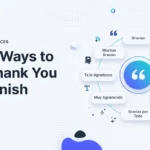
Looking for other ways to say thank you? English offers dozens of alternatives that let you match your tone to the moment, whether you are writing a formal email or thanking a close friend. The five most popular alternatives are: I appreciate it, much appreciated, thanks a lot, I’m grateful, and many thanks.
Thank you” is one of the most common expressions in the English language. People use it to show gratitude, acknowledge help, or respond politely to a kind gesture. It works in almost every situation, but relying on the same phrase repeatedly can make your English sound repetitive and less natural.
Learning alternatives to thank you helps you sound more fluent and confident in daily conversations, emails, and professional settings. Different situations call for different levels of formality, and choosing the right phrase shows that you understand tone and context, not just vocabulary.
This guide also helps you express excitement in English and appreciation in a way that feels natural, whether you are speaking casually with friends or writing a formal business message. By the end, you will have 30 alternatives ready to use in any situation.
The right tone makes your English sound professional and confident.”
Quick Categories Section
Formal alternatives to “thank you”
- I sincerely appreciate your assistance
- Thank you for your kind support
- I am truly grateful for your help
- Please accept my sincere thanks
Pro Tip: In formal writing, pair your thanks with the specific reason, such as “Thank you for your prompt response,” to sound polished and precise.
Casual alternatives
- Thanks a lot
- Thanks a bunch
- Cheers
- You’re the best
Pro Tip: Casual alternatives work well with friends and family, but avoid them in emails to clients or senior colleagues.
Professional alternatives
- I appreciate your support
- Thank you for your time and effort
- I’m grateful for your guidance
- Many thanks for your assistance
Pro Tip: Professional alternatives sound stronger when you mention what exactly you are thankful for, such as feedback, time, or effort.
Informal expressions
- Ta
- I owe you one
- You shouldn’t have
- Bless you
Pro Tip: Informal expressions like “ta” and “I owe you one” are common in spoken British and American English but should stay out of written business communication.
“Choosing the right phrase shows that you understand tone, not just vocabulary.”
Common Mistakes Section
- Using “thanks” in very formal emails. Example: “Thanks for the update” instead of “Thank you for the update, I appreciate it.”
- Overusing “thank you so much” until it loses meaning. Example: Repeating “thank you so much” in every sentence of an email.
- Mixing formal and informal tone in the same message. Example: “I sincerely appreciate it, thanks a bunch!” sounds inconsistent.
- Forgetting to specify what you are thankful for. Example: Saying only “Thank you” instead of “Thank you for your quick response.
- Using slang alternatives with people you don’t know well. Example: Saying “Cheers” to a new client in a first email.
What Does “Thank You” Mean?
Thank you” is a polite expression used to show gratitude or appreciation for something someone has done, given, or said. Grammatically, it functions as a fixed phrase and does not change form based on tense or subject.
Example Sentence: “Thank you for helping me carry these boxes.”
When to Use “Thank You”
- After receiving a gift, favor, or compliment
- When someone provides assistance or advice
- In spoken conversation, such as at the end of a meeting
- In written communication, such as emails or thank-you notes
- Formal settings: business emails, interviews, official letters
- Informal settings: conversations with friends, family, or casual acquaintances
Is It Professional or Polite to Say “Thank You”?
“Thank you” is both polite and professional in almost every context. It works well in spoken and written English and rarely sounds out of place.
Business Example: “Thank you for your feedback on the proposal. I will make the requested changes by Friday.”
Polite? ✔️ Yes Professional? ✔️ Yes
Pros and Cons of Using “Thank You”
Pros
- Simple and natural
- Friendly tone
- Common usage
- Easy to understand
Cons
- Can feel repetitive if overused
- Lacks strong emotional emphasis
- Sounds generic without added detail
- May feel too brief in formal writing
“Fluency comes from variety, not repetition.”
Other Ways to Say Thank You
These alternatives will help you sound more fluent, confident, and natural in different situations. Use them according to tone, context, and audience to express excitement, admiration, or approval.
1. Phrase: Thanks a Lot
- Meaning: A casual way to express gratitude.
- Explanation: Common in everyday spoken English among friends and coworkers.
- Example Sentence: “Thanks a lot for covering my shift yesterday.”
- Best Use: Casual conversation
- Worst Use: Formal emails
- Tone: Friendly, relaxed
- Context Variability: Casual, spoken
2. Phrase: Thanks a Million
- Meaning: An exaggerated, enthusiastic way to say thank you.
- Explanation: Used to show strong gratitude in an informal way.
- Example Sentence: “Thanks a million for helping me move this weekend.”
- Best Use: Informal favors
- Worst Use: Business writing
- Tone: Enthusiastic, warm
- Context Variability: Casual, spoken
3. Phrase: I Appreciate It
- Meaning: A polite way to acknowledge help or kindness.
- Explanation: Works in both spoken and written English across most situations.
- Example Sentence: “I appreciate it. Thank you for staying late to finish the report.”
- Best Use: Everyday professional use
- Worst Use: None, very versatile
- Tone: Sincere, polite
- Context Variability: Casual, professional, spoken
4. Phrase: I Really Appreciate It
- Meaning: A stronger version of “I appreciate it.”
- Explanation: Adds emphasis to show deeper gratitude.
- Example Sentence: “I really appreciate it. Your advice made a big difference.”
- Best Use: Personal thanks
- Worst Use: Overly formal letters
- Tone: Heartfelt, warm
- Context Variability: Casual, professional, spoken
5. Phrase: Much Appreciated
- Meaning: A short, polite phrase to express thanks.
- Explanation: Frequently used in emails and quick messages.
- Example Sentence: “Much appreciated. I’ll have the file ready by tomorrow.”
- Best Use: Emails, quick replies
- Worst Use: Emotional or personal thanks
- Tone: Efficient, polite
- Context Variability: Professional, written
6. Phrase: I’m Grateful
- Meaning: Expresses a deep sense of thankfulness.
- Explanation: Slightly more formal and reflective than “thank you.”
- Example Sentence: “I’m grateful for the opportunity to work on this project.”
- Best Use: Reflective, formal contexts
- Worst Use: Quick casual replies
- Tone: Sincere, thoughtful
- Context Variability: Formal, professional
7. Phrase: I’m So Grateful
- Meaning: An emotional, heartfelt way to express thanks.
- Explanation: Adds intensity and warmth to gratitude.
- Example Sentence: “I’m so grateful for your support during a difficult time.”
- Best Use: Personal, emotional situations
- Worst Use: Business emails
- Tone: Emotional, warm
- Context Variability: Casual, personal
8. Phrase: Thank You So Much
- Meaning: A stronger, more emphatic version of “thank you.”
- Explanation: Commonly used in both spoken and written English.
- Example Sentence: “Thank you so much for organizing the event.”
- Best Use: General appreciation
- Worst Use: None, widely accepted
- Tone: Warm, sincere
- Context Variability: Casual, professional, spoken
9. Phrase: Thank You Kindly
- Meaning: A slightly old-fashioned, polite expression of thanks.
- Explanation: Adds a gentle, respectful tone to gratitude.
- Example Sentence: “Thank you kindly for your patience with this request.”
- Best Use: Polite written notes
- Worst Use: Casual texting
- Tone: Gracious, formal
- Context Variability: Formal, written
10. Phrase: I Owe You One
- Meaning: A casual way to say you’ll return the favor.
- Explanation: Common among friends and close colleagues.
- Example Sentence: “Thanks for covering for me. I owe you one.”
- Best Use: Informal favors
- Worst Use: Professional settings
- Tone: Friendly, casual
- Context Variability: Casual, spoken
11. Phrase: You Shouldn’t Have
- Meaning: A polite response to an unexpected gift or gesture.
- Explanation: Shows surprise and appreciation together.
- Example Sentence: “You shouldn’t have. This gift is wonderful, thank you.”
- Best Use: Gifts, surprises
- Worst Use: Professional communication
- Tone: Touched, polite
- Context Variability: Casual, personal
12. Phrase: That’s So Kind of You
- Meaning: Acknowledges someone’s kindness directly.
- Explanation: Focuses on the person’s character rather than the action alone.
- Example Sentence: “That’s so kind of you to remember my birthday.”
- Best Use: Personal gestures
- Worst Use: Formal business writing
- Tone: Warm, appreciative
- Context Variability: Casual, spoken
13. Phrase: I Can’t Thank You Enough
- Meaning: Expresses gratitude that feels too large for words.
- Explanation: Used for significant help or major favors.
- Example Sentence: “I can’t thank you enough for helping me during the move.”
- Best Use: Major favors
- Worst Use: Minor everyday thanks
- Tone: Deeply grateful, sincere
- Context Variability: Personal, formal
14. Phrase: Cheers
- Meaning: A casual, informal way to say thanks, common in British English.
- Explanation: Often used at the end of quick messages or conversations.
- Example Sentence: “Cheers for sending that file over so quickly.”
- Best Use: Casual British English
- Worst Use: Formal American business writing
- Tone: Relaxed, friendly
- Context Variability: Casual, spoken
15. Phrase: Ta
- Meaning: A very informal British slang way to say thanks.
- Explanation: Used mainly in casual, spoken conversation.
- Example Sentence: “Ta for the coffee, you’re a lifesaver.”
- Best Use: Informal British speech
- Worst Use: Any written or formal context
- Tone: Casual, slangy
- Context Variability: Casual, spoken
16. Phrase: Much Obliged
- Meaning: A formal, slightly traditional way to express thanks.
- Explanation: Adds a respectful, old-fashioned tone to gratitude.
- Example Sentence: “Much obliged for your assistance with the paperwork.”
- Best Use: Formal or traditional writing
- Worst Use: Casual texting
- Tone: Respectful, formal
- Context Variability: Formal, written
17. Phrase: I’m Indebted to You
- Meaning: Expresses a strong sense of owing someone gratitude.
- Explanation: Used for significant help that feels hard to repay.
- Example Sentence: “I’m indebted to you for your guidance throughout this project.”
- Best Use: Major professional favors
- Worst Use: Everyday small thanks
- Tone: Formal, sincere
- Context Variability: Formal, professional
18. Phrase: You’re a Lifesaver
- Meaning: A warm, informal way to thank someone for major help.
- Explanation: Used when someone solves a problem or helps in a critical moment.
- Example Sentence: “You’re a lifesaver. Thanks for fixing my laptop before the meeting.”
- Best Use: Urgent help
- Worst Use: Formal writing
- Tone: Relieved, grateful
- Context Variability: Casual, spoken
19. Phrase: Bless You
- Meaning: An informal expression of gratitude or kindness.
- Explanation: Often used in casual, warm conversations.
- Example Sentence: “Bless you for helping me carry these groceries.”
- Best Use: Casual, warm exchanges
- Worst Use: Professional settings
- Tone: Affectionate, casual
- Context Variability: Casual, spoken
20. Phrase: I Truly Appreciate Your Help
- Meaning: A sincere, professional way to acknowledge support.
- Explanation: Adds emphasis while remaining polite and formal.
- Example Sentence: “I truly appreciate your help with the client presentation.”
- Best Use: Professional emails
- Worst Use: Casual texting
- Tone: Sincere, professional
- Context Variability: Professional, written
21. Phrase: Thanks a Bunch
- Meaning: A friendly, informal way to say thank you.
- Explanation: Common in casual spoken English among peers.
- Example Sentence: “Thanks a bunch for waiting for me.”
- Best Use: Casual conversation
- Worst Use: Business communication
- Tone: Cheerful, casual
- Context Variability: Casual, spoken
22. Phrase: Many Thanks
- Meaning: A polite, slightly formal way to express gratitude.
- Explanation: Commonly used to close professional emails.
- Example Sentence: “Many thanks for your continued support on this project.”
- Best Use: Email sign-offs
- Worst Use: Spoken conversation
- Tone: Polite, professional
- Context Variability: Professional, written
23. Phrase: With Gratitude
- Meaning: A formal phrase used to close letters or messages.
- Explanation: Adds a reflective, respectful tone.
- Example Sentence: “With gratitude, I accept your offer to mentor me.”
- Best Use: Formal letters
- Worst Use: Casual speech
- Tone: Formal, reflective
- Context Variability: Formal, written
24. Phrase: My Sincere Thanks
- Meaning: A formal way to emphasize genuine gratitude.
- Explanation: Common in professional and official communication.
- Example Sentence: “My sincere thanks for your patience during this process.”
- Best Use: Formal correspondence
- Worst Use: Casual texting
- Tone: Respectful, sincere
- Context Variability: Formal, professional
25. Phrase: I Appreciate Your Support
- Meaning: Acknowledges ongoing help or encouragement.
- Explanation: Common in workplace and team settings.
- Example Sentence: “I appreciate your support throughout this transition.”
- Best Use: Workplace communication
- Worst Use: One-time small favors
- Tone: Professional, warm
- Context Variability: Professional, written
26. Phrase: Thank You for Your Assistance
- Meaning: A formal way to thank someone for specific help.
- Explanation: Common in customer service and business writing.
- Example Sentence: “Thank you for your assistance with resolving this issue.”
- Best Use: Customer service, formal emails
- Worst Use: Casual conversation
- Tone: Formal, courteous
- Context Variability: Professional, written
27. Phrase: I Appreciate Your Time
- Meaning: Thanks someone specifically for the time they gave.
- Explanation: Useful after meetings, interviews, or calls.
- Example Sentence: “I appreciate your time discussing the proposal today.”
- Best Use: Meetings, interviews
- Worst Use: Casual daily thanks
- Tone: Respectful, professional
- Context Variability: Professional, spoken
28. Phrase: Thanks for Having Me
- Meaning: Expresses gratitude for being invited or included.
- Explanation: Common after events, interviews, or gatherings.
- Example Sentence: “Thanks for having me. I really enjoyed the event.”
- Best Use: After invitations, events
- Worst Use: Everyday small favors
- Tone: Gracious, warm
- Context Variability: Casual, professional, spoken
29. Phrase: I’m Thankful For
- Meaning: A reflective way to express gratitude for something specific.
- Explanation: Often used when describing what you value.
- Example Sentence: “I’m thankful for the guidance you’ve given me this year.”
- Best Use: Reflective, personal messages
- Worst Use: Quick casual replies
- Tone: Thoughtful, sincere
- Context Variability: Personal, formal
30. Phrase: Kudos to You
- Context Variability: Casual, professional, spoken
- Meaning: An informal way to praise and thank someone for a job well done.
- Explanation: Focuses on recognition of effort or achievement.
- Example Sentence: “Kudos to you for finishing the project ahead of schedule.”
- Best Use: Recognizing achievements
- Worst Use: Formal written correspondence
- Tone: Appreciative, upbeat
Fluency in English is about knowing which word fits which moment.
“Small changes in phrasing create a big difference in tone.”
Mini Quiz / Self-Check
1. Which phrase is best for a formal business email?
A) Ta
B) I appreciate your support
C) Thanks a bunch
D) Cheers
Correct Answer: B) I appreciate your support
2. Which alternative is most appropriate for casual spoken British English?
A) With gratitude
B) Ta
C) I’m indebted to you
D) My sincere thanks
Correct Answer: B) Ta
3. Which phrase best expresses gratitude for a major, significant favor?
A) Thanks a lot
B) I can’t thank you enough
C) Cheers
D) Bless you
Correct Answer: B) I can’t thank you enough
4. Which phrase works best as an email sign-off?
A) You’re a lifesaver
B) Many thanks
C) I owe you one
D) Ta
Correct Answer: B) Many thanks
Comparison Table: Top Alternatives
| Phrase | Tone | Best Use |
|---|---|---|
| I appreciate it | Sincere, polite | Everyday professional use |
| Much appreciated | Efficient, polite | Emails, quick replies |
| Thank you so much | Warm, sincere | General appreciation |
| I’m grateful | Sincere, thoughtful | Reflective, formal contexts |
| Many thanks | Polite, professional | Email sign-offs |
| Thanks a lot | Friendly, relaxed | Casual conversation |
| Cheers | Relaxed, friendly | Casual British English |
| I can’t thank you enough | Deeply grateful | Major favors |
| Much obliged | Respectful, formal | Formal or traditional writing |
| With gratitude | Formal, reflective | Formal letters |
FAQs
1. What is a more professional way to say thank you?
“I appreciate your support” or “Thank you for your assistance” both sound polished and suitable for workplace communication.
2. Is “thanks a lot” always polite?
Not always. Depending on tone of voice, “thanks a lot” can sound sarcastic in spoken English, so context matters.
3. What can I say instead of thank you in an email?
Use phrases like “Much appreciated,” “Many thanks,” or “I truly appreciate your help” to sound professional.
4. How do I express excitement in English while thanking someone?
Pair gratitude with enthusiasm, such as “Thank you so much, this means a lot to me” or “I’m so grateful, this made my day.”
5. What is the most formal way to say thank you?
Please accept my sincere thanks” or “I am truly grateful for your help” are strong, formal alternatives to thank you.
Conclusion
Learning other ways to say thank you helps you sound more natural, confident, and fluent across different situations. Whether you are writing a formal email, chatting with friends, or thanking a colleague, choosing the right phrase shows that you understand English tone and context.
Practice using these alternatives daily, in both speaking and writing, and pay attention to formality levels as you switch between professional and casual settings. Small adjustments in word choice can make a lasting impression on how confident and polished your English sounds.
Read More Related Articles:
- Other Ways to Say Circle Back | Improve Your Workplace Communication In 2026
- Other Ways to Say Welcome to the Team | Warm First Impression In 2026
- Other Ways to Say I Hope All Is Well | Make a Better First Impression In 2026

Henry Walker is an American writer and blogger with a keen interest in communication, language and digital content. At TextsResponse.com, he creates informative and reader-focused resources designed to help people communicate with clarity, confidence and authenticity.