Quick Answer
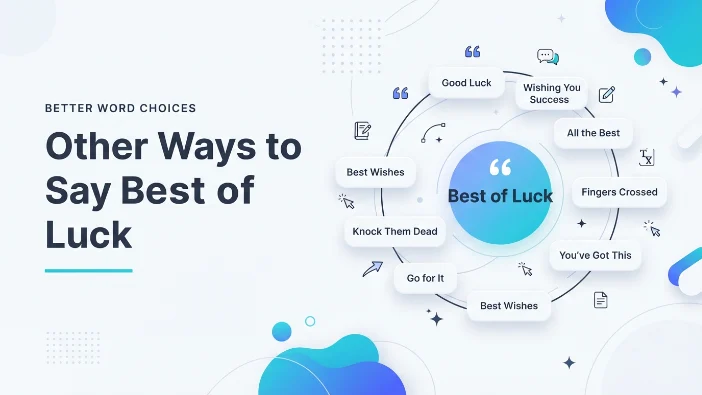
Looking for alternatives to “best of luck”? English offers many warm, natural ways to wish someone success, whether you’re writing a formal email or cheering on a friend.The top five alternatives are: good luck, wishing you success, fingers crossed for you, break a leg, and I’m rooting for you.
Best of luck” is one of the most common phrases English speakers use to express support before an exam, interview, competition, or big life event. It’s short, sincere, and works in almost any situation, which is exactly why so many people rely on it without thinking twice.
But using the same phrase repeatedly can make your English sound repetitive or even robotic. Learning alternatives to best of luck helps you match your tone to the moment, whether you want to sound professional in a work email or express excitement in English among close friends.
This guide breaks down 30 alternatives, organized by tone and context, so you always know exactly what to say and when to say it.
The right tone makes your English sound professional and confident.”
Quick Categories
Formal Alternatives to “Best of Luck”
- Wishing you every success
- I extend my best wishes for your success
- May you achieve great success
- Please accept my sincere wishes for your endeavor
Pro Tip: Use formal alternatives in emails to clients, managers, or people you don’t know well. They signal respect and professionalism.
Casual Alternatives
- Good luck
- You’ve got this
- Hope it all goes great
- Knock ’em dead
Pro Tip: Casual phrases work best with friends, classmates, or family. Save them for relaxed, low-stakes conversations.
Professional Alternatives
- Wishing you continued success
- I’m confident you’ll do well
- Best wishes for a successful outcome
- Looking forward to hearing good news
Pro Tip: In workplace messages, pair a professional alternative with a specific detail, such as the project or interview, to sound genuine rather than generic.
Informal Expressions
- Fingers crossed for you
- Break a leg
- Go get ’em
- Rooting for you
Pro Tip: Informal expressions like “break a leg” often come from specific traditions (theater, in this case), so use them only when the context fits.
Small changes in wording can completely change how supportive you sound.
Common Mistakes
- Overusing “best of luck” in every message Example: Saying “best of luck” in five different texts to the same person in one week sounds repetitive.
- Using formal alternatives in casual texts Example: Texting a close friend “I extend my best wishes for your success” sounds stiff and unnatural.
- Using slang in professional emails Example: Writing “knock ’em dead” to a client sounds unprofessional.
- Forgetting context (spoken vs written) Example: “Break a leg” said before a business presentation may confuse someone unfamiliar with the idiom.
- Using the phrase without specifying what the luck is for Example: Simply saying “good luck” with no context leaves the message feeling generic and impersonal.
“Context is everything. The same phrase can sound warm or careless depending on when you use it.
What Does “Best of Luck” Mean?
Best of luck” is an expression used to wish someone success or good fortune, typically before an event, decision, or challenge.
Grammar Note
It functions as a fixed phrase, often used on its own or followed by “with” or “on” plus a noun (e.g., “best of luck with your interview”).
Example Sentence
“Best of luck on your final exam tomorrow.”
When to Use “Best of Luck”
Spoken Contexts
- Before a friend’s job interview
- Before a sports event or competition
- As a casual goodbye before something important
Written Contexts
- At the end of an email before a big meeting
- In a card or message for graduation
- In a farewell note to a colleague
Formal vs Informal
- Formal: Emails, official letters, professional farewells
- Informal: Texts, casual conversations, social media comments
Is It Professional or Polite to Say “Best of Luck”?
Best of luck” is polite in almost every setting, but its professionalism depends on context. In business writing, it can sometimes feel casual unless paired with specific, thoughtful wording.
Business-Style Example
“Best of luck with the client presentation tomorrow. I know the team has prepared thoroughly.”
Polite? Yes Professional? No, in most strictly formal settings, unless customized with detail
Pros and Cons of Using “Best of Luck”
Pros
- Simple and natural
- Friendly tone
- Common usage
- Easy to understand
Cons
- Too informal for very formal writing
- Overused
- Limited emotional range
- Not suitable for high-stakes formal documents
Other Ways to Say Best of Luck
These alternatives will help you sound more fluent, confident, and natural in different situations. Use them according to tone, context, and audience to express excitement, admiration, or approval.
1. Phrase: Good Luck
Meaning: A simple and friendly wish for success.
Explanation: The most common expression used to encourage someone before an important event or challenge.
Example Sentence: “Good luck with your presentation today!”
Best Use: Everyday conversations, exams, interviews
Worst Use: Formal reports or legal documents
Tone: Friendly, encouraging
Context Variability: Casual, spoken
2. Phrase: Wishing You Every Success
Meaning: Hoping someone achieves excellent results.
Explanation: A polished expression often used in professional correspondence.
Example Sentence: “Wishing you every success in your new position.”
Best Use: Business emails, formal messages
Worst Use: Casual texting
Tone: Formal, sincere
Context Variability: Professional, written
3. Phrase: Fingers Crossed for You
Meaning: Hoping things turn out well.
Explanation: An informal expression that conveys hope and encouragement.
Example Sentence: “Fingers crossed for you at the interview!”
Best Use: Friends, family, casual chats
Worst Use: Official business communication
Tone: Warm, playful
Context Variability: Casual, spoken
4. Phrase: Break a Leg
Meaning: A traditional way to wish performers success.
Explanation: Commonly used in theater, music, and entertainment before a performance.
Example Sentence: “Break a leg at tonight’s performance!”
Best Use: Auditions, stage performances
Worst Use: Business meetings
Tone: Playful, traditional
Context Variability: Casual, spoken
5. Phrase: I’m Rooting for You
Meaning: Expressing personal support for someone’s success.
Explanation: Shows that you’re emotionally invested in the person’s outcome.
Example Sentence: “I’m rooting for you during the finals!”
Best Use: Friends, family, teammates
Worst Use: Formal documents
Tone: Supportive, warm
Context Variability: Casual, spoken
6. Phrase: You’ve Got This
Meaning: Expressing confidence in someone’s ability.
Explanation: Motivates someone by reminding them they’re capable.
Example Sentence: “You’ve got this—just stay focused.”
Best Use: Encouragement, motivation
Worst Use: Formal correspondence
Tone: Confident, uplifting
Context Variability: Casual, spoken
7. Phrase: Wishing You Continued Success
Meaning: Hoping someone keeps achieving great results.
Explanation: Best used when someone is already doing well.
Example Sentence: “Wishing you continued success in your career.”
Best Use: Professional congratulations
Worst Use: First-time achievements
Tone: Respectful, formal
Context Variability: Professional, written
8. Phrase: May You Achieve Great Success
Meaning: A formal wish for future accomplishments.
Explanation: Sounds uplifting and is suitable for speeches or ceremonial occasions.
Example Sentence: “May you achieve great success in all your future endeavors.”
Best Use: Graduation speeches, formal letters
Worst Use: Casual text messages
Tone: Inspirational, formal
Context Variability: Professional, written
9. Phrase: Knock ‘Em Dead
Meaning: Wishing someone outstanding success.
Explanation: An energetic idiom often used before presentations or performances.
Example Sentence: “Knock ’em dead at your big presentation!”
Best Use: Performances, speeches
Worst Use: Client emails
Tone: Energetic, informal
Context Variability: Casual, spoken
10. Phrase: Go Get ‘Em
Meaning: Encouraging someone to give their best effort.
Explanation: A motivational phrase commonly used before competitions or challenges.
Example Sentence: “Go get ’em in the championship!”
Best Use: Sports, competitions
Worst Use: Formal writing
Tone: Motivational, upbeat
Context Variability: Casual, spoken
11. Phrase: I Extend My Best Wishes for Your Success
Meaning: Offering formal wishes for someone’s achievement.
Explanation: Suitable for official letters and business correspondence.
Example Sentence: “I extend my best wishes for your success in the upcoming project.”
Best Use: Official communication
Worst Use: Friendly chats
Tone: Polished, formal
Context Variability: Professional, written
12. Phrase: Please Accept My Best Wishes
Meaning: A courteous expression of goodwill and support.
Explanation: A refined way to offer encouragement in formal settings.
Example Sentence: “Please accept my best wishes as you begin this exciting journey.”
Best Use: Formal letters, ceremonies
Worst Use: Casual conversations
Tone: Respectful, elegant
Context Variability: Professional, written
13. Phrase: Hope Everything Goes Well
Meaning: Wishing for a positive outcome.
Explanation: A relaxed and natural expression suitable for everyday conversations.
Example Sentence: “Hope everything goes well with your move!”
Best Use: Friends, family
Worst Use: Formal business emails
Tone: Friendly, casual
Context Variability: Casual, spoken
14. Phrase: I’m Confident You’ll Do Well
Meaning: Showing trust in someone’s abilities.
Explanation: Encourages someone while expressing genuine confidence.
Example Sentence: “I’m confident you’ll do well in the interview.”
Best Use: Mentoring, workplace encouragement
Worst Use: Casual slang conversations
Tone: Supportive, professional
Context Variability: Professional, spoken
15. Phrase: Best Wishes for a Successful Outcome
Meaning: Hoping someone achieves the desired result.
Explanation: Frequently used in professional and formal communication.
Example Sentence: “Best wishes for a successful outcome on the proposal.”
Best Use: Business emails
Worst Use: Informal texting
Tone: Formal, polished
Context Variability: Professional, written
16. Phrase: Looking Forward to Hearing Good News
Meaning: Expressing hopeful anticipation of success.
Explanation: Often used while waiting for important results.
Example Sentence: “Looking forward to hearing good news after your interview.”
Best Use: Follow-up messages
Worst Use: Immediate encouragement before an event
Tone: Hopeful, positive
Context Variability: Professional, casual
17. Phrase: Sending Positive Vibes Your Way
Meaning: Sending encouragement and optimism.
Explanation: A modern, friendly way to show emotional support.
Example Sentence: “Sending positive vibes your way today!
Best Use: Texts, social media
Worst Use: Formal correspondence
Tone: Warm, casual
Context Variability: Casual, written
18. Phrase: All the Best
Meaning: A simple wish for success and happiness.
Explanation: Works well as both a farewell and an expression of encouragement.
Example Sentence: “All the best in your new job!”
Best Use: Emails, greeting cards
Worst Use: Highly formal documents
Tone: Warm, versatile
Context Variability: Casual, professional
19. Phrase: May Success Be Yours
Meaning: A graceful wish for achievement.
Explanation: Often used in speeches and ceremonial writing.
Example Sentence: “May success be yours in every endeavor.”
Best Use: Ceremonies, speeches
Worst Use: Everyday texting
Tone: Formal, poetic
Context Variability: Professional, written
20. Phrase: Hoping for the Best Outcome for You
Meaning: Wishing someone the most favorable result.
Explanation: Especially suitable for uncertain or stressful situations.
Example Sentence: “Hoping for the best outcome for you tomorrow.”
Best Use: Serious situations
Worst Use: Lighthearted celebrations
Tone: Caring, sincere
Context Variability: Casual, professional
21. Phrase: You’ll Smash It
Meaning: Expressing strong confidence in someone’s success.
Explanation: A popular British English phrase used to motivate someone.
Example Sentence: “You’ll smash it in tomorrow’s competition!”
Best Use: Informal encouragement
Worst Use: Formal business writing
Tone: Confident, energetic
Context Variability: Casual, spoken
22. Phrase: Wishing You the Very Best
Meaning: Hoping someone enjoys success and happiness.
Explanation: A heartfelt expression often used for important life milestones.
Example Sentence: “Wishing you the very best in your new adventure.”
Best Use: Farewells, celebrations
Worst Use: Routine business emails
Tone: Warm, heartfelt
Context Variability: Casual, written
23. Phrase: Cheering You On
Meaning: Showing active encouragement and support.
Explanation: Lets someone know you’re supporting them from the sidelines.
Example Sentence: “Cheering you on every step of the way!”
Best Use: Friends, family, sports
Worst Use: Formal reports
Tone: Supportive, cheerful
Context Variability: Casual, spoken
24. Phrase: I Trust You’ll Succeed
Meaning: Expressing confidence in someone’s ability to achieve success.
Explanation: A professional and reassuring way to encourage someone.
Example Sentence: “I trust you’ll succeed in leading the project.”
Best Use: Leadership, mentoring
Worst Use: Casual conversations
Tone: Confident, respectful
Context Variability: Professional, spoken
25. Phrase: Here’s to Your Success
Meaning: Celebrating future achievements.
Explanation: Commonly used as a toast or congratulatory expression.
Example Sentence: “Here’s to your success in the years ahead!”
Best Use: Celebrations, milestone events
Worst Use: Formal reports
Tone: Celebratory, warm
Context Variability: Casual, professional
26. Phrase: Sending You Strength and Good Luck
Meaning: Offering both emotional support and encouragement.
Explanation: Especially thoughtful during challenging situations.
Example Sentence: “Sending you strength and good luck for tomorrow’s procedure.”
Best Use: Difficult moments
Worst Use: Lighthearted occasions
Tone: Compassionate, sincere
Context Variability: Casual, written
27. Phrase: May Everything Go Smoothly
Meaning: Wishing for an easy and successful experience.
Explanation: Focuses on a stress-free process as well as a good outcome.
Example Sentence: “May everything go smoothly during your presentation.”
Best Use: Stressful events, important meetings
Worst Use: Casual banter
Tone: Gentle, encouraging
Context Variability: Casual, professional
28. Phrase: I Believe in You
Meaning: Expressing confidence in someone’s abilities.
Explanation: A heartfelt phrase that inspires and motivates.
Example Sentence: “I believe in you—you’ve worked hard for this.
Best Use: Friends, family, mentors
Worst Use: Formal business correspondence
Tone: Warm, motivating
Context Variability: Casual, spoken
29. Phrase: Wishing You a Positive Outcome
Meaning: Hoping everything works out favorably.
Explanation: A professional alternative often used in official contexts.
Example Sentence: “Wishing you a positive outcome in the negotiations.”
Best Use: Legal, corporate, formal communication
Worst Use: Casual text messages
Tone: Formal, neutral
Context Variability: Professional, written
30. Phrase: May Fortune Be on Your Side
Meaning: A classic wish for luck and success.
Explanation: A literary-sounding expression suitable for formal occasions.
Example Sentence: “May fortune be on your side as you begin this new chapter.”
Best Use: Speeches, ceremonies, formal writing
Worst Use: Everyday conversation
Tone: Elegant, poetic
Context Variability: Professional, written
“Every alternative carries its own tone. Choose the one that matches the moment, not just the meaning.”
Mini Quiz / Self-Check
1. Which phrase is most appropriate in a formal business email?
A) Knock ’em dead
B) Wishing you every success
C) Break a leg
D) You’ll smash it
Answer: B) Wishing you every success
2. Which phrase would you use before a friend’s theater performance?
A) Break a leg
B) I extend my best wishes for your success
C) May fortune be on your side
D) Wishing you a positive outcome
Answer: A) Break a leg
3. True or False:
“Fingers crossed for you” is suitable for formal legal documents.
Answer: False
4. Which phrase best expresses emotional, personal support?
A) Please accept my best wishes
B) I believe in you
C) Wishing you a positive outcome
D) May success be yours
Answer: B) I believe in you
Practicing tone daily is the fastest way to sound naturally fluent.
Comparison Table: Top Alternatives
| Phrase | Tone | Best Use |
|---|---|---|
| Good luck | Friendly, simple | Everyday situations |
| Wishing you every success | Formal, sincere | Business emails |
| Fingers crossed for you | Playful, warm | Casual encouragement |
| Break a leg | Playful, traditional | Performances |
| I’m rooting for you | Supportive, warm | Close relationships |
| You’ve got this | Encouraging, casual | Motivation |
| Wishing you continued success | Formal, respectful | Professional messages |
| Knock ’em dead | Energetic, informal | Casual pep talks |
| I’m confident you’ll do well | Supportive, professional | Workplace |
| May fortune favor you | Formal, poetic | Speeches, formal writing |
FAQs
Is “best of luck” formal or informal?
It sits in the middle. It’s polite enough for semi-formal use but often too casual for strictly formal business writing.
What can I say instead of “best of luck” in a work email?
Try “wishing you every success” or “best wishes for a successful outcome” for a more professional tone.
Is “break a leg” only used for actors?
It originated in theater but is now sometimes used playfully for other high-pressure performances or presentations.
What’s a more personal alternative to “best of luck”?
“I’m rooting for you” or “I believe in you” both express warmer, more personal support.
Can I use “best of luck” in academic writing?
It’s better to avoid it in formal academic writing and use phrases like “wishing you continued success” instead.
Conclusion
Learning multiple ways to wish someone success helps you sound more fluent, thoughtful, and adaptable in both spoken and written English. Instead of repeating “best of luck” in every situation, you can now choose from formal, professional, casual, and heartfelt alternatives that match the moment perfectly.
Make it a habit to practice a few new phrases each week and pay attention to tone whenever you write or speak. Over time, this awareness will make your English feel more natural, confident, and genuinely supportive.
Read More Related Articles:
- Other Ways to Say “This Shows That” | Express Your Ideas with Confidence In 2026
- Other Ways to Say “Which” in English | Beyond the Common Choices In 2026
- Other Ways to Say Also in an Essay | Make Your Writing Shine In 2026

Henry Walker is an American writer and blogger with a keen interest in communication, language and digital content. At TextsResponse.com, he creates informative and reader-focused resources designed to help people communicate with clarity, confidence and authenticity.