Quick Answer:
Looking for alternatives to “make love”?
Try these top options: have sex, be intimate, sleep together, go to bed with someone, and have sexual relations. Each suits a different tone and context from romantic to clinical.
The phrase “make love” is one of the most common euphemisms in English for sexual intimacy. It carries a romantic, emotional weight that distinguishes it from more direct or clinical terms. However, relying on this single phrase in every situation can make your English sound repetitive and limited.
Learning alternatives to “make love” does more than expand your vocabulary it helps you express excitement in English with nuance and precision. Whether you are writing a novel, having a conversation with a partner, or navigating a professional context where discretion matters, knowing the right phrase for the right moment is a hallmark of fluency.
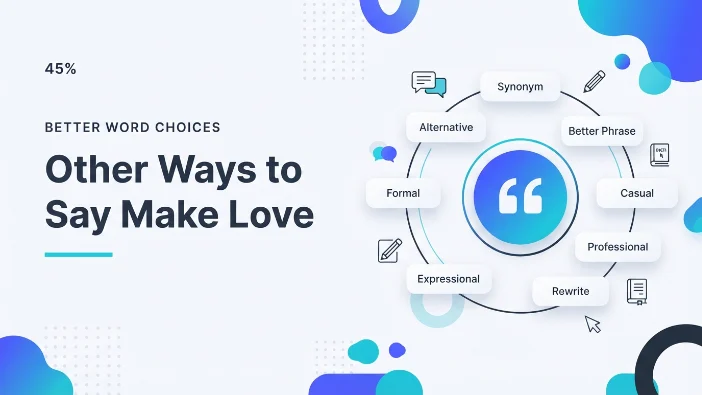
Quick Categories
Formal Alternatives to “Make Love”
- Have sexual intercourse
- Engage in sexual relations
- Copulate
- Consummate
- Have carnal knowledge
Casual Alternatives
- Sleep together
- Go to bed with someone
- Hook up
- Get together
- Spend the night together
Professional Alternatives
- Have sexual relations
- Be intimate
- Share physical intimacy
- Engage in intimacy
Informal Expressions
- Do it
- Get it on
- Mess around
- Hook up
- Roll in the hay
Pro Tip: Match your word choice to your audience. Formal settings call for clinical terms like “sexual intercourse,” while romantic contexts benefit from warmer phrases like “be intimate.”
Common Mistakes
1. Using “make love” in casual or humorous contexts
- Incorrect: “We made love after the party last night” (said to friends in a casual setting).
- Why it’s wrong: “Make love” implies emotional depth; using it lightly can sound awkward or overly serious.
2. Confusing “make love” with “make out”
- Incorrect: “They made love in the back of the cinema.”
- Why it’s wrong: “Make out” means kissing and touching, not full sexual intercourse.
3. Using overly clinical terms in romantic settings
- Incorrect: “I want to copulate with you tonight.”
- Why it’s wrong: Clinical language sounds cold and unromantic in intimate conversations.
4. Assuming all euphemisms are appropriate everywhere
- Incorrect: Using “hook up” in a formal report.
- Why it’s wrong: “Hook up” is informal and vague; it does not belong in professional writing.
5. Using archaic or outdated alternatives
- Incorrect: “He wishes to lie with her.”
- Why it’wrong: This sounds like something from a Shakespearean play, not modern English.
What Does “Make Love” Mean?
Make love is a euphemistic verb phrase meaning to engage in sexual intercourse, typically with an emotional or romantic connection. The phrase originally meant “to woo” or “to court” someone romantically, but since the 1950s, it has become the standard euphemism for sexual intimacy.
Grammar note: It is a transitive verb phrase often used with “to” or “with.”
- Example: “They made love under the stars, sharing a moment of pure connection.”
When to Use “Make Love”
- Romantic relationships – when emotional connection is central.
- Literature and poetry – to convey tenderness and passion.
- Personal conversations – with a partner or in intimate settings.
- Spoken English – far more common than in formal writing.
- Informal to neutral contexts – not suitable for professional or clinical discussions.
Is It Professional or Polite to Say “Make Love”?
- Polite? ✔️ Yes it is a widely accepted euphemism.
- Professional? ❌ No in most professional settings, it is too personal and informal.
Business-style example: “The report discusses the biological aspects of human reproduction, including sexual intercourse.”
Pros and Cons of Using “Make Love”
Pros:
- Simple and natural in romantic contexts
- Friendly and warm tone
- Widely understood by all English speakers
- Easy to use in everyday conversation
Cons:
- Too informal for professional or academic writing
- Overused can sound clichéd
- Limited emotional range does not convey humour or playfulness
- Not suitable for clinical or formal discussions
Other Ways to Say Make Love
These alternatives to “make love” will help you sound more fluent, confident, and natural in different situations. Use them according to tone, context, and audience to express intimacy, affection, or simply clarity.
1. Phrase: Have Sex
- Meaning: The most direct and neutral term for sexual activity.
- Explanation: Clear, simple, and appropriate for most contexts.
- Example Sentence: “They decided to have sex for the first time after months of dating.”
- Best Use: General conversations
- Worst Use: Romantic poetry
- Tone: Neutral, direct
- Context Variability: Casual, professional, spoken
2. Phrase: Be Intimate
- Meaning: To share a close, personal, and often sexual connection.
- Explanation: Emphasizes emotional closeness over physical mechanics.
- Example Sentence: “They were intimate for the first time after their wedding.”
- Best Use: Romantic discussions
- Worst Use: Medical contexts
- Tone: Warm, respectful
- Context Variability: Romantic, spoken
3. Phrase: Sleep Together
- Meaning: To have sex with someone, often implying a shared bed.
- Explanation: A common euphemism that softens the directness of “have sex.”
- Example Sentence: “They slept together after knowing each other for only a week.”
- Best Use: Casual conversation
- Worst Use: Formal writing
- Tone: Informal, neutral
- Context Variability: Casual, spoken
4. Phrase: Go to Bed With Someone
- Meaning: To have sex with someone, often implying a deliberate choice.
- Explanation: Suggests intentionality and mutual consent.
- Example Sentence: “She refused to go to bed with him until they were exclusive.”
- Best Use: Storytelling, personal anecdotes
- Worst Use: Professional reports
- Tone: Informal, narrative
- Context Variability: Casual, spoken
5. Phrase: Have Sexual Intercourse
- Meaning: The clinical, formal term for sexual intercourse.
- Explanation: Used in medical, legal, and educational contexts.
- Example Sentence: “The study examined how often couples have sexual intercourse.”
- Best Use: Academic, medical, legal
- Worst Use: Romantic conversations
- Tone: Formal, clinical
- Context Variability: Professional, written
6. Phrase: Engage in Sexual Relations
- Meaning: A formal way to refer to sexual activity between people.
- Explanation: Often used in legal or institutional language.
- Example Sentence: “The policy prohibits employees from engaging in sexual relations with subordinates.”
- Best Use: Workplace policies, legal documents
- Worst Use: Personal conversations
- Tone: Formal, detached
- Context Variability: Professional, written
7. Phrase: Copulate
- Meaning: The biological term for sexual union.
- Explanation: Primarily used in scientific, biological, and zoological contexts.
- Example Sentence: “The species copulates during the rainy season.”
- Best Use: Scientific writing
- Worst Use: Everyday conversation
- Tone: Technical, clinical
- Context Variability: Academic, written
8. Phrase: Consummate
- Meaning: To complete a marriage through sexual intercourse.
- Explanation: A traditional expression associated with marriage.
- Example Sentence: “They consummated their marriage on their wedding night.”
- Best Use: Historical or traditional contexts
- Worst Use: Modern casual talk
- Tone: Formal, ceremonial
- Context Variability: Literary, formal
9. Phrase: Have Carnal Knowledge
- Meaning: A legal and archaic term for sexual intercourse.
- Explanation: Rare in modern English and mostly encountered in historical or legal language.
- Example Sentence: “The phrase appeared in an old legal document.”
- Best Use: Legal or historical contexts
- Worst Use: Everyday speech
- Tone: Archaic, legal
- Context Variability: Legal, written
10. Phrase: Get Intimate
- Meaning: To become physically and emotionally close, often sexually.
- Explanation: A softer and more gradual alternative.
- Example Sentence: “They got intimate after months of dating.”
- Best Use: Romantic storytelling
- Worst Use: Professional settings
- Tone: Warm, gentle
- Context Variability: Romantic, spoken
11. Phrase: Hook Up
- Meaning: To have casual sex, often without emotional commitment.
- Explanation: A common informal expression that generally suggests casual intimacy.
- Example Sentence: “They hooked up after the party.”
- Best Use: Informal conversations
- Worst Use: Formal or professional contexts
- Tone: Casual, modern
- Context Variability: Informal, spoken
12. Phrase: Do It
- Meaning: A vague, informal way to refer to having sex.
- Explanation: Often used when speakers want to avoid being explicit.
- Example Sentence: “They had been dating for months but still hadn’t done it.”
- Best Use: Casual or humorous contexts
- Worst Use: Serious or formal discussions
- Tone: Informal, euphemistic
- Context Variability: Casual, spoken
13. Phrase: Get It On
- Meaning: An informal expression for engaging in sexual activity.
- Explanation: Playful and somewhat old-fashioned compared with some modern slang.
- Example Sentence: “The phrase was used jokingly in the conversation.”
- Best Use: Informal, playful contexts
- Worst Use: Professional settings
- Tone: Playful, informal
- Context Variability: Casual, spoken
14. Phrase: Sleep With
- Meaning: A common euphemism for having sex.
- Explanation: Widely understood and less direct than “have sex.”
- Example Sentence: “She said she had never slept with someone she barely knew.”
- Best Use: Casual conversation
- Worst Use: Formal writing
- Tone: Informal, neutral
- Context Variability: Casual, spoken
15. Phrase: Have Relations
- Meaning: A formal or dated expression referring to sexual activity.
- Explanation: It can sound indirect, old-fashioned, or vague in modern English.
- Example Sentence: “The novel described the couple as having relations.”
- Best Use: Historical or formal contexts
- Worst Use: Modern casual conversation
- Tone: Formal, dated
- Context Variability: Formal, written
16. Phrase: Make Out
- Meaning: To kiss and engage in passionate physical affection, without necessarily having intercourse.
- Explanation: “Make out” is not a direct synonym for “make love,” so it is best used when referring to passionate kissing.
- Example Sentence: “They made out for hours but didn’t go any further.”
- Best Use: Describing passionate kissing
- Worst Use: Describing intercourse
- Tone: Informal, youthful
- Context Variability: Casual, spoken
17. Phrase: Get Laid
- Meaning: An informal expression meaning to have sex.
- Explanation: It is casual and can sound crude or impersonal.
- Example Sentence: “He wasn’t looking for a relationship; he just wanted to get laid.”
- Best Use: Informal conversations
- Worst Use: Romantic or professional contexts
- Tone: Crude, informal
- Context Variability: Casual, spoken
18. Phrase: Have a One-Night Stand
- Meaning: To have sex with someone on one occasion without an ongoing relationship.
- Explanation: Specifically describes a casual sexual encounter rather than intimacy within a relationship.
- Example Sentence: “They had a one-night stand while traveling.”
- Best Use: Describing casual encounters
- Worst Use: Romantic storytelling
- Tone: Neutral, descriptive
- Context Variability: Casual, spoken
19. Phrase: Mess Around
- Meaning: To engage in romantic or sexual activity without specifying exactly what happened.
- Explanation: It is vague and can refer to anything from kissing to more intimate activity.
- Example Sentence: “They were messing around but weren’t officially dating.”
- Best Use: Casual, ambiguous contexts
- Worst Use: Situations requiring clear communication
- Tone: Informal, vague
- Context Variability: Casual, spoken
20. Phrase: Roll in the Hay
- Meaning: A humorous, old-fashioned euphemism for having sex.
- Explanation: It has a playful, rustic quality and is rarely used in serious modern conversation.
- Example Sentence: “The characters in the comedy joked about having a roll in the hay.”
- Best Use: Humorous or literary contexts
- Worst Use: Serious conversations
- Tone: Playful, old-fashioned
- Context Variability: Casual, humorous
21. Phrase: Have a Fling
- Meaning: To have a short-term romantic or sexual relationship.
- Explanation: It suggests something temporary rather than a committed relationship.
- Example Sentence: “They had a summer fling before going their separate ways.”
- Best Use: Describing short-term relationships
- Worst Use: Long-term romantic contexts
- Tone: Casual, descriptive
- Context Variability: Casual, spoken
22. Phrase: Share a Bed
- Meaning: To sleep in the same bed, sometimes implying sexual intimacy.
- Explanation: This is a softer and more indirect expression, although it can also literally mean sleeping together.
- Example Sentence: “The couple eventually shared a bed during their trip.”
- Best Use: Romantic or subtle contexts
- Worst Use: Situations requiring explicit clarity
- Tone: Gentle, indirect
- Context Variability: Romantic, spoken
23. Phrase: Have Physical Intimacy
- Meaning: To engage in physically intimate activity with someone.
- Explanation: A respectful and relatively formal expression that emphasizes closeness.
- Example Sentence: “Physical intimacy can be an important part of a healthy relationship.”
- Best Use: Relationship advice, counseling
- Worst Use: Casual banter
- Tone: Respectful, formal
- Context Variability: Professional, spoken
24. Phrase: Fornicate
- Meaning: A formal term for sexual intercourse, traditionally referring to sex outside marriage.
- Explanation: The word can carry religious, moral, or judgmental overtones.
- Example Sentence: “The historical text used the word ‘fornicate’ in a moral discussion.”
- Best Use: Religious, historical, or formal contexts
- Worst Use: Everyday conversation
- Tone: Formal, moralistic
- Context Variability: Formal, written
25. Phrase: Lie With
- Meaning: An archaic expression for having sexual relations with someone.
- Explanation: It is mainly encountered in older literature, historical texts, and biblical language.
- Example Sentence: “The phrase ‘lie with’ appears frequently in older literary texts.”
- Best Use: Literary or historical contexts
- Worst Use: Modern everyday speech
- Tone: Archaic, formal
- Context Variability: Literary, written
26. Phrase: Have a Sexual Encounter
- Meaning: A neutral and formal way to describe a sexual experience.
- Explanation: It is commonly suitable for research, journalism, and factual discussions.
- Example Sentence: “The survey asked participants about their most recent sexual encounter.”
- Best Use: Research, journalism
- Worst Use: Personal romantic conversations
- Tone: Neutral, formal
- Context Variability: Professional, written
27. Phrase: Get Together
- Meaning: A vague expression that can refer to meeting someone or, depending on context, becoming romantically or sexually involved.
- Explanation: Because it has several meanings, context is important.
- Example Sentence: “They got together after the party and started dating.”
- Best Use: Informal contexts
- Worst Use: Situations requiring precise meaning
- Tone: Casual, vague
- Context Variability: Casual, spoken
28. Phrase: Spend the Night Together
- Meaning: To stay overnight with someone, sometimes implying sexual intimacy.
- Explanation: A polite and indirect expression that leaves the exact meaning to context.
- Example Sentence: “They decided to spend the night together after their date.”
- Best Use: Polite, subtle contexts
- Worst Use: Explicit descriptions
- Tone: Polite, indirect
- Context Variability: Romantic, spoken
29. Phrase: Have a Love Affair
- Meaning: To have a romantic and often sexual relationship, especially one outside an existing marriage or commitment.
- Explanation: The phrase has a dramatic or literary quality and often emphasizes the emotional side of the relationship.
- Example Sentence: “The novel tells the story of two people who had a passionate love affair.”
- Best Use: Storytelling, literature
- Worst Use: Casual everyday conversation
- Tone: Romantic, dramatic
- Context Variability: Literary, spoken
30. Phrase: Make Love To
- Meaning: A romantic expression referring to having sex with someone.
- Explanation: It is closely related to the original phrase “make love” and emphasizes affection, tenderness, and emotional intimacy.
- Example Sentence: “The romantic novel described the couple as making love.”
- Best Use: Romantic contexts
- Worst Use: Clinical or highly formal contexts
- Tone: Romantic, tender
- Context Variability: Romantic, spoken
“The right tone makes your English sound professional and confident.”
“Knowing when to be direct and when to be subtle is the mark of a truly fluent speaker.”
“Alternatives to ‘make love’ range from clinical to poetic choose wisely based on your audience.”
Mini Quiz / Self-Check
1. Which phrase is most appropriate for a medical report?
- A) Make love
- B) Hook up
- C) Have sexual intercourse
- D) Get it on
Answer: C) Have sexual intercourse
2. You are writing a romantic novel. Which phrase best conveys tenderness?
- A) Copulate
- B) Be intimate
- C) Get laid
- D) Have a one-night stand
Answer: B) Be intimate
3. Which of the following is NOT a synonym for “make love”?
- A) Sleep together
- B) Make out
- C) Have sex
- D) Be intimate
Answer: B) Make out — this refers to kissing, not intercourse.
4. In a workplace policy, which phrase is most suitable?
- A) Hook up
- B) Engage in sexual relations
- C) Do it
- D) Roll in the hay
Answer: B) Engage in sexual relations
Comparison Table: Top 10 Alternatives
| Phrase | Tone | Best Use |
|---|---|---|
| Have sex | Neutral, direct | General conversations |
| Be intimate | Warm, respectful | Romantic discussions |
| Sleep together | Informal, neutral | Casual conversation |
| Have sexual intercourse | Formal, clinical | Medical, academic |
| Engage in sexual relations | Formal, detached | Legal, workplace |
| Copulate | Technical, clinical | Scientific writing |
| Consummate | Formal, ceremonial | Marriage, tradition |
| Hook up | Casual, modern | Peer conversations |
| Get intimate | Warm, gentle | Romantic storytelling |
| Have a sexual encounter | Neutral, formal | Research, reporting |
FAQs
1. Is “make love” the same as “have sex”?
Not exactly. “Make love” implies emotional connection and romance, while “have sex” is more neutral and can describe any sexual encounter, casual or committed.
2. What is the most professional way to say “make love”?
“Have sexual intercourse” or “engage in sexual relations” are the most professional and formal alternatives.
3. Can I use “make love” in academic writing?
No. Academic writing requires clinical or neutral terms like “sexual intercourse” or “copulation.”
4. What is a polite way to say “make love” in a formal setting?
“Be intimate” or “have physical intimacy” are polite and respectful alternatives suitable for formal discussions.
5. Is “hook up” a synonym for “make love”?
Yes, but “hook up” implies casual, often uncommitted sex, whereas “make love” suggests emotional depth and romance.
Conclusion
Expanding your vocabulary with alternatives to “make love” is one of the most effective ways to improve your English fluency. Each alternative carries a unique tone from the clinical precision of “sexual intercourse” to the tender warmth of “be intimate.” The key is to match your word choice to your audience, context, and purpose.
Practice using these phrases in your daily conversations and writing. Pay attention to how native speakers choose their words in different settings. With time, you will develop the instinct to select the perfect phrase for every situation and your English will sound more natural, confident, and professional.
Read More Related Articles:
- Other Ways to Say “That’s Good” | More Positive Way In 2026
- Other Ways to Say I Have | Smart Alternatives for Any Situation In 2026
- Other Ways to Say Very Important | Powerful Phrases to Know In 2026

Henry Walker is an American writer and blogger with a keen interest in communication, language and digital content. At TextsResponse.com, he creates informative and reader-focused resources designed to help people communicate with clarity, confidence and authenticity.