Quick Answer
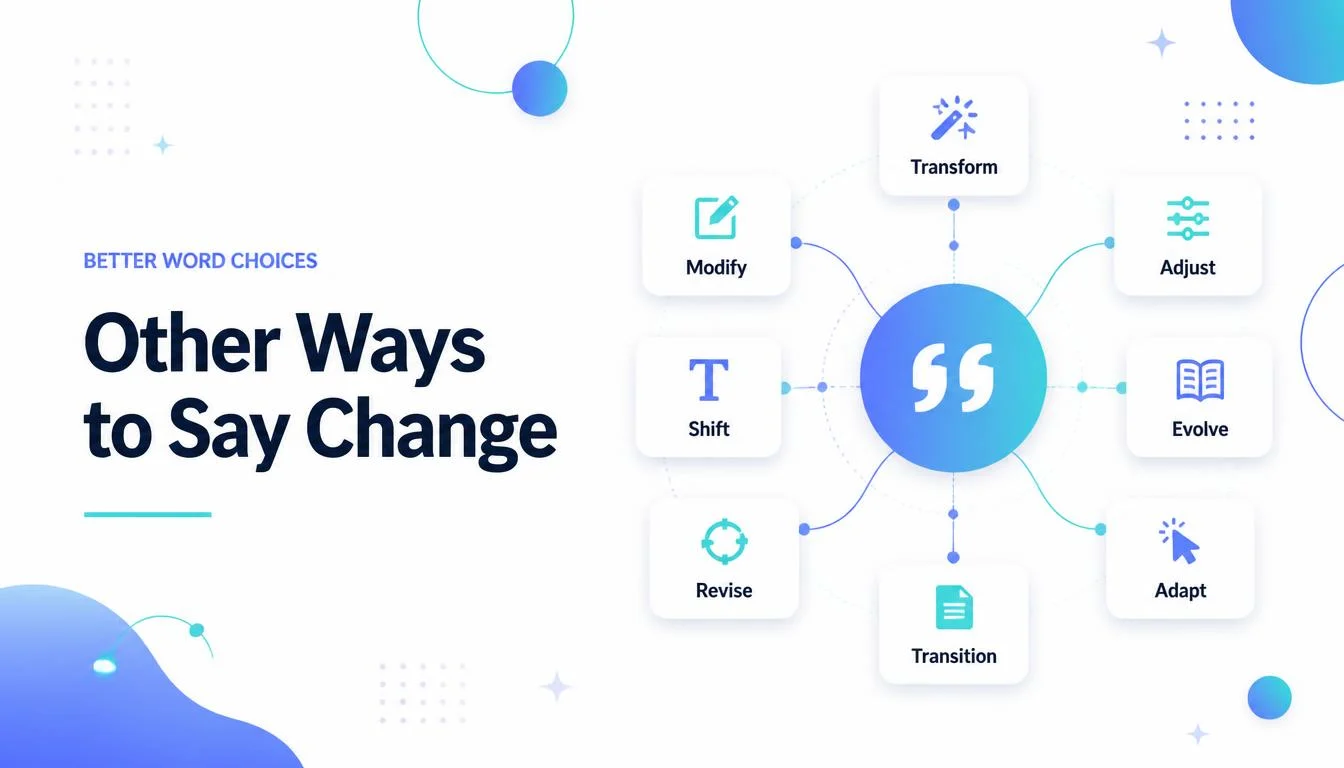
Other ways to say change include modify, alter, transform, adjust, adapt, revise, and replace.
Choose the alternative based on whether you mean a small adjustment, major transformation, or complete replacement.
Finding the right other ways to say change can make your English more precise, natural, and engaging. The word “change” has many meanings, so the best alternative depends on the situation, tone, and degree of difference.
Whether you are writing an essay, speaking professionally, or having a casual conversation, learning other ways to say change helps you express ideas more accurately. From “adjust” and “modify” to “transform” and “revamp,” each option adds a slightly different meaning.
What Is “Change”? (Meaning, Grammar & Real Use)
Imagine you are explaining a new workplace procedure, describing how a person’s life has developed, or telling a friend that your plans are different. In each situation, “change” works, but a more specific word can make your meaning clearer. Learning alternatives to “change” helps English learners describe small adjustments, major transformations, replacements, and gradual developments more precisely.
The word can refer to making something different or becoming different. For example, you might modify a document, adjust a schedule, transform a business, or shift your opinion. These distinctions are especially useful when you want to express excitement in English about progress, improvement, or a new opportunity.
Grammatically, “change” can function as both a verb and a noun. It is neutral and extremely common in spoken and written English, but the best alternative depends on your intended meaning, level of formality, and context.
Example: “We need to change the schedule.”
People use it in conversations, emails, reports, presentations, academic writing, and professional discussions. More precise alternatives can make your communication sound natural without making it unnecessarily complicated.
When Should You Use “Change”?
The word is useful in many situations, but different contexts call for different alternatives.
- For small adjustments: Use words such as adjust, modify, or adapt.
- For major developments: Use transform, revolutionize, or overhaul.
- For replacing something: Use replace, substitute, or exchange.
- For opinions or attitudes: Use shift, reconsider, or rethink.
- For gradual development: Use evolve, develop, or progress.
- For formal writing: Choose precise verbs such as alter, revise, modify, or transform.
- For everyday conversation: Simple words such as switch, adjust, or update are often more natural.
Spoken vs. Written
In conversation, “change,” “switch,” “adjust,” and “update” are common because they are quick and easy to understand.
In formal writing, more precise vocabulary can show exactly what kind of change occurred.
Formal vs. Informal
Formal contexts often favor alter, modify, revise, transform, and implement.
Informal expressions in English may include switch things up, mix things up, or shake things up, depending on the situation.
Is It Professional or Just Polite?
“Change” is both professional and neutral. It is not inherently casual or overly polite. Its suitability depends mainly on the context and the specific meaning you need to communicate.
For example, a manager might write:
“We need to change the reporting process before the next quarter.”
More precise alternatives may be preferable when the exact type of adjustment matters.
- Polite? ✔️ Yes
- Professional? ✔️ Yes
Pros and Cons of Using “Change”
Pros
- Simple: Almost every English speaker understands it.
- Flexible: It works as both a noun and a verb.
- Common: It sounds natural in everyday and professional communication.
- Versatile: It can describe minor adjustments or major transformations.
Cons
- Can be vague: It may not explain exactly what happened.
- Can be repetitive: Frequent use can make writing less precise.
- Limited specificity: It does not always show whether something improved, shifted, or was replaced.
- Context dependent: Readers may need additional information to understand the exact meaning.
Common Mistakes People Make
1. Using “change” when “replace” is intended
Incorrect: “We changed the old software with new software.”
Correct: “We replaced the old software with new software.”
2. Confusing “change” and “adjust”
Incorrect: “We completely changed the chair slightly.”
Correct: “We slightly adjusted the chair.”
3. Using “change” for a major transformation without context
Weak: “The company changed after the merger.”
Clearer: “The merger transformed the company.”
4. Using “change” when discussing an opinion
Less precise: “She changed her opinion after the meeting.”
More precise: “She reconsidered her opinion after the meeting.”
5. Using an overly dramatic alternative for a minor adjustment
Incorrect: “We transformed the meeting time by ten minutes.”
Correct: “We adjusted the meeting time by ten minutes.”
“Small tone mistakes can make confident English sound careless.”
Alternatives by Category
Formal alternatives to “change”
- Alter
- Modify
- Transform
Pro Tip: Use precise formal verbs when the exact nature or scale of an adjustment matters in reports and academic writing.
Casual alternatives
- Switch
- Mix things up
- Switch things up
Pro Tip: Choose these expressions when speaking naturally with friends or colleagues in relaxed situations.
Professional alternatives
- Adjust
- Update
- Revise
Pro Tip: In workplace communication, choose the verb that clearly identifies what was actually done.
Informal expressions
- Shake things up
- Do things differently
- Make a switch
Pro Tip: Use informal expressions when the relationship and setting are relaxed enough to support conversational language.
“Formal and informal English aren’t about correctness. They’re about context.”
Other Ways to Say “Change” (Full List with Examples)
These alternatives build fluency and help you describe adjustments, development, transformation, or replacement with greater precision.
1. Phrase: Modify
Meaning: Make a small change.
Explanation: Use for controlled adjustments.
Example Sentence: “We modified the proposal.”
Best Use: Formal writing
Worst Use: Casual chat
Tone: Formal, precise
Context Variability: professional / academic
2. Phrase: Alter
Meaning: Make something different.
Explanation: Often describes a deliberate adjustment.
Example Sentence: “They altered the schedule.”
Best Use: Formal communication
Worst Use: Friendly conversation
Tone: Formal, neutral
Context Variability: professional / written
3. Phrase: Adjust
Meaning: Make a minor improvement or correction.
Explanation: Ideal for settings, plans, or measurements.
Example Sentence: “Please adjust the settings.”
Best Use: Workplace instructions
Worst Use: Major transformations
Tone: Neutral, practical
Context Variability: professional / spoken
4. Phrase: Transform
Meaning: Change significantly.
Explanation: Suggests a major difference in form or condition.
Example Sentence: “The program transformed the community.”
Best Use: Major developments
Worst Use: Tiny changes
Tone: Strong, formal
Context Variability: professional / written
5. Phrase: Revise
Meaning: Change to improve or correct.
Explanation: Common for documents, plans, and written work.
Example Sentence: “I revised the report.”
Best Use: Written work
Worst Use: Physical objects
Tone: Professional, precise
Context Variability: professional / academic
6. Phrase: Update
Meaning: Make something current.
Explanation: Common for information, systems, and documents.
Example Sentence: “Please update the database.”
Best Use: Current information
Worst Use: Personal transformation
Tone: Neutral, modern
Context Variability: professional / spoken
7. Phrase: Replace
Meaning: Put something new in place of something else.
Explanation: Use when one thing takes another’s position.
Example Sentence: “We replaced the damaged equipment.”
Best Use: Substitution situations
Worst Use: Minor adjustments
Tone: Neutral, direct
Context Variability: professional / spoken
8. Phrase: Switch
Meaning: Move from one option to another.
Explanation: Common for choices, systems, and preferences.
Example Sentence: “We switched to a different provider.”
Best Use: Everyday decisions
Worst Use: Academic analysis
Tone: Casual, direct
Context Variability: casual / spoken
9. Phrase: Adapt
Meaning: Adjust to new conditions.
Explanation: Often describes responding effectively to circumstances.
Example Sentence: “The team adapted to the new policy.”
Best Use: New conditions
Worst Use: Simple replacement
Tone: Professional, positive
Context Variability: professional / academic
10. Phrase: Evolve
Meaning: Develop gradually over time.
Explanation: Suggests natural or progressive development.
Example Sentence: “The project evolved significantly.”
Best Use: Gradual development
Worst Use: Instant adjustments
Tone: Formal, reflective
Context Variability: professional / written
11. Phrase: Shift
Meaning: Move from one position to another.
Explanation: Useful for opinions, priorities, focus, and trends.
Example Sentence: “Customer priorities shifted.”
Best Use: Changing priorities
Worst Use: Physical replacement
Tone: Neutral, concise
Context Variability: professional / spoken
12. Phrase: Convert
Meaning: Change into another form.
Explanation: Common when changing formats, systems, or units.
Example Sentence: “We converted the file to PDF.”
Best Use: Format changes
Worst Use: Emotional changes
Tone: Technical, neutral
Context Variability: professional / written
13. Phrase: Reform
Meaning: Improve by making structural changes.
Explanation: Often used for systems, organizations, or institutions.
Example Sentence: “The organization reformed its procedures.”
Best Use: Structural improvement
Worst Use: Minor changes
Tone: Formal, serious
Context Variability: professional / written
14. Phrase: Overhaul
Meaning: Make extensive changes.
Explanation: Indicates a thorough review and major revision.
Example Sentence: “The company overhauled its website.”
Best Use: Major improvements
Worst Use: Small adjustments
Tone: Strong, professional
Context Variability: professional / spoken
15. Phrase: Improve
Meaning: Make something better.
Explanation: Use when the result is intended to be more effective.
Example Sentence: “We improved the customer service process.”
Best Use: Positive development
Worst Use: Neutral shifts
Tone: Positive, clear
Context Variability: professional / spoken
16. Phrase: Develop
Meaning: Grow or progress over time.
Explanation: Useful for skills, ideas, products, and situations.
Example Sentence: “The strategy developed over several months.”
Best Use: Gradual growth
Worst Use: Instant replacement
Tone: Neutral, professional
Context Variability: professional / academic
17. Phrase: Reconsider
Meaning: Think about something again.
Explanation: Common when changing a decision, belief, or opinion.
Example Sentence: “She reconsidered her decision.”
Best Use: Decisions, opinions
Worst Use: Physical changes
Tone: Formal, thoughtful
Context Variability: professional / spoken
18. Phrase: Rethink
Meaning: Consider something again differently.
Explanation: Often suggests questioning an existing plan or idea.
Example Sentence: “We need to rethink our strategy.”
Best Use: Strategic discussions
Worst Use: Technical repairs
Tone: Direct, professional
Context Variability: professional / spoken
19. Phrase: Substitute
Meaning: Use one thing instead of another.
Explanation: Clearly indicates replacement or alternative selection.
Example Sentence: “We substituted the original ingredient.”
Best Use: Replacement choices
Worst Use: Gradual development
Tone: Formal, precise
Context Variability: professional / written
20. Phrase: Exchange
Meaning: Give one thing and receive another.
Explanation: Use when two things or parties are swapped.
Example Sentence: “They exchanged the damaged products.”
Best Use: Item replacement
Worst Use: Personal growth
Tone: Neutral, practical
Context Variability: professional / spoken
21. Phrase: Renew
Meaning: Restore or extend something.
Explanation: Common for contracts, memberships, subscriptions, and relationships.
Example Sentence: “We renewed the contract.”
Best Use: Agreements, services
Worst Use: Sudden transformations
Tone: Professional, neutral
Context Variability: professional / written
22. Phrase: Upgrade
Meaning: Improve to a better version.
Explanation: Common for technology, systems, services, and equipment.
Example Sentence: “The company upgraded its computers.”
Best Use: Technology improvements
Worst Use: Emotional shifts
Tone: Modern, positive
Context Variability: professional / spoken
23. Phrase: Reorganize
Meaning: Arrange differently for better results.
Explanation: Useful for teams, departments, information, or systems.
Example Sentence: “The company reorganized its departments.”
Best Use: Organizational changes
Worst Use: Minor edits
Tone: Formal, professional
Context Variability: professional / written
24. Phrase: Restructure
Meaning: Change the organization or arrangement of something.
Explanation: Often describes companies, systems, or plans.
Example Sentence: “The firm restructured its operations.”
Best Use: Organizational changes
Worst Use: Casual preferences
Tone: Formal, professional
Context Variability: professional / written
25. Phrase: Redesign
Meaning: Design something differently.
Explanation: Particularly useful for products, websites, systems, and spaces.
Example Sentence: “They redesigned the website.”
Best Use: Design projects
Worst Use: Opinion changes
Tone: Professional, creative
Context Variability: professional / spoken
26. Phrase: Shake Things Up
Meaning: Introduce noticeable changes.
Explanation: An informal expression suggesting a fresh approach.
Example Sentence: “The new manager wants to shake things up.”
Best Use: Casual discussions
Worst Use: Formal reports
Tone: Informal, energetic
Context Variability: casual / spoken
27. Phrase: Mix Things Up
Meaning: Make things different or less routine.
Explanation: A casual expression for introducing variety.
Example Sentence: “Let’s mix things up this week.”
Best Use: Relaxed conversation
Worst Use: Formal proposals
Tone: Casual, friendly
Context Variability: casual / spoken
28. Phrase: Switch Things Up
Meaning: Try a different approach.
Explanation: Common in conversational English when changing routines or plans.
Example Sentence: “We should switch things up.”
Best Use: Everyday conversation
Worst Use: Academic writing
Tone: Informal, natural
Context Variability: casual / spoken
29. Phrase: Do Things Differently
Meaning: Use a different method or approach.
Explanation: A flexible phrase suitable for many everyday contexts.
Example Sentence: “Next time, we’ll do things differently.”
Best Use: Everyday reflection
Worst Use: Technical definitions
Tone: Neutral, conversational
Context Variability: casual / spoken
30. Phrase: Make a Switch
Meaning: Move from one option to another.
Explanation: Useful when changing choices, services, or preferences.
Example Sentence: “We decided to make a switch.”
Best Use: Choice changes
Worst Use: Academic analysis
Tone: Casual, direct
Context Variability: casual / spoken
Comparison Table: Top 10 Alternatives at a Glance
| Phrase | Tone | Best Use |
|---|---|---|
| Modify | Formal, precise | Formal writing |
| Alter | Formal, neutral | Professional communication |
| Adjust | Neutral, practical | Workplace instructions |
| Transform | Strong, formal | Major developments |
| Revise | Professional, precise | Written work |
| Update | Neutral, modern | Current information |
| Replace | Neutral, direct | Substitution |
| Adapt | Professional, positive | New conditions |
| Shift | Neutral, concise | Changing priorities |
| Improve | Positive, clear | Positive development |
Quick Self-Check
1. Which alternative best describes changing a report to correct and improve it?
A. Transform
B. Revise
C. Exchange
D. Shake things up
Answer: B. Revise
2. Which phrase is most natural in a relaxed conversation?
A. Restructure
B. Reform
C. Switch things up
D. Reorganize
Answer: C. Switch things up
3. Your company makes major changes to its entire operating system. Which word fits best?
A. Adjust
B. Overhaul
C. Exchange
D. Switch
Answer: B. Overhaul
4. Someone changes their opinion after hearing new evidence. Which alternative is most precise?
A. Reconsider
B. Replace
C. Convert
D. Redesign
Answer: A. Reconsider
FAQs
What are the best alternatives to “change” in English?
Useful alternatives include modify, alter, adjust, transform, revise, update, replace, adapt, shift, and evolve. The best choice depends on what kind of difference you want to describe.
What is a formal way to say “change”?
Alter, modify, revise, transform, restructure, and adapt can work in formal contexts. Choose based on whether you mean a small adjustment, major transformation, or organizational development.
What is a professional way to say “change”?
In professional communication, adjust, modify, revise, update, adapt, and restructure are useful when they accurately describe the action.
What are informal ways to say “change”?
Informal expressions include switch things up, mix things up, shake things up, and make a switch. These are generally more natural in relaxed spoken conversations.
How can I avoid repeating the word “change”?
First identify the exact meaning. Use replace for substitution, adjust for minor corrections, transform for major changes, revise for documents, and shift for priorities or opinions.
Conclusion
Learning different ways to describe change helps you become more precise and flexible in English. Instead of relying on one broad word, you can select vocabulary that communicates whether something was adjusted, replaced, improved, transformed, or developed.
Practice these alternatives in short sentences and pay attention to context. Strong English is not only about knowing more words; it is also about choosing the word that fits your audience, purpose, and tone.
Read More Related Articles:
- Other Ways to Say You’re Beautiful | Beyond the Ordinary Compliment In 2026
- Other Ways to Say I Like You | Words They’ll Never Forget In 2026
- Other Ways to Say I Love You | Melt Hearts and Strengthen Your Bond In 2026

Daniel Murphy is a professional writer and blogger specializing in digital communication and messaging trends. As a contributor to TextsResponse.com, he creates reader-focused content designed to help people find the right words at the right time.