Quick Answer
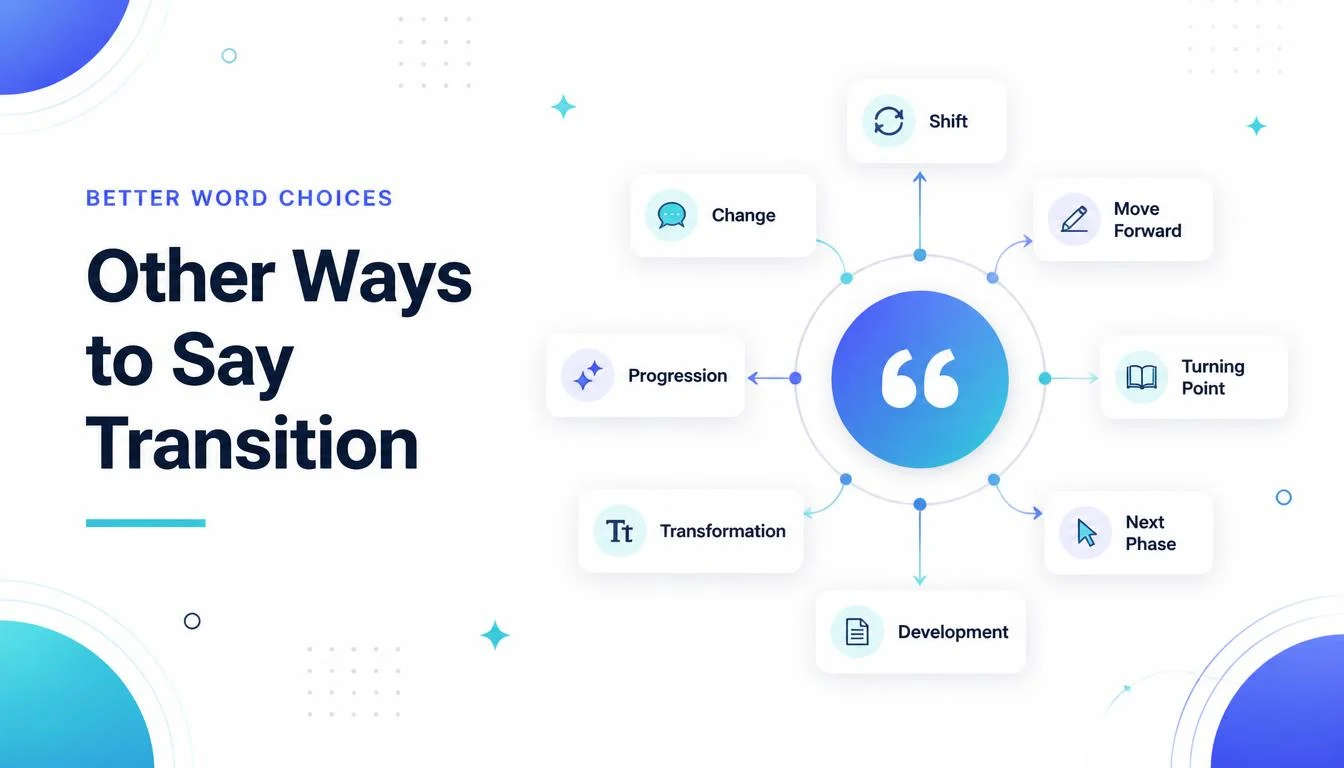
Other ways to say transition include shift, change, move, progression, adjustment, and transformation. Choose the best alternative based on your context and writing style.
Learning other ways to say transition can make your writing more precise, engaging, and professional. Whether you are writing an essay, preparing a business report, or speaking in everyday conversations, using suitable alternatives helps you express changes and connections more effectively.
The word “transition” describes the process of moving from one state, stage, situation, or topic to another. Depending on your context, you can use alternatives such as “shift,” “changeover,” “progression,” or “transformation.” Understanding these expressions will help you expand your vocabulary, avoid repetition, and communicate your ideas more naturally in academic, professional, and casual settings.
What Is “Transition”? (Meaning, Grammar & Real Use)
Imagine you are writing a business report, preparing a presentation, or explaining a career change. You may use the word transition several times, but repeating it can make your communication sound monotonous. Choosing a more precise expression helps readers understand whether you mean a simple change, a major transformation, or a gradual move between stages.
Learning alternatives to transition can improve your vocabulary and make professional conversations, academic assignments, and everyday explanations more natural. The best phrase depends on the situation. For instance, shift may describe a change in priorities, while transformation suggests a more substantial difference. Adjustment often refers to adapting to new conditions.
These expressions also help you communicate clearly when explaining processes, describing personal development, or connecting ideas in an essay. Although the phrase express excitement in English is more commonly associated with emotions, learning precise vocabulary serves a similar purpose: it allows you to communicate the exact meaning and tone you intend.
Definition: A transition is the process or period of moving from one state, stage, activity, or situation to another.
Grammar note: Transition is both a noun and a verb. As a noun, it describes a process or change. As a verb, it means to move from one condition to another. It is neutral to formal and is common in professional, academic, and everyday English.
Example: The company is going through a transition to a more flexible working model.
People use the word in spoken conversations, reports, presentations, essays, project plans, and discussions about life changes. Selecting a suitable alternative makes your message more specific and avoids unnecessary repetition.
When Should You Use “Transition”?
The word transition fits many situations, but a more specific expression can make your meaning clearer.
- Career changes: Use career shift, professional change, or career move when discussing a new role or industry.
- Business development: Use transformation, restructuring, or changeover for organizational changes.
- Academic writing: Use shift, progression, or move to describe changes in ideas, arguments, or stages.
- Personal growth: Use adjustment, adaptation, or transformation to explain changes in habits or circumstances.
- Technology: Use migration or changeover when moving systems, platforms, or data.
- Presentations: Use moving on to, next, or turning to when introducing a new topic.
Spoken vs. Written English
In conversation, simple expressions such as change, move, and shift often sound natural. In reports and academic writing, transition, transformation, progression, and realignment may communicate the intended meaning more precisely.
Formal vs. Informal English
Formal English often favors transformation, restructuring, and progression. Informal conversation usually favors change, switch, or move on to, depending on the context.
Is It Professional or Just Polite?
Transition is both professional and neutral. It is widely used in business communication, education, technology, and project management. It does not automatically sound polite or impolite because its main purpose is to describe a process of change.
Politeness depends on how you communicate that change. Professionalism depends on clarity, accuracy, and suitability for the audience.
Business-style example:
“Our team is preparing for a smooth transition to the new project management system.”
- Polite? ✔️ Yes, when used in a considerate sentence.
- Professional? ✔️ Yes, especially in business and academic contexts.
For additional guidance, read the Professional English Communication Guide.
Pros and Cons of Using “Transition”
Pros
- Professional: Appropriate for reports, presentations, and workplace discussions.
- Versatile: Applies to career changes, business processes, education, and personal development.
- Clear: Communicates movement from one stage or condition to another.
- Widely understood: Familiar to English speakers across many professional and academic settings.
Cons
- Can be vague: It may not explain exactly what is changing.
- Sometimes overused: Repetition can make reports and essays less engaging.
- May sound abstract: Some readers prefer concrete words such as change or move.
- Can imply a process: It may be less accurate when describing a sudden event rather than a period of change.
The solution is not to avoid the word. Instead, select a more precise expression whenever it communicates your intended meaning more effectively.
Common Mistakes People Make
1. Using “Transition” When “Change” Is More Natural
❌ Incorrect: “I made a transition in my daily routine yesterday.”
✔️ Correct: “I changed my daily routine yesterday.”
Why: Change sounds more natural when describing a simple personal decision.
2. Confusing “Transition” With “Transformation”
❌ Incorrect: “The team made a complete transition in its culture,” when emphasizing a fundamental overhaul.
✔️ Correct: “The team underwent a complete transformation in its culture.”
Why: Transformation emphasizes a substantial or fundamental difference, while transition highlights movement between states.
3. Using “Switch” in Formal Reports Without Considering Tone
❌ Incorrect: “The organization will switch its operating model,” in a highly formal report where precise institutional wording is expected.
✔️ Correct: “The organization will transition to a new operating model.”
Why: Switch is perfectly grammatical, but transition may better suit formal business writing.
4. Forgetting the Correct Preposition
❌ Incorrect: “We are transitioning for a new platform.”
✔️ Correct: “We are transitioning to a new platform.”
Why: Use transition to when describing the destination or new state.
5. Repeating “Transition” Instead of Improving Sentence Flow
❌ Incorrect: “The transition begins in June. During the transition, the transition team will manage the transition.”
✔️ Correct: “The change begins in June. During this period, the implementation team will coordinate the process.”
Why: Use accurate synonyms and references to reduce repetition without changing the meaning.
Alternatives by Category
The following selections are a preview of the full list of 30 alternatives below. Each phrase serves a slightly different purpose.
Formal alternatives to “Transition”
- Transformation: A substantial change in form or character.
- Progression: Movement through stages or developments.
- Evolution: Gradual development over time.
Pro Tip: Use transformation for major change and progression when the focus is on stages or development.
Casual alternatives
- Change: A general difference or move to something new.
- Shift: A change in direction, focus, or position.
- Switch: A move from one option to another.
Pro Tip: Prefer simple words in everyday conversation when they express your meaning clearly.
Professional alternatives
- Adjustment: A modification to fit new circumstances.
- Changeover: The process of replacing one system or arrangement with another.
- Realignment: A change intended to bring priorities or resources into better alignment.
Pro Tip: Match your terminology to the actual business process rather than choosing a word simply because it sounds formal.
Informal expressions
- Move on to: Begin discussing or doing something else.
- Move into: Begin a new role, activity, or phase.
- Switch over: Change from one system, method, or option to another.
Pro Tip: Use conversational expressions when speaking with colleagues, friends, or classmates, but keep the wording precise.
“Formal and informal English aren’t about correctness. They’re about context.”
Other Ways to Say “Transition” (Full List With Examples)
These 30 alternatives help you describe change, development, and movement with greater precision. They cover formal writing, workplace communication, academic work, and everyday conversation.
1. Phrase: Change
Meaning: Becoming different.
Explanation: A general, versatile alternative for almost any kind of difference or development.
Example Sentence: We need to change our approach.
Best Use: Everyday communication
Worst Use: Technical precision
Tone: Neutral and simple
Context Variability: casual / professional / spoken
2. Phrase: Shift
Meaning: A change in direction, focus, or position.
Explanation: Useful when priorities, opinions, strategies, or circumstances change.
Example Sentence: The company made a shift toward remote work.
Best Use: Strategy discussions
Worst Use: Physical replacement
Tone: Neutral and professional
Context Variability: casual / professional / spoken
3. Phrase: Transformation
Meaning: A significant change in form or character.
Explanation: Best when the result differs substantially from the original state.
Example Sentence: The transformation improved the entire organization.
Best Use: Major changes
Worst Use: Minor adjustments
Tone: Formal and impactful
Context Variability: professional / written / spoken
4. Phrase: Adjustment
Meaning: A modification made to suit new conditions.
Explanation: Emphasizes adapting something rather than completely replacing it.
Example Sentence: The adjustment helped the team work efficiently.
Best Use: Small modifications
Worst Use: Radical change
Tone: Neutral and practical
Context Variability: casual / professional / spoken
5. Phrase: Progression
Meaning: Movement through successive stages.
Explanation: Highlights development in a sequence, process, or series of events.
Example Sentence: The progression from training to independent work took several weeks.
Best Use: Staged development
Worst Use: Sudden change
Tone: Formal and analytical
Context Variability: professional / written / spoken
6. Phrase: Evolution
Meaning: Gradual development over time.
Explanation: Suitable for describing how ideas, systems, practices, or organizations develop.
Example Sentence: The evolution of the business reflects changing customer needs.
Best Use: Gradual development
Worst Use: Immediate replacement
Tone: Formal and descriptive
Context Variability: professional / written / spoken
7. Phrase: Changeover
Meaning: A process of replacing one arrangement with another.
Explanation: Often used for equipment, production, operations, and systems.
Example Sentence: The changeover to the new software begins Monday.
Best Use: System replacement
Worst Use: Personal growth
Tone: Practical and neutral
Context Variability: professional / written / spoken
8. Phrase: Switch
Meaning: A move from one option to another.
Explanation: A concise alternative for changing methods, preferences, tools, or activities.
Example Sentence: We decided to switch to a different provider.
Best Use: Everyday decisions
Worst Use: Gradual development
Tone: Casual and direct
Context Variability: casual / professional / spoken
9. Phrase: Adaptation
Meaning: The process of adjusting to new conditions.
Explanation: Emphasizes responding successfully to a different environment or situation.
Example Sentence: Her adaptation to the new role was impressive.
Best Use: New circumstances
Worst Use: Simple replacement
Tone: Neutral and thoughtful
Context Variability: professional / written / spoken
10. Phrase: Modification
Meaning: A change made to improve or alter something.
Explanation: Appropriate when a plan, product, method, or design is changed without necessarily being replaced.
Example Sentence: The modification made the process more efficient.
Best Use: Planned revisions
Worst Use: Complete reinvention
Tone: Formal and technical
Context Variability: professional / written / spoken
11. Phrase: Movement
Meaning: Progress or a change in position or direction.
Explanation: Useful for describing a move toward a goal, stage, or different approach.
Example Sentence: We are seeing movement toward a more collaborative culture.
Best Use: Directional change
Worst Use: Exact procedures
Tone: Neutral and descriptive
Context Variability: casual / professional / spoken
12. Phrase: Development
Meaning: Growth or advancement over time.
Explanation: Focuses on what emerges or improves rather than the act of switching between states.
Example Sentence: The development of the new policy took six months.
Best Use: Long-term growth
Worst Use: Immediate switching
Tone: Neutral and professional
Context Variability: professional / written / spoken
13. Phrase: Transformation process
Meaning: A sequence of steps that creates substantial change.
Explanation: Highlights the work involved in a major organizational or personal change.
Example Sentence: The transformation process requires careful planning.
Best Use: Organizational change
Worst Use: Minor updates
Tone: Formal and strategic
Context Variability: professional / written / spoken
14. Phrase: Realignment
Meaning: An adjustment that brings elements into better agreement.
Explanation: Often describes changing business priorities, teams, resources, or objectives.
Example Sentence: The realignment of priorities will support our new strategy.
Best Use: Strategic planning
Worst Use: Casual conversation
Tone: Formal and corporate
Context Variability: professional / written / spoken
15. Phrase: Reorganization
Meaning: A restructuring of how something is arranged.
Explanation: Appropriate for changes to departments, responsibilities, workflows, or systems.
Example Sentence: The reorganization clarified everyone’s responsibilities.
Best Use: Structural changes
Worst Use: Minor shifts
Tone: Formal and administrative
Context Variability: professional / written / spoken
16. Phrase: Restructuring
Meaning: Changing the structure of an organization or system.
Explanation: More specific than transition when roles, departments, finances, or operations are being reorganized.
Example Sentence: The company announced a restructuring of its regional teams.
Best Use: Organizational reform
Worst Use: Personal routines
Tone: Formal and corporate
Context Variability: professional / written / spoken
17. Phrase: Passage
Meaning: Movement from one stage, period, or condition to another.
Explanation: Often appears in literary, reflective, or formal descriptions of life stages and periods.
Example Sentence: The passage from childhood to adulthood brings new responsibilities.
Best Use: Life stages
Worst Use: Software changes
Tone: Literary and formal
Context Variability: written / professional / spoken
18. Phrase: Move
Meaning: An act of changing position, situation, or direction.
Explanation: A simple option for career changes, decisions, and movement into a new stage.
Example Sentence: Moving into management was an important career move.
Best Use: Career decisions
Worst Use: Complex processes
Tone: Neutral and direct
Context Variability: casual / professional / spoken
19. Phrase: Migration
Meaning: Moving data, systems, or people from one place to another.
Explanation: Especially useful in technology, computing, and discussions about population movement.
Example Sentence: The data migration will take place overnight.
Best Use: Technical transfers
Worst Use: General essays
Tone: Technical and formal
Context Variability: professional / written / spoken
20. Phrase: Conversion
Meaning: Changing something into a different form or use.
Explanation: Use it when the result takes a new format, function, or classification.
Example Sentence: The conversion of the files to PDF preserved their formatting.
Best Use: Format changes
Worst Use: Gradual growth
Tone: Neutral and technical
Context Variability: professional / written / spoken
21. Phrase: Advancement
Meaning: Progress toward a higher level or more developed state.
Explanation: Emphasizes forward movement, improvement, or increased responsibility.
Example Sentence: Her advancement into a leadership role followed years of experience.
Best Use: Career progress
Worst Use: Declining conditions
Tone: Positive and professional
Context Variability: professional / written / spoken
22. Phrase: Emergence
Meaning: The appearance or beginning of something new.
Explanation: Appropriate when a new trend, situation, or phase starts to become visible.
Example Sentence: The emergence of new technologies changed the industry.
Best Use: New developments
Worst Use: Planned replacement
Tone: Formal and analytical
Context Variability: professional / written / spoken
23. Phrase: Reorientation
Meaning: Changing direction, priorities, or perspective.
Explanation: Useful when a person or organization adopts a different focus or strategy.
Example Sentence: The reorientation of our strategy places customers first.
Best Use: Strategic refocusing
Worst Use: Minor edits
Tone: Formal and analytical
Context Variability: professional / written / spoken
24. Phrase: Repositioning
Meaning: Changing how something is placed, presented, or perceived.
Explanation: Common in marketing, business strategy, and professional branding.
Example Sentence: The repositioning of the brand attracted a new audience.
Best Use: Brand strategy
Worst Use: Personal routines
Tone: Professional and strategic
Context Variability: professional / written / spoken
25. Phrase: Metamorphosis
Meaning: A dramatic change in form or nature.
Explanation: Particularly effective in creative writing and vivid descriptions of profound development.
Example Sentence: The small business underwent a remarkable metamorphosis.
Best Use: Dramatic change
Worst Use: Routine updates
Tone: Literary and expressive
Context Variability: written / professional / spoken
26. Phrase: Turning point
Meaning: A moment when a situation begins to change significantly.
Explanation: Unlike transition, which often describes a process, this phrase emphasizes a key moment.
Example Sentence: Her promotion became a turning point in her career.
Best Use: Pivotal moments
Worst Use: Gradual processes
Tone: Reflective and clear
Context Variability: casual / professional / spoken
27. Phrase: Move on to
Meaning: Begin the next activity, topic, or stage.
Explanation: A natural expression for presentations, meetings, lessons, and conversations.
Example Sentence: Let’s move on to the next item on the agenda.
Best Use: Topic changes
Worst Use: Formal definitions
Tone: Conversational and neutral
Context Variability: casual / professional / spoken
28. Phrase: Move into
Meaning: Begin a new role, activity, phase, or area.
Explanation: Use it to describe entering a new professional or personal situation.
Example Sentence: He plans to move into project management next year.
Best Use: New roles
Worst Use: Technical conversions
Tone: Natural and neutral
Context Variability: casual / professional / spoken
29. Phrase: Switch over
Meaning: Change from one method, system, or option to another.
Explanation: A conversational alternative often used for tools, devices, and working arrangements.
Example Sentence: We will switch over to the backup system at noon.
Best Use: Practical changes
Worst Use: Academic analysis
Tone: Casual and direct
Context Variability: casual / professional / spoken
30. Phrase: Next phase
Meaning: The following stage of a process.
Explanation: Emphasizes what comes after the current stage, especially in projects and plans.
Example Sentence: The team is preparing for the next phase of development.
Best Use: Project planning
Worst Use: Unplanned events
Tone: Professional and forward-looking
Context Variability: professional / written / spoken
Comparison Table: Top 10 Alternatives at a Glance
Use this table to choose a phrase that fits your purpose and audience.
| Phrase | Tone | Best Use |
|---|---|---|
| Change | Neutral | Everyday communication |
| Shift | Neutral, professional | Changes in focus |
| Transformation | Formal, impactful | Major developments |
| Adjustment | Practical, neutral | Minor modifications |
| Progression | Formal, analytical | Stages of development |
| Evolution | Formal, descriptive | Gradual development |
| Switch | Casual, direct | Changing options |
| Adaptation | Neutral, thoughtful | New circumstances |
| Development | Professional, neutral | Growth and improvement |
| Move on to | Conversational | Presentations and meetings |
Quick Self-Check (Mini Quiz)
Test your understanding of how these expressions work in real situations.
1. Which phrase best describes a fundamental change in a company’s culture?
A. Adjustment
B. Transformation
C. Switch
2. You are presenting a report and want to introduce the next agenda item. Which expression is most natural?
A. Move on to
B. Metamorphosis
C. Migration
3. Your team is changing its software platform. Which phrase is most suitable for a technical project plan?
A. Passage
B. Changeover
C. Turning point
4. Which phrase best describes gradual development over several years?
A. Evolution
B. Switch over
C. Modification
FAQs
1. What are the best alternatives to transition?
The best options include change, shift, transformation, adjustment, and progression. The right choice depends on whether you mean a simple change, a major development, or movement between stages.
2. What is a more professional word for transition?
Transformation, progression, realignment, and restructuring can sound appropriate in professional contexts. Choose the word that accurately describes the change rather than relying on formality alone.
3. What is another word for transition in an essay?
Useful alternatives include shift, progression, development, evolution, and move on to. For connecting paragraphs, choose a transition word or phrase that clearly expresses the relationship between your ideas.
4. What is the difference between transition and transformation?
A transition is the process of moving from one state to another. A transformation emphasizes a substantial change in form, character, or structure.
5. How can I avoid repeating the word transition?
Use a precise synonym such as change, shift, adjustment, or development. You can also restructure sentences or use expressions such as during this period and in the next phase when the context is clear.
For more vocabulary practice, explore Other Ways to Say “Amazing” and learn how to choose expressions for different situations.
conclusion
Expanding your vocabulary helps you explain changes more clearly in conversations, essays, presentations, and professional reports. The most effective alternatives depend on the type of change, the intended meaning, and the audience. A shift describes a change in focus, an adjustment suggests a modification, and a transformation emphasizes a major difference.
Practice using one or two new expressions each day. Write example sentences, compare formal and informal contexts, and notice how professional writers describe different stages of change. Over time, these habits will help you communicate with greater precision and confidence.
Read More Related Articles:
- Other Ways to Say You’re Beautiful | Beyond the Ordinary Compliment In 2026
- Other Ways to Say I Love You in Spanish | Beyond the Usual Phrase In 2026
- Other Ways to Say I Love You in Other Languages | Beyond the Classic Three Words In 2026

Victoria Hughes is a content writer dedicated to making communication clearer and more effective. Through TextsResponse.com, she shares practical insights and thoughtfully crafted response ideas that help readers express themselves with confidence.