Quick Answer
“This is noted” is a short, professional way to confirm that you have read and understood information. If you want alternatives to “this is noted” that sound more natural or more formal, try these five: noted with thanks, understood, duly noted, got it, acknowledged.
This is noted” is a common phrase used in emails, meetings, and workplace chats to confirm that a message has been received and understood. People use it to sound polite and professional without writing a long response.
However, repeating the same phrase in every email can make your writing feel flat or robotic. Learning alternatives to “this is noted” helps you sound more natural, confident, and fluent in both spoken and written English. It also helps you express excitement in English when the situation calls for a warmer tone, instead of always sounding purely transactional.
Whether you are writing a formal business email or replying casually to a coworker, choosing the right alternative can instantly improve how professional and polished your English sounds.
The right tone makes your English sound professional and confident.”
Quick Categories
Formal Alternatives to “This Is Noted”
- Duly noted
- Acknowledged with thanks
- This has been recorded
- Noted for future reference
Pro Tip: Use formal alternatives in emails to clients, senior management, or official documentation where tone matters most.
Casual Alternatives
- Got it
- Cool, noted
- Okay, thanks
- Sounds good
Pro Tip: Save casual alternatives for coworkers or friends you already have an informal relationship with.
Professional Alternatives
- Understood, thank you
- I have taken note of this
- Acknowledged
- Noted with thanks
Pro Tip: Pair professional alternatives with a short next step, such as “Understood, I will proceed accordingly,” to sound proactive.
Informal Expressions
- No worries, got it
- All good, thanks
- Yep, on it
- Noted, thanks
Pro Tip: Informal expressions work well in team chat apps like Slack, but avoid them in client-facing emails.
Common Mistakes
- Overusing “this is noted” in every reply Example: Replying “This is noted” to five messages in a row without variation.
- Using it in emotional or apologetic contexts Example: Saying “This is noted” after someone shares bad personal news, which sounds cold.
- Treating it as a complete response to a question Example: Writing only “This is noted” when the sender actually asked a direct question.
- Using overly casual versions with senior staff Example: Replying “Cool, noted” to a company director.
- Forgetting to confirm action, not just receipt Example: Saying “This is noted” but never following up on the required task.
Variety in language is what separates fluent speakers from robotic ones.
What Does “This Is Noted” Mean?
“This is noted” means that a piece of information has been read, understood, and mentally or officially recorded by the recipient. It is a passive-voice construction using “this” as the subject and “noted” as the past participle.
Example Sentence: “This is noted, and I will update the report accordingly.”
When to Use “This Is Noted”
- Confirming receipt of instructions or updates
- Acknowledging feedback in a professional setting
- Responding to policy changes or announcements
- Closing out an email thread politely
Spoken vs Written:
- Spoken: Less common; people often say “Got it” or “Understood” instead.
- Written: Very common in emails, project management tools, and official memos.
Formal vs Informal:
- Formal: Suitable for client communication and official records.
- Informal: Can feel slightly stiff in casual chats compared to “Got it” or “Sounds good.”
Is It Professional or Polite to Say “This Is Noted”?
“This is noted” is both polite and professional in most workplace contexts. It communicates attentiveness without being overly emotional or wordy.
Business Example: “This is noted. I will revise the proposal before Friday’s meeting.”
Polite? Yes Professional? Yes (in most cases)
Pros and Cons of Using “This Is Noted”
Pros:
- Simple and natural
- Sounds professional
- Common in workplace usage
- Easy to understand
Cons:
- Can feel repetitive
- Overused in email threads
- Limited emotional range
- Not suitable for casual or warm conversations
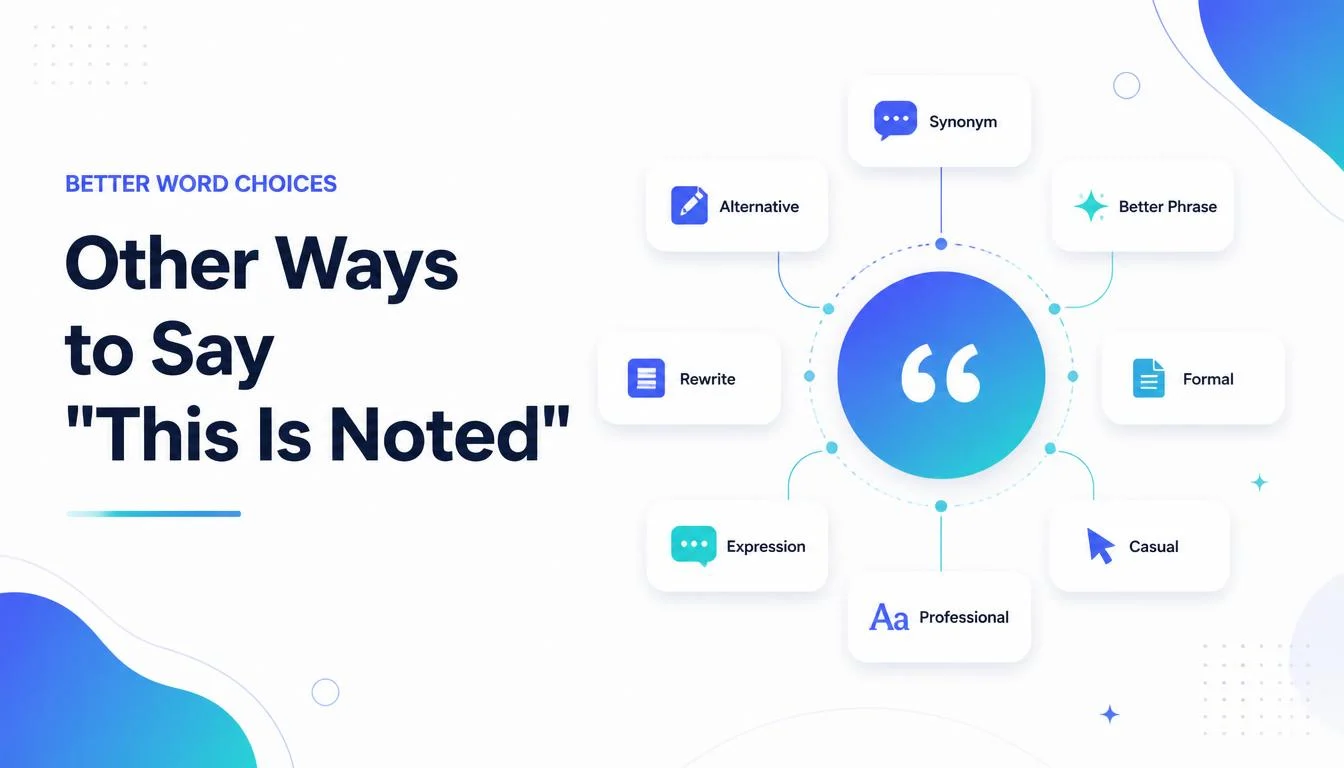
Other Ways to Say “This Is Noted”
These alternatives will help you sound more fluent, confident, and natural in different situations. Use them according to tone, context, and audience to express acknowledgment, understanding, or approval when appropriate.
1. Phrase: Duly noted
Meaning: Formally acknowledging information.
Explanation: Adds a slightly formal, almost official tone.
Example Sentence: “Duly noted, we will adjust the schedule accordingly.”
Best Use: Formal emails
Worst Use: Casual chats
Tone: Formal, respectful
Context Variability: Professional
2. Phrase: Understood
Meaning: Confirming clear comprehension.
Explanation: Short and direct, works in nearly any setting.
Example Sentence: “Understood, I’ll send the file by noon.”
Best Use: Meetings, emails
Worst Use: Emotional talks
Tone: Confident, clear
Context Variability: Professional, spoken
3. Phrase: Got it
Meaning: Casually confirming receipt of information.
Explanation: A quick, friendly way to acknowledge something.
Example Sentence: “Got it, I’ll update you tomorrow.”
Best Use: Team chats
Worst Use: Formal reports
Tone: Casual, friendly
Context Variability: Casual, spoken
4. Phrase: Acknowledged
Meaning: Formally confirming receipt of a message.
Explanation: Common in corporate or technical communication.
Example Sentence: “Acknowledged, the changes will be reviewed.”
Best Use: Corporate emails
Worst Use: Personal chats
Tone: Formal, neutral
Context Variability: Professional
5. Phrase: Noted with thanks
Meaning: Confirming receipt while expressing gratitude.
Explanation: Adds warmth to a formal acknowledgment.
Example Sentence: “Noted with thanks, I appreciate the update.”
Best Use: Client emails
Worst Use: Informal texts
Tone: Polite, warm
Context Variability: Professional
6. Phrase: I have taken note of this
Meaning: Explicitly stating that information is recorded.
Explanation: More descriptive and slightly formal.
Example Sentence: “I have taken note of this and will follow up next week.”
Best Use: Formal reports
Worst Use: Quick replies
Tone: Formal, thorough
Context Variability: Professional
7. Phrase: Sounds good
Meaning: Casually agreeing or confirming.
Explanation: Common in friendly workplace exchanges.
Example Sentence: “Sounds good, see you at three.”
Best Use: Casual coordination
Worst Use: Official documents
Tone: Relaxed, friendly
Context Variability: Casual, spoken
8. Phrase: Noted for future reference
Meaning: Recording information for later use.
Explanation: Highlights that the note will matter later.
Example Sentence: “Noted for future reference, thank you for flagging it.”
Best Use: Policy updates
Worst Use: One time casual replies
Tone: Formal, careful
Context Variability: Professional
9. Phrase: This has been recorded
Meaning: Confirming official documentation of information.
Explanation: Sounds administrative and precise.
Example Sentence: “This has been recorded in the meeting minutes.”
Best Use: Official records
Worst Use: Casual talk
Tone: Formal, procedural
Context Variability: Professional
10. Phrase: On it
Meaning: Confirming action is being taken immediately.
Explanation: Shows quick responsiveness rather than just acknowledgment.
Example Sentence: “On it, I’ll have this fixed shortly.”
Best Use: Urgent tasks
Worst Use: Formal writing
Tone: Energetic, quick
Context Variability: Casual, spoken
11. Phrase: Copy that
Meaning: Confirming receipt of a message clearly.
Explanation: Borrowed from radio communication, now used informally.
Example Sentence: “Copy that, I’ll handle it right away.”
Best Use: Team banter
Worst Use: Client emails
Tone: Playful, casual
Context Variability: Casual, spoken
12. Phrase: Received and understood
Meaning: Fully confirming both receipt and comprehension.
Explanation: Slightly formal and thorough.
Example Sentence: “Received and understood, thank you for the clarification.”
Best Use: Detailed instructions
Worst Use: Quick chats
Tone: Formal, precise
Context Variability: Professional
13. Phrase: Noted, thanks
Meaning: A short casual acknowledgment with gratitude.
Explanation: Balances politeness with brevity.
Example Sentence: “Noted, thanks for letting me know.”
Best Use: Quick email replies
Worst Use: Formal reports
Tone: Polite, brief
Context Variability: Casual, professional
14. Phrase: Alright, got it
Meaning: Casually confirming understanding.
Explanation: Adds a conversational tone to acknowledgment.
Example Sentence: “Alright, got it, I’ll take care of that.”
Best Use: Team conversations
Worst Use: Formal writing
Tone: Relaxed, informal
Context Variability: Casual, spoken
15. Phrase: I appreciate the update, noted
Meaning: Combining gratitude with confirmation.
Explanation: Useful when someone shares important information.
Example Sentence: “I appreciate the update, noted for the next meeting.”
Best Use: Professional updates
Worst Use: Casual texting
Tone: Warm, professional
Context Variability: Professional
16. Phrase: Message received
Meaning: Confirming that information has arrived.
Explanation: Slightly technical but clear.
Example Sentence: “Message received, I’ll respond in detail soon.”
Best Use: Written communication
Worst Use: Face to face talk
Tone: Neutral, clear
Context Variability: Professional, spoken
17. Phrase: Fair enough, noted
Meaning: Accepting information while acknowledging it.
Explanation: Slightly conversational, shows agreement.
Example Sentence: “Fair enough, noted, we’ll adjust the plan.”
Best Use: Discussions
Worst Use: Formal reports
Tone: Casual, agreeable
Context Variability: Casual, spoken
18. Phrase: Duly registered
Meaning: Formally confirming that something is on record.
Explanation: More administrative in tone.
Example Sentence: “Your request has been duly registered.”
Best Use: Official documentation
Worst Use: Everyday chats
Tone: Formal, official
Context Variability: Professional
19. Phrase: I hear you, noted
Meaning: Acknowledging with empathy.
Explanation: Adds a personal, understanding tone.
Example Sentence: “I hear you, noted, let’s find a solution together.”
Best Use: Team discussions
Worst Use: Strictly formal emails
Tone: Empathetic, warm
Context Variability: Casual, professional
20. Phrase: Great, noted
Meaning: Positively acknowledging information.
Explanation: Adds enthusiasm to a simple confirmation.
Example Sentence: “Great, noted, I’ll include this in the plan.”
Best Use: Positive updates
Worst Use: Serious or sensitive topics
Tone: Upbeat, friendly
Context Variability: Casual, professional
21. Phrase: Understood and appreciated
Meaning: Confirming comprehension with gratitude.
Explanation: Useful for detailed or helpful feedback.
Example Sentence: “Understood and appreciated, I’ll revise accordingly.”
Best Use: Feedback responses
Worst Use: Quick casual replies
Tone: Polite, grateful
Context Variability: Professional
22. Phrase: Point taken
Meaning: Acknowledging a valid comment or criticism.
Explanation: Common when responding to feedback or correction.
Example Sentence: “Point taken, I’ll be more careful next time.”
Best Use: Feedback conversations
Worst Use: Simple task updates
Tone: Reflective, honest
Context Variability: Casual, professional
23. Phrase: Confirmed and noted
Meaning: Strongly confirming that information is recorded.
Explanation: Emphasizes certainty and reliability.
Example Sentence: “Confirmed and noted, the meeting is at 10 AM.”
Best Use: Scheduling
Worst Use: Emotional conversations
Tone: Firm, clear
Context Variability: Professional
24. Phrase: Thanks, I’ll keep that in mind
Meaning: Acknowledging while promising future consideration.
Explanation: Shows thoughtfulness beyond simple confirmation.
Example Sentence: “Thanks, I’ll keep that in mind for the next project.
Best Use: Advice or suggestions
Worst Use: Urgent instructions
Tone: Thoughtful, polite
Context Variability: Casual, professional
25. Phrase: Alright, noted for the record
Meaning: Confirming information for documentation purposes.
Explanation: Slightly formal, useful in meetings.
Example Sentence: “Alright, noted for the record, we’ll proceed as discussed.”
Best Use: Meeting minutes
Worst Use: Casual texting
Tone: Formal, procedural
Context Variability: Professional
26. Phrase: Well noted
Meaning: Emphasizing careful attention to information.
Explanation: Slightly more expressive than a plain “noted.”
Example Sentence: “Well noted, I’ll make sure this doesn’t happen again.”
Best Use: Corrections, feedback
Worst Use: Very casual talk
Tone: Formal, attentive
Context Variability: Professional
27. Phrase: I’ve made a note of that
Meaning: Personally confirming that information is recorded.
Explanation: Adds a personal touch to the acknowledgment.
Example Sentence: “I’ve made a note of that for our next call.”
Best Use: One on one conversations
Worst Use: Group announcements
Tone: Personal, careful
Context Variability: Professional, spoken
28. Phrase: Right, noted
Meaning: Quickly confirming understanding.
Explanation: Slightly informal but still clear.
Example Sentence: “Right, noted, I’ll fix that today.”
Best Use: Team check ins
Worst Use: Client facing emails
Tone: Direct, casual
Context Variability: Casual, spoken
29. Phrase: This is on record
Meaning: Emphasizing formal documentation.
Explanation: Common in legal or official contexts.
Example Sentence: “This is on record and will be reviewed by management.”
Best Use: Legal or official matters
Worst Use: Everyday conversation
Tone: Formal, serious
Context Variability: Professional
30. Phrase: I’ve registered your comment
Meaning: Formally confirming that feedback has been recorded.
Explanation: Common in customer service and support contexts.
Example Sentence: “I’ve registered your comment and will pass it along to the team.”
Best Use: Customer service
Worst Use: Casual friend chats
Tone: Formal, service oriented
Context Variability: Professional
Small changes in wording can completely change how confident you sound.
Mini Quiz
1. Which phrase is best for a formal client email?
a) Cool, noted
b) Duly noted
c) On it
2. Which alternative shows quick action rather than just acknowledgment?
a) On it
b) Acknowledged
c) This has been recorded
3. Which phrase adds warmth to a formal acknowledgment?
a) This is on record
b) Noted with thanks
c) Copy that
4. Which phrase is too casual for a senior manager?
a) Understood
b) Cool, noted
c) Acknowledged with thanks
“Fluency is not about big words, it’s about the right words.”
Comparison Table: Top Alternatives
| Phrase | Tone | Best Use |
|---|---|---|
| Duly noted | Formal | Client emails |
| Understood | Neutral | Meetings |
| Got it | Casual | Team chats |
| Acknowledged | Formal | Corporate emails |
| Noted with thanks | Warm | Client communication |
| On it | Energetic | Urgent tasks |
| Sounds good | Relaxed | Casual coordination |
| Point taken | Reflective | Feedback |
| Confirmed and noted | Firm | Scheduling |
| Well noted | Attentive | Corrections |
FAQs
Is “this is noted” grammatically correct?
Yes, it is grammatically correct and commonly used in professional English.
What is a more formal alternative to “this is noted”?
Duly noted” or “acknowledged with thanks” are strong formal alternatives.
Can I use “got it” instead of “this is noted” at work?
Yes, but only in casual team communication, not in formal client emails.
Why should I use alternatives to “this is noted”?
Using varied professional reaction phrases prevents repetitive writing and improves fluency.
Is “noted” alone considered rude?
It can sound abrupt in written English, so adding “thanks” or a follow-up sentence is recommended.
Conclusion
Learning alternatives to “this is noted” helps you communicate with greater fluency, confidence, and professionalism in both spoken and written English. Instead of repeating the same phrase, you can now choose from formal, casual, and professional options depending on your audience.
Practice using these informal expressions in English and professional reaction phrases daily, and pay close attention to tone in every conversation. Small adjustments in word choice can make a lasting difference in how clearly and confidently you communicate.
Read More Related Articles:
- Other Ways to Say “From” in a Letter | For a More Professional Sign-Off In 2026
- Other Ways to Say Be Safe | Upgrade Your Farewells In 2026
- Other Ways to Say Feel Free | Formal Writing and Business Communication In 2026

Daniel Murphy is a professional writer and blogger specializing in digital communication and messaging trends. As a contributor to TextsResponse.com, he creates reader-focused content designed to help people find the right words at the right time.