Quick Answer:
The most common ways to say thanks in Spanish include gracias (thank you), muchas gracias (thank you very much), mil gracias (thanks a million), te lo agradezco (I appreciate it), and muy amable (very kind of you). These alternatives to thanks in Spanish cover everything from casual chats to professional emails.
Thanks in Spanish or gracias is one of the first phrases English learners pick up. It’s simple, polite, and universally understood across the Spanish-speaking world. But relying on the same word every time you want to express gratitude can make you sound repetitive and limit your ability to convey genuine emotion.
Learning different alternatives to thanks in Spanish helps you sound more fluent, natural, and culturally aware. Whether you need to express excitement in English (or Spanish) when someone surprises you, or you want to deliver a polished thank-you in a business email, having a rich vocabulary of gratitude phrases will elevate your communication skills instantly.
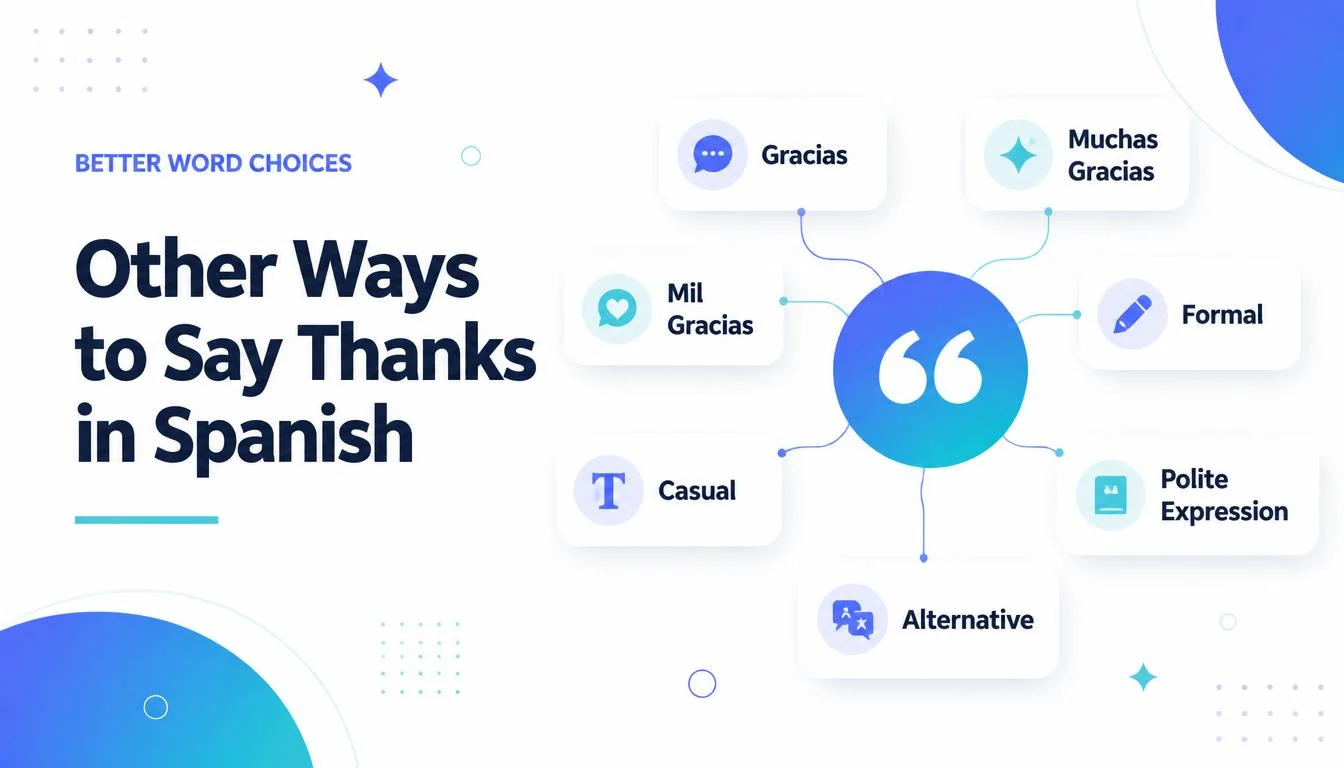
Quick Categories
Formal Alternatives to Thanks in Spanish
- Se lo agradezco – I thank you (formal)
- Le agradezco su tiempo – I appreciate your time
- Muy agradecido / agradecida – Very grateful
- Gracias de antemano – Thank you in advance
Casual Alternatives
- Gracias – Thanks
- Muchas gracias – Thanks a lot
- Mil gracias – A thousand thanks
- Gracias, qué lindo – Thanks, how nice
Professional Alternatives
- Se lo agradezco mucho – I truly appreciate it
- Le estoy muy agradecido – I am very grateful to you
- Agradezco su apoyo – I appreciate your support
- Es muy amable de su parte – That’s very kind of you
Informal Expressions
- Te pasaste – You shouldn’t have
- Te debo una – I owe you one
- Gracias a ti – Thanks to you
- ¡Qué detalle! – What a thoughtful gesture
Pro Tip: Match your level of gratitude to the situation. A quick gracias works for holding a door, but a favor or gift deserves muchísimas gracias or a heartfelt te lo agradezco de corazón.
Common Mistakes to Avoid
1. Using gracias para instead of gracias por
- ❌ Gracias para tu ayuda.
- ✅ Gracias por tu ayuda.
- Por means “for” when thanking someone for something.
2. Overusing gracias without variation
- Repeating gracias in every situation sounds robotic. Mix in muchas gracias, mil gracias, or te lo agradezco to sound more natural.
3. Misusing formal vs. informal pronouns
- ❌ Using te with a boss or elder.
- ✅ Use le or se for formal situations (usted).
4. Saying gracias mucho instead of muchas gracias
- ❌ Gracias mucho por venir.
- ✅ Muchas gracias por venir.
- Adjective (muchas) must agree with the noun (gracias).
5. Forgetting gender agreement with agradecido
What Does Thanks in Spanish Mean?
Thanks in Spanish translates directly to gracias, which comes from the Latin gratias meaning “thanks” or “favor.” It is a feminine noun and is always used in the plural form in Spanish even when thanking one person for one thing.
Grammar note: Gracias is a feminine plural noun, so adjectives and modifiers must agree: muchas gracias (not mucho gracias).
Example: Gracias por el café. – Thanks for the coffee.
When to Use Thanks in Spanish
- Everyday interactions – Saying gracias to cashiers, waiters, and strangers
- Casual conversations – With friends, family, and colleagues you know well
- Written communication – Emails, texts, and social media posts
- Formal settings – Business meetings, customer service, and professional correspondence (with appropriate formal variations)
Spoken vs Written: Gracias works in both, but written Spanish often uses more formal variants like le agradezco in emails.
Formal vs Informal: Use tú forms (te agradezco) with people you know. Use usted forms (le agradezco, se lo agradezco) with strangers, elders, and superiors.
Is It Professional or Polite to Say Thanks in Spanish?
Polite? ✔️ Yes – Gracias is always polite and universally accepted.
Professional? ❌ No (in most cases) – While gracias is fine in casual work settings, professional correspondence often calls for more formal expressions like le agradezco or se lo agradezco.
Business-style example: Le agradezco su atención a este asunto. – I appreciate your attention to this matter.
Pros and Cons of Using Thanks in Spanish
Pros
- Simple and natural – easy to remember and pronounce
- Friendly tone – works in almost any casual context
- Common usage – understood by all Spanish speakers
- Easy to understand – no complex grammar required
Cons
- Too informal for work – lacks the weight needed in professional settings
- Overused – can sound repetitive and unoriginal
- Limited emotional range – doesn’t convey deep gratitude
- Not suitable for formal writing – letters, proposals, or official documents demand more elaborate expressions
Other Ways to Say Thanks in Spanish
These 30 alternatives will help you sound more fluent, confident, and natural in different situations. Use them according to tone, context, and audience to express excitement, admiration, or approval.
1. Phrase: Gracias
Meaning: The standard, all-purpose “thank you.”
Explanation: The most common and versatile way to say thanks in Spanish.
Example Sentence: Gracias por tu ayuda. – Thanks for your help.
Best Use: Everyday situations
Worst Use: Formal business letters
Tone: Neutral, friendly
Context Variability: Universal – spoken and written
2. Phrase: Muchas gracias
Meaning: “Thank you very much” or “many thanks.”
Explanation: Adds emphasis by literally giving “many thanks.”
Example Sentence: ¡Muchas gracias por venir! – Thank you very much for coming!
Best Use: Showing extra appreciation
Worst Use: When a simple nod will do
Tone: Warm, appreciative
Context Variability: Casual and formal – widely used
3. Phrase: Muchísimas gracias
Meaning: “Thank you so very much.”
Explanation: The augmentative -ísimas intensifies the gratitude significantly.
Example Sentence: ¡Muchísimas gracias por el regalo! – Thank you so much for the gift!
Best Use: Heartfelt thanks
Worst Use: Minor favors
Tone: Enthusiastic, warm
Context Variability: Casual, friendly
4. Phrase: Mil gracias
Meaning: “A thousand thanks” – equivalent to “thanks a million.”
Explanation: A poetic and emphatic way to show deep gratitude.
Example Sentence: ¡Mil gracias por todo lo que hiciste! – A thousand thanks for everything you did!
Best Use: Significant favors or gestures
Worst Use: Routine exchanges
Tone: Grateful, heartfelt
Context Variability: Casual and semi-formal
5. Phrase: Un millón de gracias
Meaning: “A million thanks.”
Explanation: Even more emphatic than mil gracias – expresses overwhelming gratitude.
Example Sentence: Te doy un millón de gracias por tu apoyo. – I give you a million thanks for your support.
Best Use: Major life events or incredible kindness
Worst Use: Everyday small talk
Tone: Exaggerated, sincere
Context Variability: Casual, emotional
6. Phrase: Gracias de todo corazón
Meaning: “Thanks from the bottom of my heart.”
Explanation: A deeply emotional and sincere expression of gratitude.
Example Sentence: Gracias de todo corazón por estar conmigo. – Thanks from the bottom of my heart for being with me.
Best Use: Personal, emotional moments
Worst Use: Business or professional settings
Tone: Deeply emotional, sincere
Context Variability: Personal, intimate
7. Phrase: Te lo agradezco
Meaning: “I appreciate it” (informal).
Explanation: A more personal and mature way to say thank you to someone you know.
Example Sentence: Te lo agradezco de verdad. – I truly appreciate it.
Best Use: Friends, family, close colleagues
Worst Use: Strangers or superiors
Tone: Warm, genuine
Context Variability: Informal, spoken
8. Phrase: Se lo agradezco
Meaning: “I appreciate it” (formal).
Explanation: The formal version using usted – shows respect and professionalism.
Example Sentence: Se lo agradezco mucho, señora. – I truly appreciate it, madam.
Best Use: Business, elders, strangers
Worst Use: Casual conversations with friends
Tone: Respectful, professional
Context Variability: Formal, professional
9. Phrase: Te lo agradezco de corazón
Meaning: “I thank you from the bottom of my heart” (informal).
Explanation: Combines personal appreciation with deep emotional weight.
Example Sentence: Te lo agradezco de corazón, amigo. – I thank you from the bottom of my heart, friend.
Best Use: Close relationships
Worst Use: Professional environments
Tone: Deeply grateful, personal
Context Variability: Casual, emotional
10. Phrase: Te lo agradezco en el alma
Meaning: “I thank you from the bottom of my soul.”
Explanation: An even more profound and poetic version of heartfelt thanks.
Example Sentence: Te lo agradezco en el alma por salvarme. – I thank you from the bottom of my soul for saving me.
Best Use: Life-changing moments
Worst Use: Everyday gratitude
Tone: Poetic, intense
Context Variability: Personal, dramatic
11. Phrase: Te estoy eternamente agradecido
Meaning: “I am eternally grateful to you.”
Explanation: A formal, enduring expression of lifelong gratitude.
Example Sentence: Te estoy eternamente agradecido por todo lo que has hecho. – I am eternally grateful for everything you’ve done.
Best Use: Major life debts
Worst Use: Minor favors
Tone: Formal, profound
Context Variability: Formal, heartfelt
12. Phrase: No tengo palabras para agradecerte
Meaning: “I have no words to thank you.”
Explanation: Used when you are overwhelmed with gratitude and cannot find the right words.
Example Sentence: No tengo palabras para agradecerte tu generosidad. – I have no words to thank you for your generosity.
Best Use: Overwhelming kindness
Worst Use: Simple favors
Tone: Overwhelmed, sincere
Context Variability: Casual, emotional
13. Phrase: No sé cómo agradecerte
Meaning: “I don’t know how to thank you.”
Explanation: A humble way to acknowledge someone’s extraordinary help.
Example Sentence: No sé cómo agradecerte lo que has hecho por mí. – I don’t know how to thank you for what you’ve done for me.
Best Use: Unexpected or massive favors
Worst Use: Routine thanks
Tone: Humble, appreciative
Context Variability: Casual, spoken
14. Phrase: Te debo mucho
Meaning: “I owe you a lot.”
Explanation: Acknowledges that you are in someone’s debt and will repay the favor.
Example Sentence: Te debo mucho por todo tu apoyo. – I owe you a lot for all your support.
Best Use: Significant help
Worst Use: Small gestures
Tone: Grateful, indebted
Context Variability: Casual, personal
15. Phrase: Le debo mucho
Meaning: “I owe you a lot” (formal).
Explanation: The formal version of te debo mucho – used with strangers or superiors.
Example Sentence: Le debo mucho, doctor. – I owe you a lot, doctor.
Best Use: Professional, formal settings
Worst Use: Friends or family
Tone: Respectful, indebted
Context Variability: Formal
16. Phrase: Es muy amable de tu parte
Meaning: “That’s very kind of you” (informal).
Explanation: A polite way to acknowledge someone’s thoughtfulness.
Example Sentence: Es muy amable de tu parte ayudarme. – That’s very kind of you to help me.
Best Use: Compliments and small favors
Worst Use: Deep, emotional moments
Tone: Polite, gracious
Context Variability: Casual, spoken
17. Phrase: Es muy amable de su parte
Meaning: “That’s very kind of you” (formal).
Explanation: The formal version – shows respect and appreciation in professional settings.
Example Sentence: Es muy amable de su parte recibirme. – That’s very kind of you to receive me.
Best Use: Business, customer service
Worst Use: Close friends
Tone: Polite, respectful
Context Variability: Formal
18. Phrase: Muy amable
Meaning: “Very kind.”
Explanation: A short, polite way to acknowledge someone’s help or service.
Example Sentence: Muy amable, gracias. – Very kind, thank you.
Best Use: Waitstaff, cashiers, service workers
Worst Use: Personal, emotional moments
Tone: Polite, courteous
Context Variability: Formal and casual
19. Phrase: Gracias por todo
Meaning: “Thanks for everything.”
Explanation: A warm way to express gratitude for multiple things or ongoing support.
Example Sentence: Gracias por todo lo que has hecho por mí. – Thanks for everything you’ve done for me.
Best Use: Farewells, comprehensive thanks
Worst Use: Minor, single favors
Tone: Warm, inclusive
Context Variability: Casual and formal
20. Phrase: Gracias de nuevo
Meaning: “Thanks again.”
Explanation: Used to re-iterate appreciation after already saying thank you.
Example Sentence: Gracias de nuevo por tu tiempo. – Thanks again for your time.
Best Use: Follow-up emails, repeated thanks
Worst Use: First-time thanks
Tone: Polite, appreciative
Context Variability: Written and spoken
21. Phrase: Gracias de antemano
Meaning: “Thanks in advance.”
Explanation: Used when you are requesting a favor and want to thank the person before they act.
Example Sentence: Gracias de antemano por su respuesta. – Thanks in advance for your reply.
Best Use: Emails, requests
Worst Use: In-person conversations (can sound presumptuous)
Tone: Polite, anticipatory
Context Variability: Formal, written
22. Phrase: Gracias a todos
Meaning: “Thanks, everyone.”
Explanation: A group thank-you – used in speeches, presentations, or group settings.
Example Sentence: Gracias a todos por venir hoy. – Thanks, everyone, for coming today.
Best Use: Public speaking, group settings
Worst Use: One-on-one conversations
Tone: Inclusive, warm
Context Variability: Formal and casual
23. Phrase: Gracias, qué lindo
Meaning: “Thanks, how nice!”
Explanation: Expresses appreciation for a kind gesture or compliment.
Example Sentence: ¡Gracias, qué lindo detalle! – Thanks, what a nice gesture!
Best Use: Compliments, gifts
Worst Use: Professional, serious settings
Tone: Cheerful, appreciative
Context Variability: Casual
24. Phrase: ¡Te pasaste!
Meaning: “You shouldn’t have!” / “You went above and beyond!”
Explanation: An informal, enthusiastic exclamation for when someone does more than expected.
Example Sentence: ¡Te pasaste con el regalo! – You shouldn’t have with the gift!
Best Use: Surprising or extravagant gestures
Worst Use: Professional, formal situations
Tone: Excited, surprised
Context Variability: Casual, spoken
25. Phrase: Gracias a ti
Meaning: “Thanks to you.”
Explanation: Used as a response when someone thanks you – reciprocates the gratitude.
Example Sentence: No, gracias a ti por invitarme. – No, thanks to you for inviting me.
Best Use: Responding to thanks
Worst Use: Initiating thanks
Tone: Mutual, gracious
Context Variability: Casual, spoken
26. Phrase: Gracias a usted
Meaning: “Thanks to you” (formal).
Explanation: The formal version of gracias a ti – used with strangers or superiors.
Example Sentence: Gracias a usted por su atención. – Thanks to you for your attention.
Best Use: Formal responses
Worst Use: Casual chats
Tone: Respectful, mutual
Context Variability: Formal
27. Phrase: Se agradece
Meaning: “It’s appreciated.”
Explanation: A passive, impersonal way to express that something is valued.
Example Sentence: Se agradece tu colaboración. – Your collaboration is appreciated.
Best Use: Formal notices, announcements
Worst Use: Personal conversations
Tone: Formal, impersonal
Context Variability: Formal, written
28. Phrase: Estoy muy agradecido / agradecida
Meaning: “I am very thankful.”
Explanation: A direct and sincere way to express a state of gratitude.
Example Sentence: Estoy muy agradecido por tu ayuda. – I am very thankful for your help.
Best Use: Personal, semi-formal
Worst Use: Quick, casual thanks
Tone: Sincere, warm
Context Variability: Casual and formal
29. Phrase: Te doy las gracias
Meaning: “I give you thanks” (informal).
Explanation: A slightly more formal-sounding but still informal way to thank someone directly.
Example Sentence: Te doy las gracias por todo. – I give you thanks for everything.
Best Use: Friends, family
Worst Use: Business letters
Tone: Warm, direct
Context Variability: Casual
30. Phrase: Le doy las gracias
Meaning: “I give you thanks” (formal).
Explanation: The formal version – respectful and professional.
Example Sentence: Le doy las gracias por su tiempo. – I give you thanks for your time.
Best Use: Professional correspondence
Worst Use: Casual conversations
Tone: Respectful, formal
Context Variability: Formal
Mini Quiz / Self-Check
1. Which phrase would you use to thank your boss in a formal email?
- A) Te pasaste
- B) Se lo agradezco
- C) Gracias, qué lindo
- D) Te debo una
Answer: B – Se lo agradezco is the formal, respectful choice.
2. You receive an extravagant gift from a close friend. Which expression best matches the moment?
- A) Gracias de antemano
- B) Mil gracias
- C) Gracias a todos
- D) Se agradece
Answer: B – Mil gracias conveys warm, heartfelt appreciation.
3. You need to request a favor in an email and want to thank the recipient in advance. Which phrase should you use?
- A) Gracias de nuevo
- B) Gracias de antemano
- C) Muy amable
- D) No tengo palabras
Answer: B – Gracias de antemano means “thanks in advance.”
4. A stranger holds the door for you. What’s the most natural response?
- A) Te lo agradezco en el alma
- B) Gracias
- C) ¡Te pasaste!
- D) Le debo mucho
Answer: B – A simple gracias is appropriate for small courtesies.
Comparison Table: Top 10 Alternatives
| Phrase | Tone | Best Use |
|---|---|---|
| Gracias | Neutral | Everyday situations |
| Muchas gracias | Warm | Showing extra appreciation |
| Muchísimas gracias | Enthusiastic | Heartfelt thanks |
| Mil gracias | Grateful | Significant favors |
| Te lo agradezco | Warm | Friends and family |
| Se lo agradezco | Respectful | Formal, professional |
| Gracias de todo corazón | Emotional | Personal, intimate moments |
| Muy amable | Polite | Service workers, strangers |
| Gracias de antemano | Anticipatory | Emails, requests |
| Estoy muy agradecido | Sincere | Semi-formal gratitude |
FAQs
1. What is the most common way to say thanks in Spanish?
Gracias is the most common and universal way to say thank you in Spanish. It works in formal and informal settings alike.
2. How do you say “thank you very much” in Spanish?
Muchas gracias is the standard way to say “thank you very much.” For extra emphasis, use muchísimas gracias.
3. What is the difference between te agradezco and se lo agradezco?
Te agradezco is informal (used with tú), while se lo agradezco is formal (used with usted). Choose based on your relationship with the person.
4. Can I use gracias in a professional email?
Yes, but for more formal emails, consider le agradezco, se lo agradezco, or gracias de antemano to sound more professional.
5. What is the most heartfelt way to say thank you in Spanish?
Gracias de todo corazón (“thanks from the bottom of my heart”) and te lo agradezco en el alma (“I thank you from the bottom of my soul”) are among the most heartfelt expressions.
Conclusion
Learning different alternatives to thanks in Spanish transforms your communication from basic to brilliant. Whether you’re ordering coffee, writing a business email, or expressing deep gratitude to a loved one, the right phrase makes all the difference. Each alternative carries its own tone, formality, and emotional weight so choose wisely.
Start practicing these 30 expressions today. Use one new phrase each day, and soon you’ll instinctively reach for the perfect thank-you in any situation. Remember: the right tone makes your Spanish sound professional and confident and now you have the tools to master it.
Read More Related Articles:
- Other Ways to Say Circle Back | Improve Your Workplace Communication In 2026
- Other Ways to Say Welcome to the Team | Warm First Impression In 2026
- Other Ways to Say I Hope All Is Well | Make a Better First Impression In 2026

Daniel Murphy is a professional writer and blogger specializing in digital communication and messaging trends. As a contributor to TextsResponse.com, he creates reader-focused content designed to help people find the right words at the right time.