Quick Answer
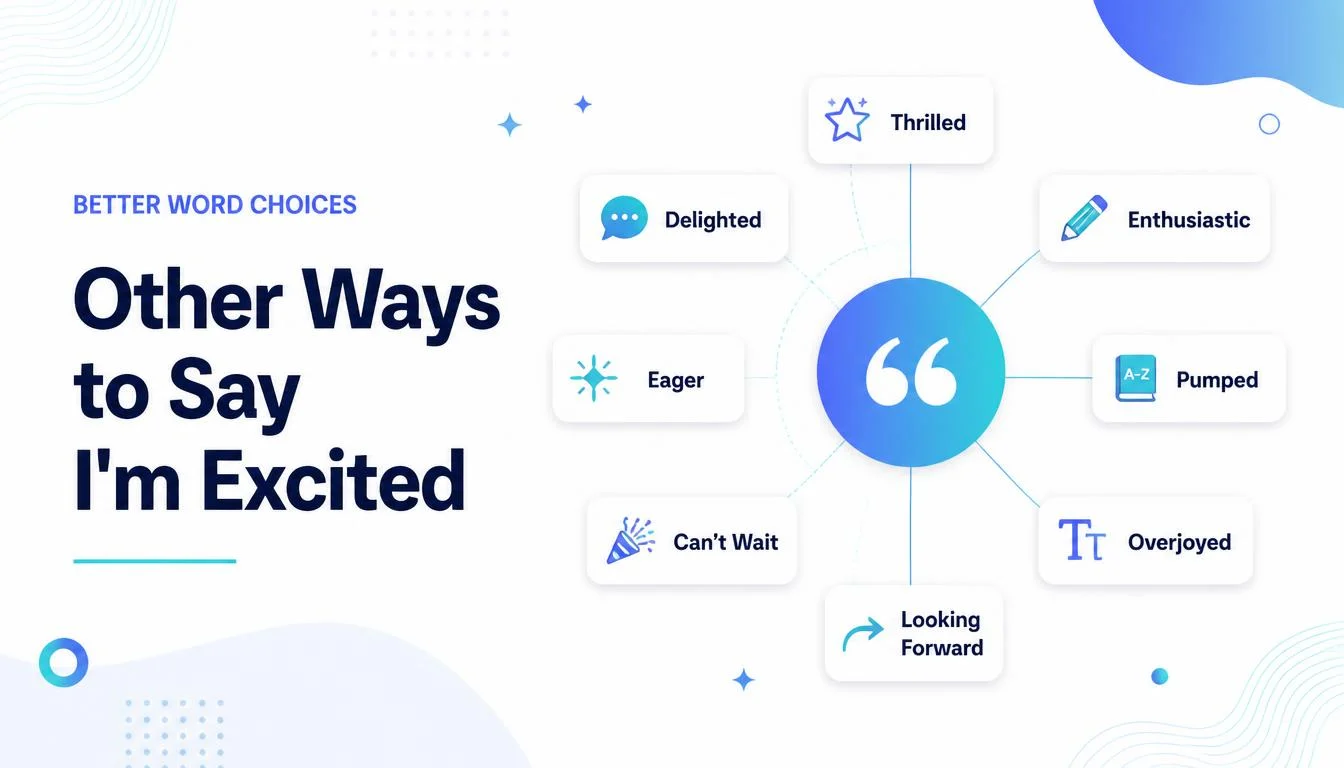
Other ways to say I’m excited include I’m thrilled, I’m delighted, I’m looking forward to it, I can’t wait, and I’m eager to get started.
Finding the right other ways to say I’m excited can help you express enthusiasm more naturally and confidently.Whether you’re talking with friends writing a professional message or sharing exciting news different phrases can add variety and personality to your English.
In this guide, you’ll discover useful other ways to say I’m excited for different situations and tones. From polite and professional expressions to energetic and casual alternatives, these phrases will help you communicate your enthusiasm clearly.
What Is “Other Ways to Say I’m Excited”? (Meaning, Grammar & Real Use)
Imagine telling a colleague about an upcoming presentation, telling a friend about a vacation, or sharing your reaction to exciting personal news. Saying “I’m excited” works in all three situations, but it does not always communicate the exact level or type of enthusiasm you feel.
Learning alternatives to this phrase helps you communicate more precisely. You might want to sound polished in an email, warm when speaking with a friend, or highly enthusiastic when discussing an opportunity. Knowing how to express excitement in English gives you more flexibility and helps your communication sound natural rather than repetitive.
“I’m excited” means that you feel enthusiastic, eager, happy or strongly interested about something that is happening or expected to happen.
Grammatically, “excited” is an adjective used after the linking verb “am.” The phrase is common in both spoken and written English. It can be informal, neutral, or professional depending on the surrounding words and context.
Example: “I’m excited about the opportunity to work with your team.”
People use the phrase when discussing future events, opportunities, achievements, plans, invitations, or positive news. In professional communication, more specific expressions can sometimes sound more polished.
When Should You Use “I’m Excited”?
The phrase works in many everyday and professional situations, but your choice should reflect the audience and purpose.
Spoken vs Written
- Spoken English: “I’m so excited about the trip!”
- Text messages: “I’m excited to see everyone!”
- Emails: “I’m excited to begin working on this project.”
- Formal writing: “I am enthusiastic about the opportunity.”
- Presentations: “We are excited to introduce this new initiative.”
Formal vs Informal
Use “I’m excited” when you want a natural and direct expression of enthusiasm. For more formal communication, phrases such as “I am enthusiastic about” or “I look forward to” may provide a more professional tone.
For casual conversations, “I can’t wait” and “I’m so pumped” can communicate stronger energy, although some expressions are better reserved for relaxed settings.
Is It Professional or Just Polite?
Politeness and professionalism are related, but they are not identical. “I’m excited” is generally friendly and positive, but its suitability in professional communication depends on the context.
In a workplace email, it can work well when discussing a new project, event, opportunity, or collaboration.
Business example: “I’m excited to contribute to the upcoming project and support the team.”
Polite? ✔️ Yes
Professional? ✔️ Yes, in appropriate contexts
For highly formal documents, “I am enthusiastic about” or “I look forward to” may sound more measured.
Pros and Cons of Using “I’m Excited”
Pros
- Simple: The meaning is immediately clear.
- Friendly: It creates a positive and approachable tone.
- Common: Native speakers use it frequently.
- Flexible: It works in casual and many professional situations.
Cons
- Can sound repetitive: Using it frequently can make writing less varied.
- Sometimes too general: It does not explain the exact nature of your enthusiasm.
- Limited intensity: It may not show whether your excitement is mild or extreme.
- Context matters: Very formal writing may benefit from more restrained wording.
Common Mistakes People Make
Knowing the phrase is easy, but using it naturally requires attention to grammar and context.
Mistake 1: Using the wrong preposition
Incorrect: “I’m excited on the new project.”
Correct: “I’m excited about the new project.”
Use excited about when the excitement concerns a person, thing, event, or situation.
Mistake 2: Confusing “excited” with “exciting”
Incorrect: “The new opportunity is very excited.”
Correct: “The new opportunity is very exciting.”
“Excited” describes a person’s feeling, while “exciting” describes something that creates excitement.
Mistake 3: Using “excited for” incorrectly
Less natural: “I’m excited for the opportunity.”
Better: “I’m excited about the opportunity.”
Excited for” is common in informal English, especially when talking about someone else’s upcoming experience.
Mistake 4: Overusing intensifiers
Weak: “I’m extremely, incredibly, unbelievably excited about everything.”
Better: “I’m genuinely excited about the opportunity.”
Too many intensifiers can make professional writing sound exaggerated.
Mistake 5: Choosing a casual expression for a formal document
Incorrect for a formal report: “We’re super pumped about the results.”
Better: “We are very pleased with the results.”
Match your expression to your audience and communication setting.
Pull Quote: “Small tone mistakes can make confident English sound careless.
Alternatives by Category
The best alternatives depend on how much enthusiasm you want to communicate and where you are using the phrase.
Formal alternatives to “I’m Excited”
- I am enthusiastic about it.
- I am delighted about the opportunity.
- I am very pleased about this development.
Pro Tip: Use measured expressions such as “enthusiastic” or “delighted” when you want warmth without sounding overly casual.
Casual alternatives
- I can’t wait!
- I’m so happy about it!
- I’m really looking forward to it!
Pro Tip: Use these expressions with friends, family, and familiar colleagues when a relaxed tone is appropriate.
Professional alternatives
- I am looking forward to it.
- I am enthusiastic about this opportunity.
- I am pleased to be involved.
Pro Tip: In professional emails, connect your enthusiasm to a specific opportunity, project, or goal.
Informal expressions
- I’m so pumped!
- I’m thrilled!
- I’m really fired up!
Pro Tip: Save high-energy expressions for informal conversations unless you already know the workplace culture supports that style.
Pull Quote: “Formal and informal English aren’t about correctness. They’re about context.”
Other Ways to Say “I’m Excited” (Full List with Examples)
These 30 alternatives build fluency and help you express excitement, admiration, or approval according to tone and context.
1. Phrase: I’m Thrilled
Meaning: Extremely happy and excited.
Explanation: A strong but polished expression of enthusiasm.
Example Sentence: “I’m thrilled to join the team.”
Best Use: Professional enthusiasm
Worst Use: Serious situations
Tone: Warm, enthusiastic
Context Variability: professional / spoken
2. Phrase: I’m Really Looking Forward to It
Meaning: You are eagerly anticipating something.
Explanation: Natural and versatile for future events.
Example Sentence: “I’m really looking forward to the conference.”
Best Use: Future events
Worst Use: Immediate reactions
Tone: Positive, natural
Context Variability: professional / spoken
3. Phrase: I Can’t Wait
Meaning: You are extremely eager.
Explanation: Shows strong anticipation and enthusiasm.
Example Sentence: “I can’t wait to see the new office.”
Best Use: Casual anticipation
Worst Use: Formal reports
Tone: Energetic, casual
Context Variability: casual / spoken
4. Phrase: I’m Delighted
Meaning: You are very pleased and happy.
Explanation: A polished expression suitable for professional situations.
Example Sentence: “I’m delighted to accept the invitation.”
Best Use: Formal responses
Worst Use: Casual excitement
Tone: Polished, warm
Context Variability: professional / written
5. Phrase: I’m Enthusiastic About It
Meaning: You have strong interest and excitement.
Explanation: Clearly communicates positive energy in professional settings.
Example Sentence: “I’m enthusiastic about the new proposal.”
Best Use: Work situations
Worst Use: Casual jokes
Tone: Professional, positive
Context Variability: professional / written
6. Phrase: I’m Looking Forward to It
Meaning: You anticipate something positively.
Explanation: One of the safest professional reaction phrases.
Example Sentence: “I’m looking forward to meeting the team.
Best Use: Professional communication
Worst Use: Past events
Tone: Polite, professional
Context Variability: professional / written
7. Phrase: I’m So Happy
Meaning: You feel very pleased.
Explanation: Simple and emotional without necessarily sounding intense.
Example Sentence: “I’m so happy that you can come.”
Best Use: Personal news
Worst Use: Formal reports
Tone: Warm, friendly
Context Variability: casual / spoken
8. Phrase: I’m Excited About This
Meaning: You feel enthusiastic about something specific.
Explanation: More focused than simply saying you are excited.
Example Sentence: “I’m excited about this new opportunity.”
Best Use: Specific opportunities
Worst Use: Formal analysis
Tone: Positive, direct
Context Variability: professional / spoken
9. Phrase: I’m Eager to Begin
Meaning: You are ready and enthusiastic to start.
Explanation: Particularly useful when discussing work or projects.
Example Sentence: “I’m eager to begin working with the team.”
Best Use: New projects
Worst Use: Casual invitations
Tone: Professional, motivated
Context Variability: professional / written
10. Phrase: I’m Looking Forward to the Opportunity
Meaning: You anticipate an opportunity positively.
Explanation: A polished alternative for workplace communication.
Example Sentence: “I’m looking forward to the opportunity to contribute.”
Best Use: Work emails
Worst Use: Casual chats
Tone: Polished, positive
Context Variability: professional / written
11. Phrase: I’m So Pleased
Meaning: You feel very happy about something.
Explanation: Communicates satisfaction with a positive development.
Example Sentence: “I’m so pleased with the final result.”
Best Use: Positive outcomes
Worst Use: High-energy moments
Tone: Warm, restrained
Context Variability: professional / spoken
12. Phrase: I’m Ecstatic
Meaning: You are extremely happy and excited.
Explanation: Very strong wording for intense positive emotion.
Example Sentence: “I’m ecstatic about the opportunity.”
Best Use: Major celebrations
Worst Use: Routine updates
Tone: Intense, joyful
Context Variability: casual / spoken
13. Phrase: I’m Overjoyed
Meaning: You are exceptionally happy.
Explanation: Strong emotional language often associated with wonderful news.
Example Sentence: “I’m overjoyed to hear the good news.”
Best Use: Personal celebrations
Worst Use: Routine emails
Tone: Emotional, warm
Context Variability: casual / spoken
14. Phrase: I’m Delighted About the News
Meaning: You are very pleased by recent information.
Explanation: A polished response to positive news.
Example Sentence: “I’m delighted about the news and grateful for the opportunity.”
Best Use: Positive announcements
Worst Use: Casual banter
Tone: Warm, polished
Context Variability: professional / written
15. Phrase: I’m Excited to Get Started
Meaning: You are eager to begin.
Explanation: Useful when starting work, projects, courses, or activities.
Example Sentence: “I’m excited to get started on the project.”
Best Use: New beginnings
Worst Use: Formal reports
Tone: Energetic, positive
Context Variability: professional / spoken
16. Phrase: I’m Eager to Get Started
Meaning: You strongly want to begin.
Explanation: Sounds motivated and professional.
Example Sentence: “I’m eager to get started and contribute to the project.”
Best Use: Workplace projects
Worst Use: Casual greetings
Tone: Motivated, professional
Context Variability: professional / spoken
17. Phrase: I’m Fired Up
Meaning: You feel highly energized and motivated.
Explanation: A strongly informal expression of enthusiasm.
Example Sentence: “I’m fired up for the competition.”
Best Use: Informal motivation
Worst Use: Formal emails
Tone: Energetic, informal
Context Variability: casual / spoken
18. Phrase: I’m Pumped
Meaning: You are very excited and energized.
Explanation: Common in informal American English.
Example Sentence: “I’m pumped for the concert tonight.”
Best Use: Casual events
Worst Use: Formal meetings
Tone: Energetic, casual
Context Variability: casual / spoken
19. Phrase: I’m Really Enthusiastic
Meaning: You have strong positive interest.
Explanation: Directly communicates enthusiasm without excessive informality.
Example Sentence: “I’m really enthusiastic about joining the project.”
Best Use: Professional settings
Worst Use: Formal legal text
Tone: Positive, confident
Context Variability: professional / spoken
20. Phrase: I’m Excited to Be Part of It
Meaning: You are happy to participate.
Explanation: Highlights enthusiasm about involvement or membership.
Example Sentence: “I’m excited to be part of this initiative.”
Best Use: Team situations
Worst Use: Negative events
Tone: Warm, collaborative
Context Variability: professional / spoken
21. Phrase: I’m Honored
Meaning: You feel deeply pleased and privileged.
Explanation: Best when excitement comes with appreciation or recognition.
Example Sentence: “I’m honored to be invited to speak.”
Best Use: Recognition moments
Worst Use: Casual plans
Tone: Respectful, warm
Context Variability: professional / spoken
22. Phrase: I’m So Looking Forward to This
Meaning: You strongly anticipate something.
Explanation: Adds emotional emphasis to a common expression.
Example Sentence: “I’m so looking forward to this event.”
Best Use: Upcoming events
Worst Use: Formal reports
Tone: Friendly, enthusiastic
Context Variability: casual / spoken
23. Phrase: I’m Very Pleased
Meaning: You are strongly satisfied or happy.
Explanation: A restrained alternative suitable for professional communication.
Example Sentence: “I’m very pleased to announce the results.”
Best Use: Professional announcements
Worst Use: Casual excitement
Tone: Formal, positive
Context Variability: professional / written
24. Phrase: I’m Enthusiastic to Join
Meaning: You are eager to become involved.
Explanation: Communicates motivation and positive interest.
Example Sentence: “I’m enthusiastic about joining the organization.”
Best Use: Career communication
Worst Use: Casual invitations
Tone: Professional, motivated
Context Variability: professional / written
25. Phrase: I’m Eagerly Anticipating It
Meaning: You are strongly looking forward to something.
Explanation: More formal and deliberate than casual expressions.
Example Sentence: “I’m eagerly anticipating the upcoming event.”
Best Use: Formal writing
Worst Use: Casual conversation
Tone: Formal, enthusiastic
Context Variability: professional / written
26. Phrase: This Is Exciting
Meaning: Something creates enthusiasm or anticipation.
Explanation: Focuses on the situation rather than directly on your feelings.
Example Sentence: “This is exciting news for the entire team.”
Best Use: Positive announcements
Worst Use: Personal apologies
Tone: Positive, direct
Context Variability: professional / spoken
27. Phrase: I’m Excited for What Comes Next
Meaning: You eagerly anticipate the future.
Explanation: Useful when discussing progress, plans, or new stages.
Example Sentence: “I’m excited for what comes next in my career.”
Best Use: Future plans
Worst Use: Formal documentation
Tone: Optimistic, warm
Context Variability: professional / spoken
28. Phrase: I’m Full of Enthusiasm
Meaning: You feel strongly enthusiastic.
Explanation: Emphasizes a high level of positive energy.
Example Sentence: “I’m full of enthusiasm for the new project.”
Best Use: Expressive writing
Worst Use: Casual texting
Tone: Expressive, positive
Context Variability: professional / written
29. Phrase: I’m Delighted to Be Involved
Meaning: You are happy to participate.
Explanation: A polished way to express positive involvement.
Example Sentence: “I’m delighted to be involved in this initiative.”
Best Use: Professional teamwork
Worst Use: Casual plans
Tone: Polished, warm
Context Variability: professional / written
30. Phrase: I Couldn’t Be More Excited
Meaning: You are extremely enthusiastic.
Explanation: Strong emphasis that communicates very high excitement.
Example Sentence: “I couldn’t be more excited about the launch.”
Best Use: Major announcements
Worst Use: Serious situations
Tone: Strong, enthusiastic
Context Variability: casual / spoken
Comparison Table: Top 10 Alternatives at a Glance
| Phrase | Tone | Best Use |
|---|---|---|
| I’m thrilled | Warm, enthusiastic | Professional enthusiasm |
| I’m really looking forward to it | Positive, natural | Future events |
| I can’t wait | Energetic, casual | Casual anticipation |
| I’m delighted | Polished, warm | Formal responses |
| I’m enthusiastic about it | Professional, positive | Work situations |
| I’m looking forward to it | Polite, professional | Professional communication |
| I’m eager to begin | Professional, motivated | New projects |
| I’m so happy | Warm, friendly | Personal news |
| I’m eager to get started | Motivated, professional | Workplace projects |
| I couldn’t be more excited | Strong, enthusiastic | Major announcements |
Quick Self-Check (Mini Quiz)
Question 1
You are writing a formal email accepting a speaking invitation. Which phrase fits best?
- A. I’m super pumped!
- B. I can’t wait!
- C. I’m delighted to accept the invitation.
- D. I’m fired up!
Answer: C. It communicates enthusiasm while maintaining a polished tone.
Question 2
Your friend tells you that you are both going to a concert. Which response sounds natural?
- A. I eagerly anticipate the event.
- B. I can’t wait!
- C. I am pleased to acknowledge this development.
- D. I am enthusiastic regarding the event.
Answer: B. It is natural and energetic in informal conversation.
Question 3
You are starting a new workplace project. Which sentence sounds professional?
- A. I’m pumped to start!
- B. I’m fired up to begin!
- C. I’m eager to get started.
- D. I can’t wait to get this thing going!
Answer: C. It expresses motivation without sounding overly casual.
Question 4
Which sentence correctly uses “excited”?
- A. I’m excited on the new opportunity.
- B. I’m exciting about the new opportunity.
- C. I’m excited about the new opportunity.
- D. I’m excited at the new opportunity.
Answer: C. “Excited about” is the standard construction for expressing enthusiasm about something.
FAQs
What are the best other ways to say I’m excited?
Some useful alternatives include “I’m thrilled,” “I’m delighted,” “I’m enthusiastic about it,” “I can’t wait,” and “I’m looking forward to it.” Your choice should depend on the level of excitement and the situation.
What is a professional way to say I’m excited?
“I am enthusiastic about the opportunity,” “I am delighted to be involved,” and “I am looking forward to it” are polished choices for professional communication.
How can I express excitement in English naturally?
Use expressions that match your relationship with the listener. Try “I can’t wait” in casual conversation and “I am looking forward to” or “I am enthusiastic about” in professional situations.
What are informal expressions in English for excitement?
Common informal expressions include “I can’t wait,” “I’m so pumped,” and “I’m fired up.” These expressions communicate strong energy and are generally better suited to relaxed conversations.
Is “I’m excited” professional English?
Yes, “I’m excited” can be professional when used appropriately. For more formal communication, alternatives such as “I am enthusiastic about” or “I am delighted to” can provide a more polished tone.
conclusion
Expanding your vocabulary beyond one familiar phrase helps you communicate enthusiasm with greater precision. The right expression can show excitement, anticipation, happiness, motivation, or appreciation while making your English sound more natural.
Practice switching between formal, professional, casual, and informal expressions according to the situation. For more useful vocabulary choices.
Read More Related Articles:
- Other Ways to Say “From” in a Letter | For a More Professional Sign-Off In 2026
- Other Ways to Say Be Safe | Upgrade Your Farewells In 2026
- Other Ways to Say Feel Free | Formal Writing and Business Communication In 2026

Henry Walker is an American writer and blogger with a keen interest in communication, language and digital content. At TextsResponse.com, he creates informative and reader-focused resources designed to help people communicate with clarity, confidence and authenticity.