Quick Answer
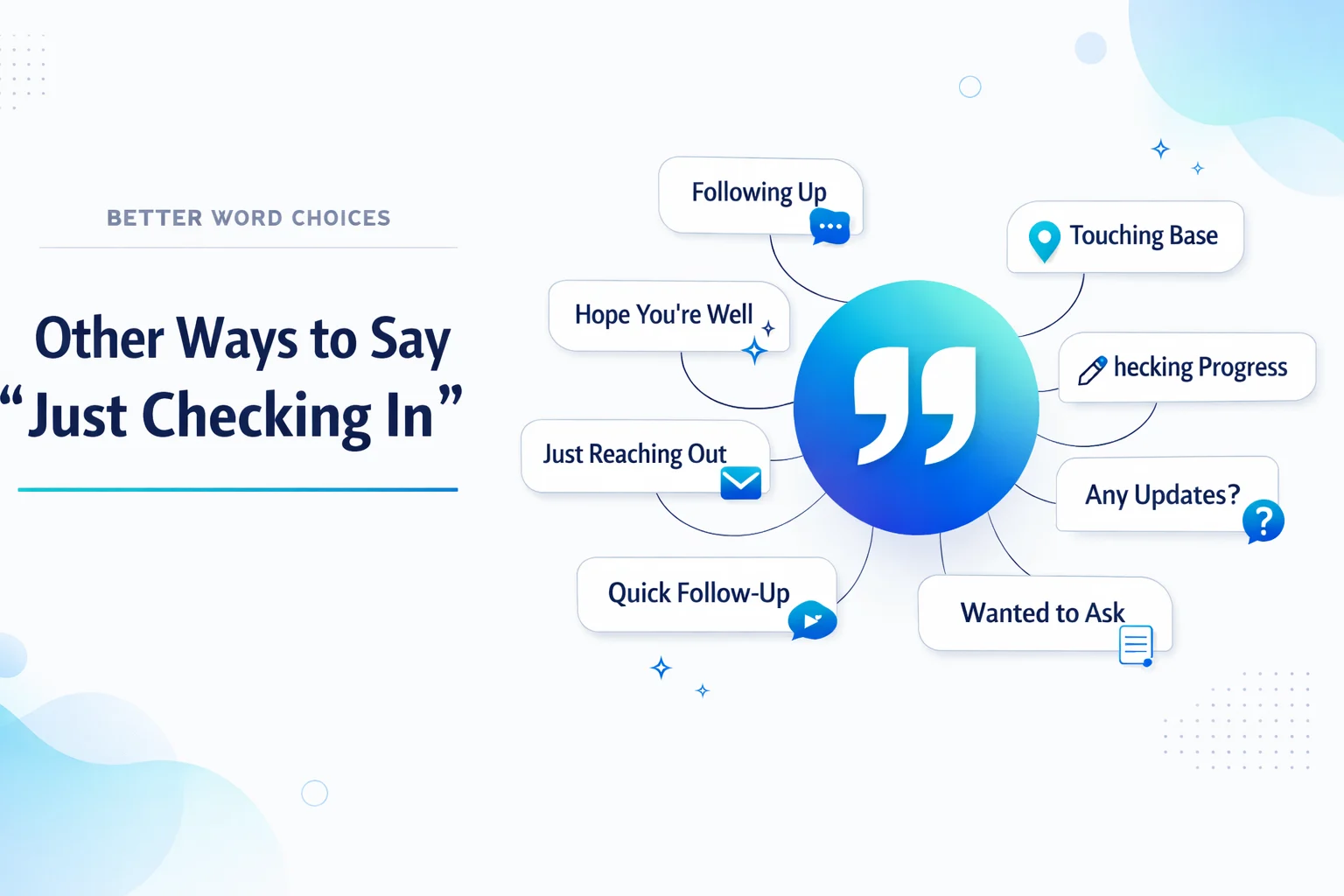
Looking for alternatives to “just checking in”?Try these top replacements: Following up on our previous discussion, I’m touching base regarding, Just circling back on this, I wanted to see how things are progressing, and Reaching out to check on the status.
“Just checking in” is one of the most overused phrases in modern communication. You see it in emails, text messages, and casual conversations. While the intention is usually friendly and non-pressuring, the phrase has become so common that it often triggers the opposite reaction—recipients mentally translate it into “I need a reply right now”.
Learning alternatives to “just checking in” will make your English sound more fluent, confident, and contextually appropriate. Whether you are writing a formal business email, following up with a colleague, or simply reaching out to a friend, having a varied vocabulary allows you to express excitement in English and adapt your tone to any situation.
Quick Categories
Formal Alternatives
- Following up on our previous discussion
- I am reaching out to inquire about
- I would appreciate an update regarding
- Permitting me to follow up
Professional Alternatives
- Touching base on this matter
- Circling back on this item
- Requesting a status update
- Seeking clarification on
Casual Alternatives
- Just circling back
- Checking in on this
- Popping in to see how things are
- Dropping a quick note
Informal Expressions
- How’s it going with…?
- Any update on this?
- What’s the status?
- Any news?
💡 Pro Tip: Match your alternative to your relationship with the recipient. Use formal alternatives for clients and senior leaders; save casual options for teammates and familiar colleagues.
Common Mistakes When Using “Just Checking In”
| Mistake | Example |
|---|---|
| Using it too frequently | Sending “Just checking in” every week to the same person |
| No clear purpose | “Just checking in” without stating what you actually need |
| Using it for urgent matters | “Just checking in” when a decision is needed by end of day |
| No context or reference | “Just checking in” with no mention of previous conversation |
| Using it with senior executives | “Just checking in” in a formal board-level email |
What Does “Just Checking In” Mean?
“Just checking in” is a casual phrase used to follow up on a previous conversation, request an update, or ask about someone’s well-being. It is typically used at the beginning of an email or message to encourage a response in a friendly, low-pressure way.
Example: “I’m just checking in to see how the project is going.”
When to Use “Just Checking In”
- Following up on a previous email or conversation
- Asking for a status update on a project
- Checking on someone’s well-being in a personal context
- Reconnecting after a period of no communication
Spoken vs Written: More common in written communication (emails, messages) than in speech.
Formal vs Informal: Primarily informal; not recommended for formal business writing.
Is It Professional or Polite to Say “Just Checking In”?
| Aspect | Verdict |
|---|---|
| Polite? | ✔️ Yes – It is intended to be friendly and non-demanding |
| Professional? | ❌ No – In most business contexts, it sounds vague and overused |
Business-style alternative: “I’m following up on the proposal we discussed last week to see if you have any questions.”
Pros and Cons of Using “Just Checking In”
Pros
- Simple and natural
- Friendly tone
- Common usage – easily understood
- Easy to understand
Cons
- Too informal for work settings
- Overused and clichéd
- Limited emotional range
- Not suitable for formal writing
Other Ways to Say “Just Checking In”
These alternatives will help you sound more fluent, confident, and natural in different situations. Use them according to tone, context, and audience to express excitement, admiration, or approval.
1. Following Up on Our Previous Discussion
Meaning: Refers back to an earlier conversation to continue the discussion.
Explanation: This phrase shows professionalism and demonstrates that you’re keeping track of previous communications.
Example Sentence: Following up on our previous discussion about the quarterly report, I wanted to see if you had any additional thoughts.
Best Use: Business emails
Worst Use: Texting a friend
Tone: Professional, organized
Context Variability: Professional
2. I Am Reaching Out to Inquire About
Meaning: Contacts someone to request information.
Explanation: A formal expression that clearly communicates your purpose for getting in touch.
Example Sentence: I am reaching out to inquire about the status of the contract we submitted last week.
Best Use: Formal correspondence
Worst Use: Casual conversations
Tone: Formal, respectful
Context Variability: Professional, formal
3. I Would Appreciate an Update Regarding
Meaning: Politely asks for the latest information on a specific matter.
Explanation: This phrase softens your request by expressing appreciation in advance.
Example Sentence: I would appreciate an update regarding the timeline for the product launch.
Best Use: Professional requests
Worst Use: Informal chats
Tone: Polite, appreciative
Context Variability: Professional
4. Permitting Me to Follow Up
Meaning: Politely asks permission to continue a previous conversation.
Explanation: A highly formal expression that conveys courtesy and respect for the recipient’s time.
Example Sentence: Permitting me to follow up, have you had a chance to review the proposal?
Best Use: Very formal settings
Worst Use: Everyday communication
Tone: Highly formal, courteous
Context Variability: Formal
5. Touching Base on This Matter
Meaning: Makes brief contact regarding a specific issue.
Explanation: A common business expression that sounds professional while keeping the conversation moving.
Example Sentence: I’m touching base on this matter to confirm our next steps.
Best Use: Workplace communication
Worst Use: Personal messages
Tone: Professional, efficient
Context Variability: Professional
6. Circling Back on This Item
Meaning: Returns to a previously discussed topic.
Explanation: Shows that you’re following through and ensuring nothing is overlooked.
Example Sentence: Circling back on this item—have you had a chance to review the figures?
Best Use: Project follow-ups
Worst Use: Social conversations
Tone: Professional, proactive
Context Variability: Professional
7. Requesting a Status Update
Meaning: Asks for the current progress of a task or project.
Explanation: A direct phrase that clearly communicates your request for an update.
Example Sentence: I’m requesting a status update on the marketing campaign before tomorrow’s meeting.
Best Use: Clear, direct requests
Worst Use: Checking on someone’s well-being
Tone: Direct, professional
Context Variability: Professional
8. Seeking Clarification on
Meaning: Requests additional explanation about a specific topic.
Explanation: Best used when you need more precise information rather than a general progress update.
Example Sentence: I’m seeking clarification on the budget figures you shared in your last email.
Best Use: When information is unclear
Worst Use: General check-ins
Tone: Professional, precise
Context Variability: Professional
9. Confirming Progress on
Meaning: Verifies how much progress has been made.
Explanation: Suggests that work is expected to be underway and you’re confirming its status.
Example Sentence: I’m confirming progress on the software development to ensure we meet the deadline.
Best Use: Project management
Worst Use: Personal check-ins
Tone: Professional, results-oriented
Context Variability: Professional
10. Following Through on
Meaning: Continues an agreed action or commitment.
Explanation: Highlights accountability and your intention to complete previous commitments.
Example Sentence: I’m following through on our agreement to review the draft by Friday.
Best Use: Accountability follow-ups
Worst Use: Casual greetings
Tone: Professional, committed
Context Variability: Professional
Casual & Friendly Alternatives
11. Just Circling Back
Meaning: Returns to a topic after some time has passed.
Explanation: A relaxed, friendly way to continue a previous conversation.
Example Sentence: Just circling back—did you get a chance to look at the photos?
Best Use: Friendly follow-ups
Worst Use: Formal business emails
Tone: Casual, friendly
Context Variability: Casual, spoken
12. Checking In on This
Meaning: Asks how something is progressing.
Explanation: A shorter, more conversational version of “just checking in.”
Example Sentence: Checking in on this—how’s the presentation coming along?
Best Use: Quick status checks
Worst Use: Formal communications
Tone: Casual, direct
Context Variability: Casual, light professional
13. Popping In to See How Things Are
Meaning: Makes a brief, friendly check-in.
Explanation: Creates a warm, low-pressure way to reconnect.
Example Sentence: Just popping in to see how things are with the new system.
Best Use: Friendly workplace check-ins
Worst Use: Formal emails
Tone: Warm, casual
Context Variability: Casual, spoken
14. Dropping a Quick Note
Meaning: Sends a brief message.
Explanation: Lets the reader know your message will be short and straightforward.
Example Sentence: Dropping a quick note to ask about the meeting agenda.
Best Use: Short messages
Worst Use: Detailed requests
Tone: Casual, brief
Context Variability: Casual, written
15. How’s Everything Going With…?
Meaning: Asks about overall progress or how things are going.
Explanation: Opens the conversation in a friendly and natural way.
Example Sentence: How’s everything going with the new client onboarding?
Best Use: Friendly status checks
Worst Use: Formal business writing
Tone: Friendly, conversational
Context Variability: Casual, spoken
16. I Wanted to Check How Things Are Progressing
Meaning: Expresses interest in current progress.
Explanation: Sounds thoughtful and supportive without creating pressure.
Example Sentence: I wanted to check how things are progressing with the renovation.
Best Use: Showing genuine interest
Worst Use: Urgent requests
Tone: Caring, interested
Context Variability: Casual, professional
17. How Are You Getting On With…?
Meaning: Asks how someone is progressing with a task.
Explanation: A common British English expression that feels friendly and encouraging.
Example Sentence: How are you getting on with the new software?
Best Use: Friendly inquiries
Worst Use: Formal settings
Tone: Warm, supportive
Context Variability: Casual, spoken
18. What’s the Latest on…?
Meaning: Asks for the most recent update.
Explanation: A casual way to request the latest news or progress.
Example Sentence: What’s the latest on the job application?
Best Use: Informal updates
Worst Use: Professional emails
Tone: Casual, curious
Context Variability: Casual, spoken
19. Any Update on This?
Meaning: Asks whether there is any new information.
Explanation: A short and direct phrase that’s ideal for quick follow-ups.
Example Sentence: Any update on this? Just want to make sure we’re still on track.
Best Use: Quick follow-ups
Worst Use: Formal correspondence
Tone: Casual, direct
Context Variability: Casual, written
20. How’s It Coming Along?
Meaning: Asks about the progress of a task or project.
Explanation: Sounds encouraging and supportive while requesting an update.
Example Sentence: How’s it coming along with the website redesign?
Best Use: Encouraging check-ins
Worst Use: Professional reports
Tone: Encouraging, casual
Context Variability: Casual, spoken
Direct & Action-Oriented Alternatives
21. I’m Writing to Follow Up On
Meaning: Clearly states that you’re continuing a previous conversation.
Explanation: A professional phrase that leaves no doubt about the purpose of your message.
Example Sentence: I’m writing to follow up on the invoice I sent last Tuesday.
Best Use: Clear follow-ups
Worst Use: Social messages
Tone: Direct, professional
Context Variability: Professional, written
22. I’d Love to Get an Update On
Meaning: Expresses genuine interest in receiving new information.
Explanation: Sounds positive and friendly without being demanding.
Example Sentence: I’d love to get an update on the research findings when you have a moment.
Best Use: Positive, encouraging requests
Worst Use: Urgent situations
Tone: Enthusiastic, polite
Context Variability: Professional, casual
23. Could You Provide an Update On…?
Meaning: Politely requests the latest information.
Explanation: A clear and courteous question suitable for most situations.
Example Sentence: Could you provide an update on the shipping status?
Best Use: Clear, polite requests
Worst Use: Very informal chats
Tone: Polite, clear
Context Variability: Professional, casual
24. Do You Have Any News On…?
Meaning: Asks whether there have been any new developments.
Explanation: Conversational while remaining appropriate for many workplace situations.
Example Sentence: Do you have any news on the partnership agreement?
Best Use: Seeking recent updates
Worst Use: Formal written reports
Tone: Conversational, professional
Context Variability: Professional, casual
25. What’s the Status Of…?
Meaning: Asks about the current state or progress of something.
Explanation: One of the most direct ways to request a status update.
Example Sentence: What’s the status of the budget approval?
Best Use: Direct status requests
Worst Use: Personal well-being checks
Tone: Direct, professional
Context Variability: Professional
26. I’m Checking to See If There’s Anything You Need From Me
Meaning: Offers assistance instead of simply requesting information.
Explanation: Shifts the conversation toward collaboration and support.
Example Sentence: I’m checking to see if there’s anything you need from me to move this forward.
Best Use: Supportive follow-ups
Worst Use: When you need immediate information
Tone: Supportive, collaborative
Context Variability: Professional, casual
27. Just a Quick Follow-Up
Meaning: Introduces a brief continuation of a previous conversation.
Explanation: Signals that your message will be short and respectful of the recipient’s time.
Example Sentence: Just a quick follow-up—have you had a chance to review the draft?
Best Use: Brief reminders
Worst Use: Complex requests
Tone: Brief, polite
Context Variability: Professional, casual
28. I Wanted to Touch Base About
Meaning: Makes brief contact regarding a specific topic.
Explanation: A popular workplace phrase that sounds professional and approachable.
Example Sentence: I wanted to touch base about the team meeting scheduled for next week.
Best Use: Professional check-ins
Worst Use: Very formal documents
Tone: Professional, friendly
Context Variability: Professional
29. Reaching Out to Check on the Status Of
Meaning: Contacts someone to ask about the progress of something.
Explanation: A clear and professional way to request an update.
Example Sentence: I’m reaching out to check on the status of your feedback on the proposal.
Best Use: Professional follow-ups
Worst Use: Casual conversations
Tone: Professional, clear
Context Variability: Professional
30. I’m Just Following Up to See If
Meaning: Continues a previous conversation by asking a specific question.
Explanation: A softer version of “following up” that feels polite rather than demanding.
Example Sentence: I’m just following up to see if you had any questions about the document I sent.
Best Use: Gentle follow-ups
Worst Use: Urgent requests
Tone: Gentle, polite
Context Variability: Professional, casual
“The right tone makes your English sound professional and confident.”
Mini Quiz: Test Your Knowledge
1. Which alternative is best for a formal email to a client?
- A) “Just circling back”
- B) “Following up on our previous discussion”
- C) “How’s it coming along?”
- D) “Any update?”
2. You are texting a colleague you know well. Which phrase fits best?
- A) “I am reaching out to inquire about”
- B) “Permitting me to follow up”
- C) “What’s the latest on…?”
- D) “Confirming progress on”
3. Which phrase shows you are offering help rather than asking for something?
- A) “Requesting a status update”
- B) “I’m checking to see if there’s anything you need from me”
- C) “Could you provide an update?”
- D) “Seeking clarification on”
4. True or False: “Just checking in” is always appropriate in professional emails.
- A) True
- B) False
Comparison Table: Top 10 Alternatives
| Phrase | Tone | Best Use |
|---|---|---|
| Following up on our previous discussion | Professional | Business emails |
| I am reaching out to inquire about | Formal | Formal correspondence |
| Touching base on this matter | Professional | Workplace communication |
| Circling back on this item | Professional | Project follow-ups |
| Just circling back | Casual | Friendly follow-ups |
| Checking in on this | Casual | Quick status checks |
| I’d love to get an update on | Enthusiastic | Positive requests |
| What’s the status of…? | Direct | Status requests |
| I wanted to touch base about | Professional | Professional check-ins |
| How’s everything going with…? | Friendly | Casual inquiries |
FAQs
1. Is “just checking in” considered rude?
Not necessarily. However, because it’s used so often, it can sometimes come across as passive-aggressive or imply that you’re expecting an immediate response. Choosing a more specific follow-up phrase often sounds clearer and more professional.
2. What can I say instead of “just checking in” in a professional email?
Professional alternatives include:
- Following up on our previous discussion
- I’m writing to follow up on…
- I’m reaching out regarding…
- Touching base about…
These phrases sound more polished and clearly explain the purpose of your message.
3. Is “just checking in” appropriate for formal emails?
It’s generally better to avoid it in formal emails. The phrase can feel too casual and doesn’t clearly explain why you’re contacting the recipient. More specific alternatives create a stronger professional impression.
4. How can I say “just checking in” in a friendly way?
For a warm, conversational tone, try phrases such as:
- Just circling back
- Popping in to see how things are going
- How’s everything coming along?
- Hope everything’s going well!
These alternatives feel friendly without sounding overly demanding.
5. What is the best alternative for a follow-up email?
For most professional follow-ups, the clearest options are:
- I’m writing to follow up on…
- Following up on our previous discussion…
Both phrases are polite, direct, and widely accepted in business communication.
Conclusion
Learning alternatives to “just checking in” is one of the simplest ways to elevate your English communication. Whether you are writing a formal business email or sending a quick message to a friend, having a range of phrases at your disposal allows you to choose the right tone for every situation.
Practice using these alternatives daily. Pay attention to the context and your relationship with the recipient. The more you vary your language, the more fluent, confident, and professional you will sound. Start with just one or two new phrases this week – your inbox (and your colleagues) will thank you.
Read More Related Articles:
- Other Ways to Say Circle Back | Improve Your Workplace Communication In 2026
- Other Ways to Say Welcome to the Team | Warm First Impression In 2026
- Other Ways to Say I Hope All Is Well | Make a Better First Impression In 2026

Henry Walker is an American writer and blogger with a keen interest in communication, language and digital content. At TextsResponse.com, he creates informative and reader-focused resources designed to help people communicate with clarity, confidence and authenticity.