Quick Answer
If you want to sound more natural and fluent than the overused phrase “apologies for the inconvenience,” try these alternatives instead. The right phrase depends on your tone, audience, and how formal the situation is.Top 5 alternatives: We regret the inconvenience, Sorry for the trouble, Please accept our apologies, We appreciate your patience, Sorry about that.
Apologies for the inconvenience” is one of the most common phrases in emails, customer service replies, and workplace communication. It is used to acknowledge that something went wrong and to show respect for the other person’s time or experience.
However, repeating the same phrase over and over can make your English sound robotic and impersonal. Learning alternatives to apologies for the inconvenience helps you sound more genuine, whether you are writing a formal business email or having a casual conversation with a friend.
Building a wider vocabulary also helps you express excitement in English and other emotions with more precision. Fluency is not just about grammar. It is about choosing words that match the moment.
Quick Categories
Formal Alternatives to “Apologies for the Inconvenience”
- We sincerely apologize for the inconvenience caused
- Please accept our sincere apologies
- We regret any disruption this may have caused
- Kindly accept our apologies for the delay
Pro Tip: In formal emails, pair your apology with a clear next step, such as “We are working to resolve this immediately.”
Casual Alternatives
- Sorry about that
- My bad
- Sorry for the trouble
- Oops, sorry for the mix-up
Pro Tip: Keep casual apologies short and sincere. Overexplaining can make a simple mistake sound bigger than it is.
Professional Alternatives
- We appreciate your patience during this time
- Thank you for your understanding
- We regret the inconvenience this has caused
- Please let us know if we can assist further
Pro Tip: Professional apologies focus on solutions, not just regret. Always offer help or a fix.
Informal Expressions
- Sorry for the hassle
- My mistake
- Sorry to bother you
- Thanks for bearing with us
Pro Tip: Informal expressions work well with friends or coworkers you know well, but avoid them in client-facing writing.
“Fluent English means knowing which phrase fits which moment.
Common Mistakes When Using “Apologies for the Inconvenience”
- Using it without context. Example: “Apologies for the inconvenience.” (The reader does not know what happened.)
- Overusing it in every email. Example: Repeating the phrase in three separate messages to the same client.
- Sounding insincere by rushing it. Example: “Apologies for the inconvenience, anyway, moving on.”
- Mixing formal and casual tone. Example: “Apologies for the inconvenience, my bad though.”
- Forgetting to offer a solution. Example: “Apologies for the inconvenience.” with no follow-up action mentioned.
What Does “Apologies for the Inconvenience” Mean?
Apologies for the inconvenience” is a polite expression used to acknowledge that a problem, delay, or disruption has affected someone negatively. Grammatically, it uses the plural noun “apologies” followed by the preposition “for,” which introduces the cause of the apology.
Example sentence: “Apologies for the inconvenience, your order will arrive one day later than expected.
When to Use “Apologies for the Inconvenience”
- Customer service emails
- Business announcements about delays
- Workplace communication about schedule changes
- Public notices or service updates
Spoken vs Written
- In writing, it appears in emails, memos, and notices.
- In speech, people usually prefer shorter forms like “sorry about that” or “sorry for the trouble.”
Formal vs Informal
- Formal settings favor the full phrase or its formal alternatives.
- Informal settings favor shorter, warmer expressions.
Is It Professional or Polite to Say “Apologies for the Inconvenience”?
This phrase is polite, but it is not always the most professional choice on its own. In business writing, it works best when paired with an explanation and a next step.
Business example: “Apologies for the inconvenience. We have identified the issue and expect it to be resolved by 5 PM today.”
Polite? Yes Professional? No, in most cases without added context or action
Pros and Cons of Using “Apologies for the Inconvenience”
Pros
- Simple and natural
- Friendly tone
- Common usage
- Easy to understand
Cons
- Too informal for work in some contexts
- Overused
- Limited emotional range
- Not suitable for formal writing without extra detail
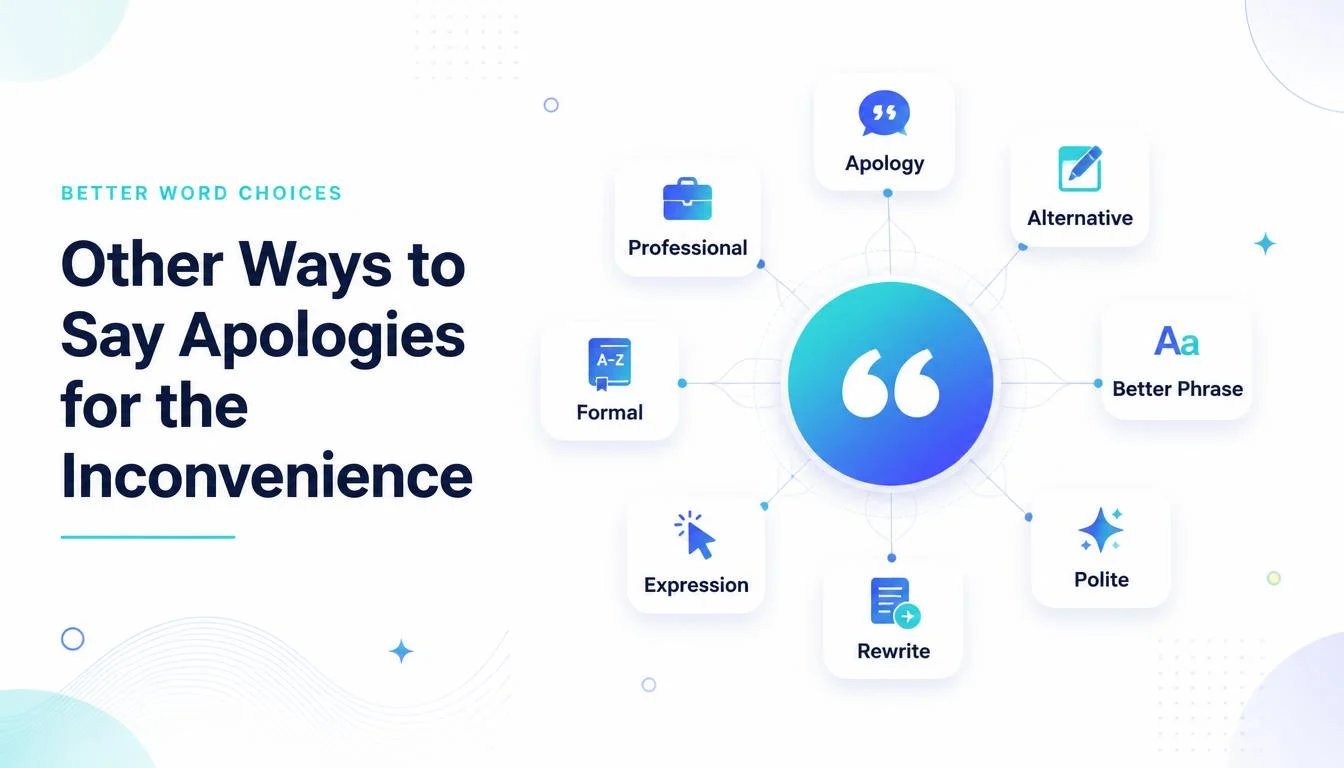
Other Ways to Say Apologies for the Inconvenience
These alternatives will help you sound more fluent, confident, and natural in different situations. Use them according to tone, context, and audience to express excitement, admiration, or approval, or in this case, sincere regret.
1. Phrase: We apologize for any inconvenience caused
Meaning: A formal way to express regret for a problem.
Explanation: Commonly used in official business communication.
Example Sentence: “We apologize for any inconvenience caused by the system outage.”
Best Use: Corporate emails
Worst Use: Casual chats
Tone: Formal, respectful, polished
Context Variability: Professional
2. Phrase: Sorry for the trouble
Meaning: A simple, warm apology for a small issue.
Explanation: Works well in everyday conversation.
Example Sentence: “Sorry for the trouble, I’ll fix it right away.”
Best Use: Friendly chats
Worst Use: Legal documents
Tone: Friendly, casual, warm
Context Variability: Casual, spoken
3. Phrase: We regret the inconvenience
Meaning: A formal expression of regret.
Explanation: Often used in written notices or announcements.
Example Sentence: “We regret the inconvenience caused by the delay in shipping.”
Best Use: Public notices
Worst Use: Texting friends
Tone: Formal, serious, respectful
Context Variability: Professional, written
4. Phrase: Please accept our apologies
Meaning: A polite request for forgiveness.
Explanation: Adds humility and courtesy to formal writing.
Example Sentence: “Please accept our apologies for the miscommunication.”
Best Use: Client emails
Worst Use: Informal texts
Tone: Polite, formal, sincere
Context Variability: Professional
5. Phrase: We’re sorry for any disruption
Meaning: An apology acknowledging a broader impact.
Explanation: Suitable when many people are affected.
Example Sentence: “We’re sorry for any disruption to your daily schedule.”
Best Use: Service updates
Worst Use: One-on-one small talk
Tone: Formal, caring, professional
Context Variability: Professional, written
6. Phrase: Sorry for the hassle
Meaning: A casual acknowledgment of minor difficulty.
Explanation: Lighthearted and easy to say in speech.
Example Sentence: “Sorry for the hassle, let’s reschedule the call.”
Best Use: Coworker chats
Worst Use: Formal reports
Tone: Casual, relaxed, friendly
Context Variability: Casual, spoken
7. Phrase: We apologize for the delay
Meaning: A direct apology focused on timing issues.
Explanation: Common in shipping, meetings, and project updates.
Example Sentence: “We apologize for the delay in responding to your request.”
Best Use: Business updates
Worst Use: Personal texts
Tone: Formal, direct, professional
Context Variability: Professional
8. Phrase: Sorry about that
Meaning: A quick, informal apology.
Explanation: Used often in daily conversation for small mistakes.
Example Sentence: “Sorry about that, I sent the wrong file.”
Best Use: Casual conversation
Worst Use: Legal writing
Tone: Casual, simple, sincere
Context Variability: Casual, spoken
9. Phrase: We appreciate your patience
Meaning: Thanking someone while acknowledging a delay.
Explanation: Shifts focus from the problem to gratitude.
Example Sentence: “We appreciate your patience while we resolve this issue.”
Best Use: Customer service
Worst Use: Informal apologies
Tone: Professional, warm, appreciative
Context Variability: Professional
10. Phrase: Thank you for your understanding
Meaning: A courteous close to an apology.
Explanation: Common at the end of professional messages.
Example Sentence: “Thank you for your understanding during this transition.”
Best Use: Email sign-offs
Worst Use: Verbal apologies to close friends
Tone: Polished, respectful, professional
Context Variability: Professional, written
11. Phrase: We’re sorry for the mix-up
Meaning: An apology for confusion or errors.
Explanation: Common when details were misunderstood.
Example Sentence: “We’re sorry for the mix-up with your order.”
Best Use: Order corrections
Worst Use: Legal apologies
Tone: Friendly, honest, casual
Context Variability: Casual, professional
12. Phrase: Sorry for any confusion caused
Meaning: An apology when instructions were unclear.
Explanation: Useful in emails clarifying earlier messages.
Example Sentence: “Sorry for any confusion caused by my earlier email.”
Best Use: Follow-up emails
Worst Use: Casual texting
Tone: Polite, clear, professional
Context Variability: Professional, written
13. Phrase: We regret any disruption this may have caused
Meaning: A formal apology for a larger impact.
Explanation: Common in service outage announcements.
Example Sentence: “We regret any disruption this may have caused to your business.”
Best Use: Corporate statements
Worst Use: Casual speech
Tone: Formal, serious, corporate
Context Variability: Professional
14. Phrase: Please forgive the inconvenience
Meaning: A gentle, humble apology.
Explanation: Slightly old-fashioned but still polite.
Example Sentence: “Please forgive the inconvenience caused by the road closure.”
Best Use: Public announcements
Worst Use: Texting friends
Tone: Polite, humble, formal
Context Variability: Professional, written
15. Phrase: We apologize for the interruption
Meaning: An apology for stopping something unexpectedly.
Explanation: Common during broadcasts or presentations.
Example Sentence: “We apologize for the interruption during the live stream.”
Best Use: Broadcasts, events
Worst Use: Casual chats
Tone: Formal, professional, brief
Context Variability: Professional, spoken
16. Phrase: Sorry to bother you
Meaning: An apology for taking someone’s time.
Explanation: Used before making a request.
Example Sentence: “Sorry to bother you, but could you resend the file?”
Best Use: Requests
Worst Use: Formal reports
Tone: Polite, casual, gentle
Context Variability: Casual, spoken
17. Phrase: We’re sorry this happened
Meaning: A sincere, simple apology.
Explanation: Focuses on empathy rather than formality.
Example Sentence: “We’re sorry this happened and we’re looking into it.”
Best Use: Support messages
Worst Use: Legal statements
Tone: Warm, sincere, caring
Context Variability: Casual, professional
18. Phrase: Apologies for the delay
Meaning: A shorter, direct version of the original phrase.
Explanation: Common in quick email replies.
Example Sentence: “Apologies for the delay, here is the report you requested.”
Best Use: Email replies
Worst Use: Formal legal writing
Tone: Neutral, professional, brief
Context Variability: Professional, written
19. Phrase: Sorry for the wait
Meaning: An apology for making someone wait.
Explanation: Common in customer service and daily life.
Example Sentence: “Sorry for the wait, your table is ready now.”
Best Use: In-person service
Worst Use: Formal contracts
Tone: Friendly, casual, polite
Context Variability: Casual, spoken
20. Phrase: We apologize for the oversight
Meaning: An apology for a mistake or missed detail.
Explanation: Used when something was forgotten or overlooked.
Example Sentence: “We apologize for the oversight in your invoice.”
Best Use: Correcting errors
Worst Use: Casual conversation
Tone: Formal, accountable, professional
Context Variability: Professional
21. Phrase: Sorry for any inconvenience this may cause
Meaning: A forward-looking apology before an issue occurs.
Explanation: Used when warning someone about upcoming changes.
Example Sentence: “Sorry for any inconvenience this may cause during maintenance.”
Best Use: Advance notices
Worst Use: After-the-fact apologies
Tone: Polite, formal, cautious
Context Variability: Professional, written
22. Phrase: We deeply regret the inconvenience
Meaning: A strong, sincere apology.
Explanation: Used when the issue caused significant impact.
Example Sentence: “We deeply regret the inconvenience caused by the cancellation.”
Best Use: Serious complaints
Worst Use: Minor issues
Tone: Formal, heartfelt, serious
Context Variability: Professional
23. Phrase: My apologies for the inconvenience
Meaning: A personal, first-person apology.
Explanation: Slightly more personal than the corporate “we.”
Example Sentence: “My apologies for the inconvenience, I should have called earlier.”
Best Use: Personal emails
Worst Use: Company-wide statements
Tone: Polite, personal, sincere
Context Variability: Professional, casual
24. Phrase: Sorry for any trouble this may have caused
Meaning: An apology acknowledging possible negative effects.
Explanation: Common in customer support replies.
Example Sentence: “Sorry for any trouble this may have caused with your account.”
Best Use: Support tickets
Worst Use: Legal notices
Tone: Polite, caring, professional
Context Variability: Professional, casual
25. Phrase: We’re sorry for the inconvenience caused
Meaning: A slightly reworded version of the original phrase.
Explanation: Common but still slightly more natural in speech.
Example Sentence: “We’re sorry for the inconvenience caused by the price change.”
Best Use: General announcements
Worst Use: Highly formal contracts
Tone: Neutral, professional, calm
Context Variability: Professional, written
26. Phrase: Please excuse the inconvenience
Meaning: A polite request for tolerance.
Explanation: Slightly formal and often used in notices.
Example Sentence: “Please excuse the inconvenience while we renovate the store.”
Best Use: Public signs
Worst Use: Verbal apologies
Tone: Polite, formal, brief
Context Variability: Professional, written
27. Phrase: Sorry, my bad
Meaning: A very casual apology.
Explanation: Common among friends and close coworkers.
Example Sentence: “Sorry, my bad, I forgot to send the link.”
Best Use: Friendly chats
Worst Use: Client emails
Tone: Casual, playful, informal
Context Variability: Casual, spoken
28. Phrase: Oops, sorry about that
Meaning: A light, informal apology for a small slip.
Explanation: Adds a humorous, relaxed tone.
Example Sentence: “Oops, sorry about that, wrong attachment.”
Best Use: Casual messages
Worst Use: Formal writing
Tone: Playful, casual, light
Context Variability: Casual, spoken
29. Phrase: We apologize sincerely for the inconvenience
Meaning: A strengthened, formal apology.
Explanation: Adds emphasis through the word “sincerely.”
Example Sentence: “We apologize sincerely for the inconvenience caused by the error.”
Best Use: Serious business matters
Worst Use: Small casual mistakes
Tone: Formal, sincere, respectful
Context Variability: Professional
30. Phrase: Thanks for bearing with us
Meaning: A grateful way to acknowledge patience during an issue.
Explanation: Shifts the apology into appreciation.
Example Sentence: “Thanks for bearing with us while we fix the website.”
Best Use: Ongoing issues
Worst Use: Formal legal writing
Tone: Warm, grateful, casual
Context Variability: Casual, professional
“A well-chosen phrase can turn an apology into a moment of trust.”
Professional reaction phrases are not about sounding stiff. They are about sounding reliable.”
“Informal expressions in English build connection, not distance.”
Mini Quiz
1. Which phrase is most appropriate for a formal business email about a service outage?
A) Sorry, my bad
B) We regret any disruption this may have caused
C) Oops, sorry about that
2. Which phrase fits best in a casual text to a friend who is running late to meet you?
A) We deeply regret the inconvenience
B) Sorry for the hassle
C) Please accept our sincere apologies
3. True or False: “Apologies for the inconvenience” is always professional enough on its own.
A) True
B) False
4. Which phrase focuses on gratitude rather than regret?
A) Thanks for bearing with us
B) Sorry for the trouble
C) Please forgive the inconvenience
Answers: 1-B, 2-B, 3-B (False, it needs context or a solution), 4-A
Comparison Table: Top Alternatives
| Phrase | Tone | Best Use |
|---|---|---|
| We apologize for any inconvenience caused | Formal | Corporate emails |
| Sorry for the trouble | Casual | Friendly chats |
| We regret the inconvenience | Formal | Public notices |
| Please accept our apologies | Polite, formal | Client emails |
| We appreciate your patience | Professional | Customer service |
| Sorry about that | Casual | Daily conversation |
| We apologize for the delay | Professional | Business updates |
| Sorry for the hassle | Casual | Coworker chats |
| Thanks for bearing with us | Warm, casual | Ongoing issues |
| We deeply regret the inconvenience | Formal, serious | Serious complaints |
FAQs
1. What is another way to say “apologies for the inconvenience” in an email?
You can say “We regret the inconvenience” or “We appreciate your patience” depending on the tone you want.
2. Is “sorry for the inconvenience” formal or informal?
It sits in the middle. It is polite enough for general use but often needs more context to sound fully professional.
3. What are some professional reaction phrases for delays at work?
Try “We apologize for the delay” or “Thank you for your understanding” for a polished, professional tone.
4. Can I use casual apologies like “my bad” in customer service?
It is best avoided. Casual apologies work well with friends but can seem unprofessional in customer-facing roles.
5. How can I sound more sincere when apologizing in English? Pair your apology with a clear explanation and a next step, rather than repeating the same phrase alone.
Conclusion
Learning different ways to say “apologies for the inconvenience” helps you communicate with more nuance, whether you are writing a formal email, chatting with a coworker, or handling a customer complaint. Each phrase carries its own tone, so choosing the right one shows both empathy and professionalism.
Practice using these alternatives daily in your writing and conversations. Pay attention to tone, audience, and context every time you apologize, and your English will sound more natural, confident, and fluent.
Read More Related Articles:
- Other Ways to Say Circle Back | Improve Your Workplace Communication In 2026
- Other Ways to Say Welcome to the Team | Warm First Impression In 2026
- Other Ways to Say I Hope All Is Well | Make a Better First Impression In 2026

Henry Walker is an American writer and blogger with a keen interest in communication, language and digital content. At TextsResponse.com, he creates informative and reader-focused resources designed to help people communicate with clarity, confidence and authenticity.