Quick Answer
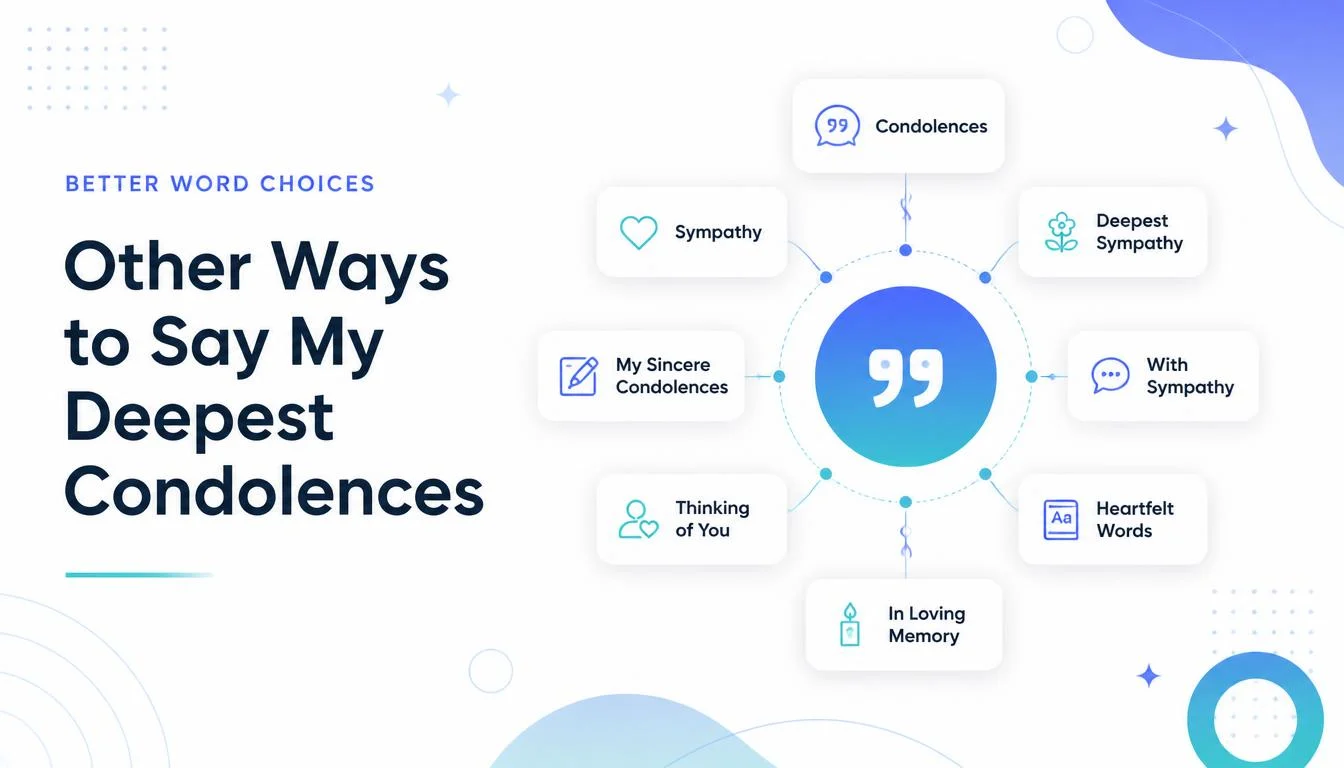
Looking for alternatives to “my deepest condolences”? The best options include: my heartfelt condolences, please accept my sympathy, thinking of you during this time, my sincere condolences, and my heart goes out to you. Each phrase carries a slightly different tone, so choosing the right one depends on how close you are to the grieving person and whether the setting is personal or professional.
My deepest condolences” is one of the most common phrases used to express sympathy after someone experiences a loss. It is widely used in cards, emails, speeches, and conversations to acknowledge grief and offer comfort.
People rely on this phrase because it feels respectful and safe. However, repeating the same expression can sound scripted or impersonal, especially in professional communication or written messages. Learning other ways to say my deepest condolences helps you sound more sincere, thoughtful, and emotionally aware.
Just as learners often study how to express excitement in English to sound more natural in happy moments, understanding condolence vocabulary helps you communicate compassion with the same authenticity during difficult moments.
“The right words at the right moment show more care than a repeated phrase ever could.”
Quick Categories
Formal Alternatives to “My Deepest Condolences”
- Please accept my sincere condolences
- My sincere condolences to you and your family
- I offer my sincerest sympathies
- My deepest sympathy during this difficult time
Pro Tip Box: Formal alternatives work best in written communication, such as sympathy cards, emails, or official statements. Keep the tone respectful and avoid casual add-ons.
Casual Alternatives
- I’m so sorry for your loss
- Thinking of you today
- Sending you love and strength
- My heart goes out to you
Pro Tip Box: Casual alternatives suit close friends and family. Pair them with a warm tone of voice or a personal gesture for authenticity.
Professional Alternatives
- On behalf of the team, please accept our condolences
- We are deeply saddened by this loss
- Please accept our sincere sympathy during this time
- My condolences to you and your family
Pro Tip Box: In workplace emails, keep professional condolence messages short, respectful, and free of overly emotional language.
Informal Expressions
- So sorry, sending you hugs
- Rest easy, friend
- Thinking of you, sending love
- My heart hurts for you
Pro Tip Box: Informal expressions are best for close relationships. Avoid using them with colleagues, acquaintances, or in formal settings.
Common Mistakes
- Overusing the exact phrase in writing. Example: Repeating “my deepest condolences” three times in one card can feel robotic.
- Using informal phrases in professional settings. Example: Saying “sending hugs” in a company-wide email feels inappropriate.
- Adding unnecessary details about the loss. Example: “My deepest condolences, I heard it was really sudden and shocking” can feel intrusive.
- Sounding overly rehearsed or distant. Example: “My deepest condolences on this unfortunate event” can feel cold rather than caring.
- Forgetting to personalize the message. Example: Sending a generic condolence text without mentioning the person’s name feels impersonal.
“A sincere message needs warmth, not just the right words.”
What Does “My Deepest Condolences” Mean?
My deepest condolences” is a polite, formal expression used to communicate sympathy for someone’s loss, usually after a death. Grammatically, “condolences” is a plural noun referring to expressions of sympathy, and “deepest” intensifies the sincerity of the sentiment.
Example Sentence: “My deepest condolences on the passing of your grandfather.”
When to Use “My Deepest Condolences”
- After hearing about a death in someone’s family
- In sympathy cards or written notes
- In professional emails to colleagues or clients
- During formal speeches or public statements
Spoken vs Written: It appears more often in written form, though it can be spoken during formal gatherings such as funerals.
Formal vs Informal: It is considered a formal phrase and may sound stiff in casual daily conversation.
Is It Professional or Polite to Say “My Deepest Condolences”?
This phrase is both polite and professional, making it suitable for workplace communication, client relationships, and formal correspondence.
Business Example: “On behalf of the entire team, please accept my deepest condolences during this difficult time.”
Polite? Yes Professional? Yes
Pros and Cons of Using “My Deepest Condolences”
Pros:
- Widely understood and respected
- Appropriate for formal and professional settings
- Conveys sincerity and respect
- Safe choice across cultures and workplaces
Cons:
- Can sound repetitive if overused
- May feel impersonal without added warmth
- Limited emotional range compared to personal messages
- Not ideal for very close, informal relationships
“Formal phrases build respect, but personal words build connection.”
Comparison Table: Top Alternatives
| Phrase | Tone | Best Use |
|---|---|---|
| My heartfelt condolences | Warm, sincere | Cards, emails |
| Please accept my sympathy | Polite, formal | Work emails |
| I’m so sorry for your loss | Genuine, warm | In-person, texts |
| Thinking of you during this time | Gentle, caring | Texts, cards |
| My sincere condolences | Respectful, formal | Emails, cards |
| My heart goes out to you | Emotional, personal | Close relationships |
| I offer my sincerest sympathies | Formal, respectful | Official statements |
| Wishing you strength and peace | Comforting, hopeful | Cards, messages |
| Sending you love and strength | Warm, modern | Texts, social media |
| We are deeply saddened by this loss | Formal, professional | Official announcements |
FAQs
1. What can I say instead of “my deepest condolences” in a work email?
Use professional alternatives like “please accept our condolences” or “we are deeply saddened by this loss.”
2. Is “my deepest condolences” too formal for close friends?
It can sound distant; casual alternatives like “I’m so sorry for your loss” feel warmer.
3. What is a good alternative for social media tributes?
Phrases like “rest easy, you will be missed” work well for informal public posts.
4. How do I express condolences without sounding repetitive?
Rotate between formal, casual, and professional alternatives depending on the relationship and setting.
5. Are informal condolence expressions ever inappropriate?
Yes, informal phrases should be avoided in business emails, official statements, or with acquaintances.
Conclusion
Learning multiple alternatives to my deepest condolences allows you to communicate sympathy with more sincerity and emotional accuracy. Whether the situation calls for a formal email, a heartfelt card, or a casual text, having the right phrase ready helps you express genuine care.
Practice using these expressions daily and pay close attention to tone, audience, and context. Over time, this awareness will help you communicate with more confidence, not only during moments of loss, but across every area of professional and personal English communication.
Read More Related Articles:
- Other Ways to Say Mental Health | More Respectful Ways to Express It In 2026
- Other Ways to Say Oh My God | Say It With More Surprise and Emotion In 2026
- Other Ways to Say Make Love | Beautiful Phrases for Couples In 2026

Daniel Murphy is a professional writer and blogger specializing in digital communication and messaging trends. As a contributor to TextsResponse.com, he creates reader-focused content designed to help people find the right words at the right time.